Anyone who has been exposed to photography, whether professional or not, should know the importance of the camera to the camera, as the most important component of the camera, whose good or bad quality directly affects the quality of the finished product. And the camera can be classified as a professional camera, a quasi-professional camera, and a normal camera. Today, the article gives you a little insight into what the camera has to say。
I. Camera type by lens
1. Professional cameras
The professional camera is called a single camera reflecting camera, that's what we're talking about. The mirrors and prisms of this camera are relatively unique and can be observed directly from the viewers by any camera camera. It's based on the idea that the light reaches the mirror through the lens of the camera, refractions to the focus screen above and creates images that can be seen through the lenses and the prisms, and then let the user see through the observation window。
The price of a professional camera is wide ranging from several thousand dollars to tens of thousands dollars, and the price of a high-quality camera is not lost to the camera. Specialized cameras can be broken and varied. The body of the professional camera and the functional indicators are closely related to the lens and are also based on optical lenses. When you buy a professional camera, you have to figure out the course and style you want to take, and don't buy anything。
2. Paraprofessional cameras
The quasi-professional camera camera is not interchangeable and is less effective than the professional camera. Although it cannot be replaced, quasi-professional cameras can obtain the effect of other lenses by supersing lenses or lenses. The biggest difference between semi-professional cameras and professional cameras is that they are cheaper, and a set of cameras plus cameras is around $10,000, so that para-professional cameras are also popular with many photographers。
3. Normal cameras
A normal camera means a stupid camera that's more common every day. The camera is non-replaceable and, for the most part, cannot be used over and above other cameras, so the effects are limited and more suitable for non-professional or photo white use。
Ii. Camera classification
The camera is divided into focal, focus and multipliers。
The focus lens points to the lens that can be pushed, and its focal length can change, for example, the sony 24-105 mm f4, which can change at will between 24 and 105 mm, and the focus lens usually uses two rings, one for focal rings and the other for focal rings。
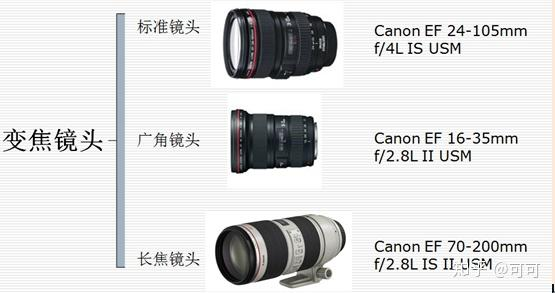
Focus lens focal length is fixed, with three types of wide angle lens, mechanized lens and long focus lens。
The wide-angle lens, which is characterized by less than 35 mm, has a broader perspective and, with a strong sense of intensity, can be relatively deformed and more suitable for larger scenes. If the lens is lower than 28 mm, it's a hyper-wide angle. It's much broader than the wide angle。
The mid-focal lens is 36 mm-70 mm, which is closer to the normal vision and perspective of the human being, which is more similar to what can be seen in the human eye, and allows for the filming of smaller, fixed objects such as man, flora and fauna。
The long-focal lens is usually more than 70 mm, and if it is more than 300 mm, it's a very long-focal lens that is suitable for visions, such as the sky, concert stage, etc。
In relative terms, the focus lens provides a better picture than the focus lens, but not every focus lens。
The main function of the multiplier is to increase the number of optical focal points of the camera, which can be used to change the lens if the optical focus is insufficient. It is calculated by multiplying, i. E. Multiples of multipliers x multiples of optical focal points。
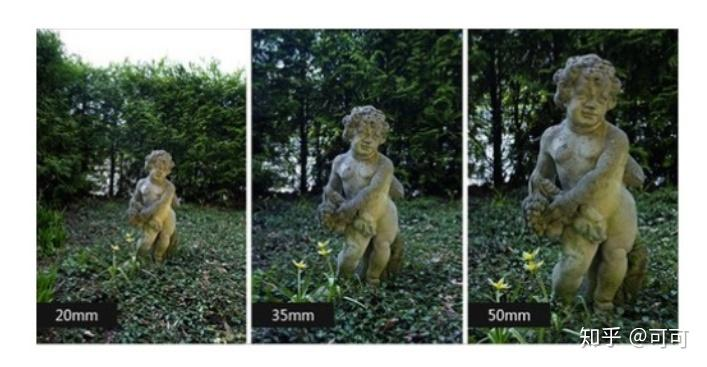
Photo from https://www. Taodocs. Com/p-322875496. HTML
The best maintenance method is to be maintained with a blow bag, which is usually purchased with a professional soft brush, which can also be cleaned. As a general rule, as long as the camera dust is not too large, it does not generally affect normal use, and as long as it does not affect normal use, as long as it is not maintained, since the camera is a fragile object, which could not be used if the camera was accidentally scratched。
If there is fog on the surface of the lens, the camera can be turned over, the fog will be dispersed naturally and as little as possible will not be wiped. Even if there is a real need for clean-up, every effort is made to use professional lenses only to sow on the surface, and every effort is made to avoid back and forth。
A lot of people like to wipe the lens with a soft cloth, which is actually wrong. You can pick up some of that professional lens paper, and there's a lot of it on the digital store and online, and it's not expensive. These lenses are specially processed and can be used for camera maintenance. And never use your own soap when cleaning a camera, and digital stores have a special cleaning agent, using as much professional equipment as possible。
It is important to keep in mind that the lens is filled with a lid in time for daily use, and only a good daily habit of maintaining the camera can most effectively enhance its useful life。
Iv. Focal length and aperture of the lens
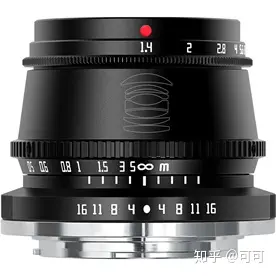
The problem of focal length, as we have already said, is the exact distance from the mirror center. There are many professional terms to look at, and most people don't understand it. All you need to know is that focal length is the determining factor in the lens and perceiving relationship。
Focal lengths are typically expressed in millimetres, and the smaller the values indicate the shorter the focal length, the wider the perspective and the greater the range of the film. The same thing, things that are taken at different focal lengths are very different. You can shoot a bird at 300 mm focal, and if you shoot at 18 mm focal, you can shoot the whole forest。
Many people don't understand the exact expression of the focal length, which is usually 28 mm for our mobile phone, and some of the mobile cameras claim that the focal length is so high, but the main camera is also 28 mm. You can see the focal length of your eyes. Human eyes can see almost 50 mm。
The aperture is also an important part of the lens, and many people think it is a hole, and it's of little use. If you think so, it's a big mistake. The arcade is very useful for the camera. The size of the aperture is typically expressed in f, the larger the aperture, the smaller the f. The main function of the aperture is to control exposure, and if the light is so good, we can turn it down, so that the photographs are not over-exposed. On the other hand, if it was darker, it would also be possible to turn up the halo, so that the scene would not be too dark。
The size of the halo is also associated with the defunctation of the background, the larger it is, the more visible it is. The bigger the light, the more expensive it is。
V. Common question answers for lenses
1. The camera i bought in brand a, can you install a b camera
The ability to install a camera has nothing to do with the brand, depending on the lens's access. Even different brands can be installed directly if the lens is suitable. If you install this brand, you call it the original plant, and if you install other brands, the secondary plant。
But i personally suggest that we use the original camera as much as possible. Because while some cameras and lenses are suitable, each company has a different development strategy, and cameras are the best。
What about the camera
It is true that many of the things that are being filmed on mobile phones are clear and have good visibility, but still cannot be compared to most cameras. Look, most of what i'm saying is that there are mobile phones on the market that can be more visible than normal cameras, but there's still a distance from one-way and micros。
3. Do professional photographers like to use one-sided reverses
It does. There are many reasons why professional photographers prefer to use one-size-fits-all. Three of the most recognized points are that large-scale sensors can bring very high quality; the ease with which camera switching can take place; and the breadth of the body-rich interface. All three points are very important, and i asked a couple of the photographers around me, who said that changing the camera would do a great deal to the contrary。
What kind of camera is a card machine and a single camera
All i'm saying is, one-on-one cameras can be changed, cards can't be replaced. Isn't that easy to understand? A single back camera is much better than a card camera in terms of convenience or imaging。
How can a camera produce a false background
Background fissure is not an effect, but a manifestation of the camera's large radial belt. If you haven't bought a camera yet, you can choose a large sensor camera if you want to film a false background, and if you've already bought a camera, you can just increase the lens。
What's a three-dollar shot
The “big three” lens refers to the generic description of the three focal lenses of the constant f2. 8 radium, the focus of which is 16-35 mm, 24-70 mm, 70-200 mm (the focus of the wide-angle lens is different, e. G. 14-24 mm, 15-35 mm, etc.). And there's three little ones. They're a constant f4-centre lens。
Vi. Detailed lens parameters
When we buy cameras, we have to be careful with these parameters:
1. Focal length
Focal length refers to the distance from the lens centre to the clear image formed on the focal plane. Its size directly affects the size of the field of view, the wider the focus range, and is divided into focus and focus。
2. Aperture
Mainly f, measured by the margin of lens f and perforation d. The greater the f, the greater the arctic。
3. Interface
It refers to the connection of the lens to the camera, which is more common in c, cs, f, v, t2, leica, m42x1, m75x0. 75, etc。
4. Resolution
Resolution refers to the ability of the lens to record the details of the object, expressed as lp/mm. The higher the resolution, the clearer the lens image。
5. Scope of the vision
The size of the area that the camera actually gets。
Deep view
This refers to the extent to which the image remains relatively clear at a certain distance around the object after the target object has been focused。
7. Corresponding maximum sensor size
The maximum sensor size to be covered by the imaging diameter of the lens. It can be divided into 1/2, 2/3, 1 and above。
Vii. Common camera recommendations
You can choose the camera from your own scene, for example
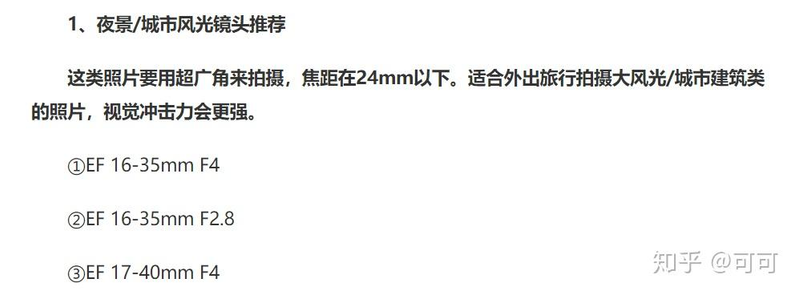
Image by https://dy. 163. Com/article/fife449205450tu. HTML
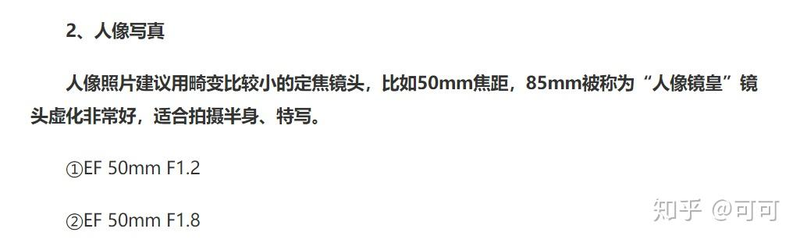
Image by https://dy. 163. Com/article/fife449205450tu. HTML
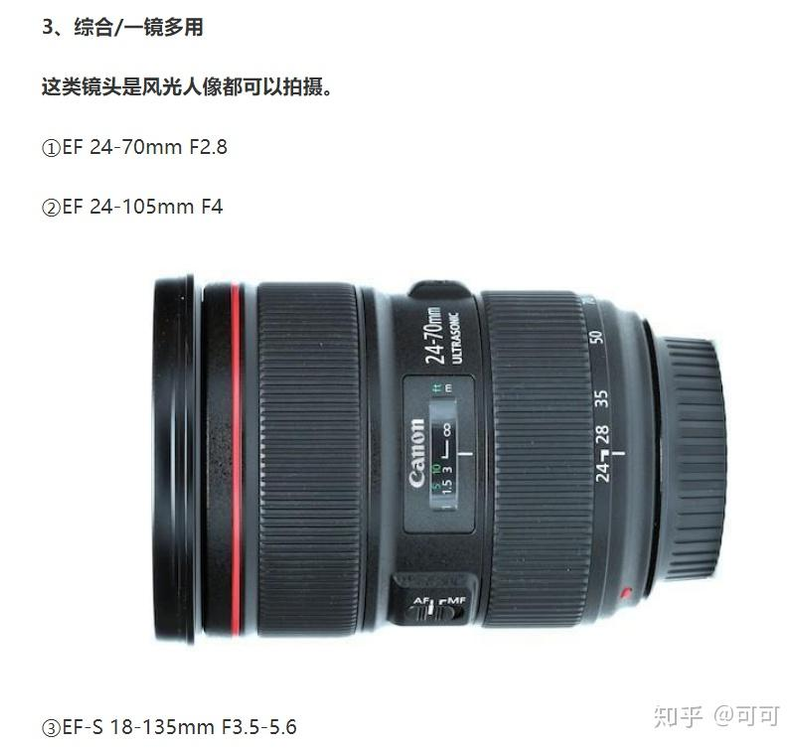
Image by https://dy. 163. Com/article/fife449205450tu. HTML
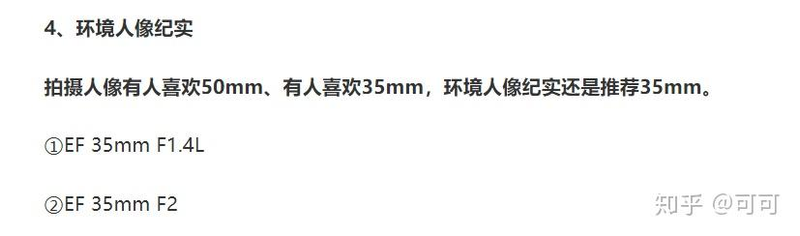
Image by https://dy. 163. Com/article/fife449205450tu. HTML
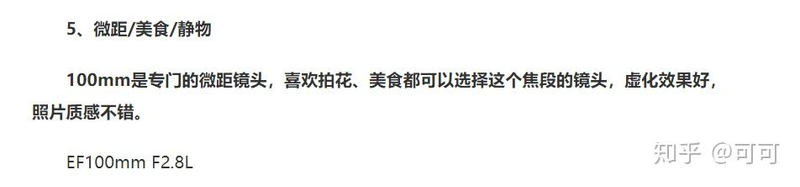
Image by https://dy. 163. Com/article/fife449205450tu. HTML
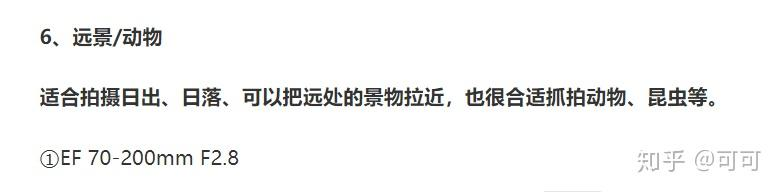
Image by https://dy. 163. Com/article/fife449205450tu. HTML
It is also recalled that it is important to select the lenses by the opening of the camera itself and that, although there is a camera interface, it is not recommended for use by beginners。
It's a little long
Let's not mention it. Let's go to the camera