On 24 january 2019, the world intellectual property organization (wipo) published the theme of this year's 19th world intellectual property day — fighting for gold: intellectual property and sport. As a mature industry with a high level of commercialization, the degree of integration of sporting events with intellectual property rights becomes ever closer with the development of the economy, technology and networks. At the same time as the sporting industry is developing rapidly, there is a growing number of intellectual property cases related to sports. The people's court of the haidian district of beijing (hereinafter referred to as the haidian court) conducted a statistical analysis of the cases of intellectual property rights in sporting events that had been before it for almost three years. The analysis was carried out by way of a summary of the cases, with a view to making recommendations on the consideration of such cases and the protection of intellectual property rights in sporting events。
I. Overview of private property cases relating to sports
(i) cases received
Between 1 january 2017 and 31 march 2019, 1902 cases of intellectual property rights related to sports events were heard by the minjus tribunal of haidian court. Of these, 357 cases were processed in 2017; the number of cases processed in 2018 increased significantly, to 729 cases, an increase of 104. 2 per cent over 2017, and 816 cases in the first quarter of 2019, which is higher than the total number of cases received throughout 2018。
(ii) type of case
In terms of the type of cases, over the past three years, there have been 1,877 cases of copyright violations in the haydian court, representing 98. 7 per cent of the total number of cases of intellectual property rights in sports, and 1,188 cases. Of these, 350 were processed in 2017 and 343 were disposed of; 723 in 2018 and 669 in 2018; and 804 in the first quarter of 2019 and 176 in 2019. There were three cases of violation of trademark rights at sporting events, and one case was settled, one in 2018, one in 2019 and two in 2019. A total of 21 cases of unfair competition (complex cases involving infringement of copyright and unfair competition) were heard and 5 cases were concluded, 6 in 2017 and 2 in 2018, 5 in 2018 and 3 in 2019. One contract dispute relating to sports is pending。
In the case of copyright infringement disputes, the main focus is on the case of violation of copyright in the photographic and written works of sporting events. Of these, 1,632 cases involved photographs of sporting events, with an explosive increase, representing 86. 95 per cent of disputes over copyright violations and 85. 8 per cent of all cases involving intellectual property rights in sporting events; 238 cases of written works related to sporting events, mainly in 2017; and the remaining 7 cases related to sports events。
(iii) subject matter
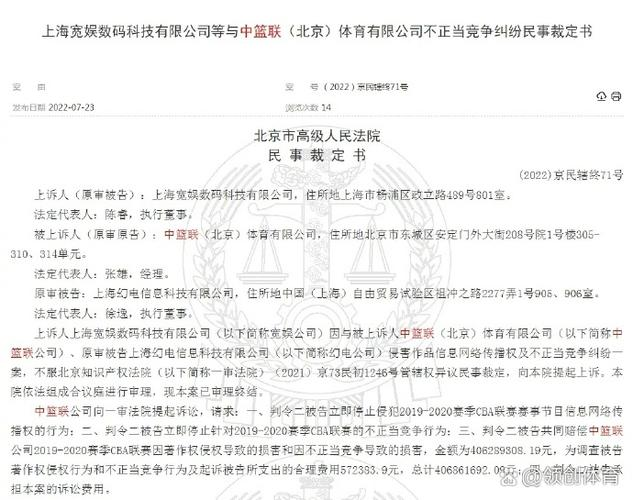
From the point of view of the subject of the prosecution, it is concentrated in several companies operating pictures professionally, large internet companies with teams of sports photographers or journalists, and related companies with rights to exclusive live broadcasting of events, rebroadcasting rights, and dissemination of information networks. From the point of view of the subject of the complaint, most of the companies that operate accounts or professional websites on platforms such as weibo, weibo, and so forth also involve video app development, operator development and micro-intelligence programs, and so on。
(iv) cases closed
Over the past three years, the haidian court of justice and the people's fifth chamber have concluded 1194 such cases, of which 383 were judgements, 12 were mediations, 799 were withdrawn and 67. 9 per cent were withdrawn. In 2017, 345 cases were completed, of which 301 were decided, 35 were withdrawn and 9 were settled; in 2018, 673 were completed, of which 81 were decided, 589 were withdrawn and 3 were settled; and in the first quarter of 2019, 176 cases were completed, of which 1 was decided and the remainder were withdrawn。
(v) amounts awarded in various types of cases
Statistics show that in the last three years, cases involving the writing of sports events have been awarded between 160 dollars per thousand words and 480 dollars per book, and cases involving the production of sporting events have been awarded between 2,000 and 10,000 dollars per page, mainly due to the fact that in some cases the threshold for taking pictures of events was higher and the corresponding work was of higher market value. In the case of unfair competition, a sum of $3 million was awarded in the case of unfair competition involving exclusive interests in ultra-photographic works。
Ii. Characteristics of intellectual property cases relating to sporting events
(i) the competition is dominated by popular, large-scale sports events, coverage hiro

The main events involved in such cases were the numerous, highly influential and highly commercial sporting events such as the china super league, the australian net, the champ, the european cup, the nba, the world cup, the olympic games and the european championship。
(ii) high degree of commercialization of subjects of prosecution, high level of specialization and relative regulation of evidence of tenure
Prosecuting subjects in such cases focus relatively much on the transformation of intellectual property outcomes, including professional photo companies that receive exclusive rights and interests in the competition, as well as companies that receive exclusive rights to live and rebroadcast the competition, and large internet companies that have a professional website and a professional team to film or write. At the same time, the evidence of tenure in such cases is relatively normative and complete。
(iii) operating content of the subject is closely related to sports events
The content of the subject of such cases is closely related to sports events, and the audience is also focused on event audiences, fans, etc., such as the app software that is operated by the subject providing professional sports information, the accounts that are operated by the subject identifying it as an official sponsor of a given event, and the website operated by the defendant in some cases with a dedicated sports channel covering events. In the case of the plaintiff shanghai passage cultural communication ltd. V. The defendant's improper competition dispute with recreation (beijing) cultural media co. Ltd., the defendant company was a professional body devoted to sporting events and had entered into agreements with the china super league limited。
(iv) most of the alleged violations occurred during the hot season of the competition
The greatest feature of the spread of sporting events is their timeliness, and at the time when they occurred, they were the time when the greatest attention was paid to them, and when the commercial value of sports events was most likely to be converted, when such violations were brought against them, they were often also in the hot air of events, most prominently in the form of live live broadcasts。

(v) the defence of the subject is closely related to the characteristics of sports events
The defences of the subjects complained of in such cases are closely related to the characteristics of sports events, including, inter alia, that the words of the sports events, photo coverage, etc., are not in themselves works and should not be protected by copyright law; that the photographs taken by the plaintiff are not protected by copyright law because of the infringement of portraits without the consent of the filmee; that the plaintiff's lack of qualification in the press and therefore that his practice of sports journalism is not protected by copyright law; and that its conduct is consistent with the circumstances in which the reporting of events constitutes a reasonable use。
Iii. Elements and conclusion of instruments relating to instruments in the science of sports
(i) whether the object of protection is a work
The question of whether the object of protection sought against the plaintiff in the case of infringement of copyright at sporting events generally concerns the following: the first is whether the photographs or articles involved constitute current affairs news and are not protected by copyright law. Generally speaking, neither the pictures taken nor the articles written against the sporting events are mere factual news and do not constitute current news. The second is whether sports events, especially live videos, are part of the work, such as the live broadcast of sports events with a broadcaster, which is still under further consideration。
(ii) whether the plaintiff is entitled to bring an action and claim a corresponding right