The core of the sports industry is sport ip
The sporting industry has a strong externality, which means that it has a positive impact on the well-being of bystanders in its own activities, and that the benefits of this positive impact are not attributed to sports practitioners。
High-quality sports events can directly drive local tourism, hotels, restaurants, shopping, entertainment, etc., and boost local economic dynamism, which is at the heart of the sports industry landscape. The surrounding industry has benefited from the development of the competition and has fed into the building of the competition itself, generating positive feedback and thus contributing to the development of the industry as a whole。
At the heart of the sports industry is the sports ip, which, from the perspective of the industry chain, includes the following:

The core industry chain in the sports industry: users of the sports ip media. All other links depend on, serve and benefit from this core industry chain, the level of development of which determines the level of development of the entire sport industry。
Sports-dependent industries: dependent industries. Sports affiliates include physical training education, sports health services, sports supplies, sports clothing, sports intelligence hardware, sports lottery, sports financial services, etc. Affiliated industries are the basic guarantee for the proper operation of the sports core industry and are amplifiers of the size of the sports industry. For example, the current 3/4-scale contribution of our sports industry comes from sports supplies and clothing。
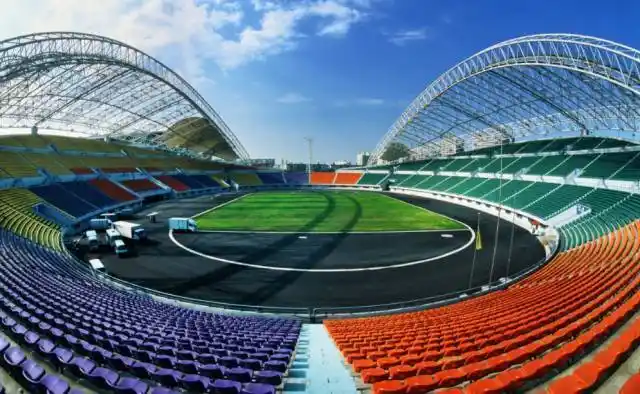
Sports infrastructure: building and running. Sports infrastructure includes the construction and operation of stadiums, which are currently government-owned, with ownership at all levels of government, usually self-run or outsourced to market-based operators。
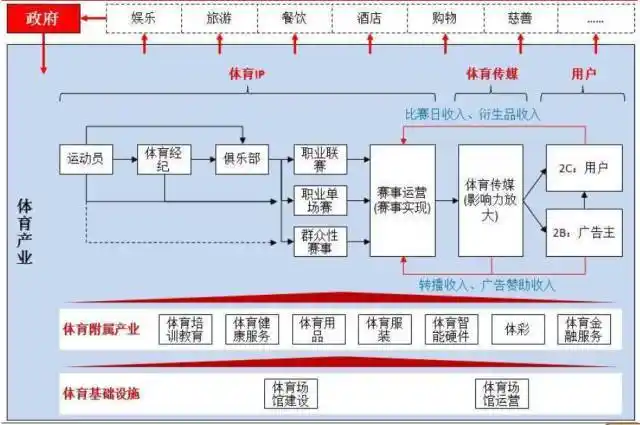
Figure 1
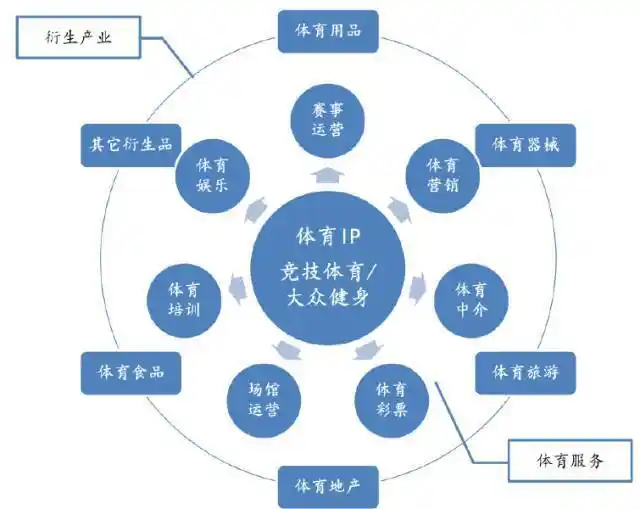
Figure 2 sports industry around the core of sport ip
Ii. Characteristics of sport ip
At the heart of the sports industry is sports ip, and any profit model is ultimately built around it. In different contexts, sports ips are defined differently. Depending on the type of ip, it can be divided into games, clubs and star athletes。
Table 1 examples of ip types
One, the core supply element is good athletes
It takes time to upgrade
The core elements, whether in competitions, clubs or sports stars, are good athletes. Good athletes are the key to shaping a good race and the most critical element on the supply side of the sport industry。
Although the number of gold medals in our country tends to be at the top of the list at the olympic games, our sports industry is dominated by long-term closed nation-wide training systems and the lack of mass sports infrastructure. It is mainly contributed by individual competitions, with a small number of good athletes in the type of sport of higher commercial value and in group-like sports, resulting in low levels, especially football and basketball。
Table 2
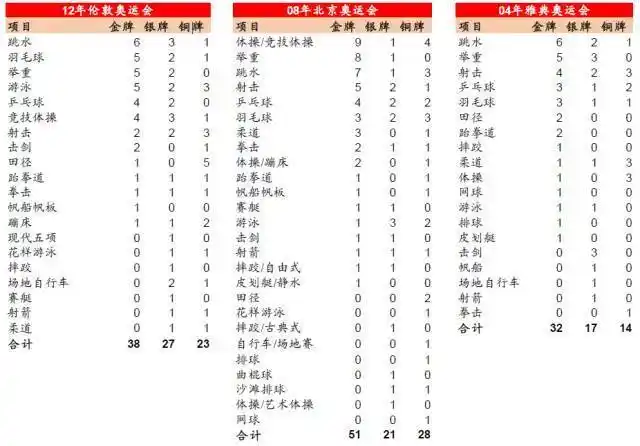
From the distribution of medals received by china during the last three olympic games, it can be seen that the country's strengths are concentrated in individual events and in the type of sport of low commercial value. The selection of outstanding athletes in these sports programmes is not based on a large mass movement base, but rather on a large population base to select talented athletes and pool resources for closed training. As a result of inadequate mechanisms and lack of alternatives, the disease is often referred to as “a dead end”。
Table 3 world sports star income ranking, 2015
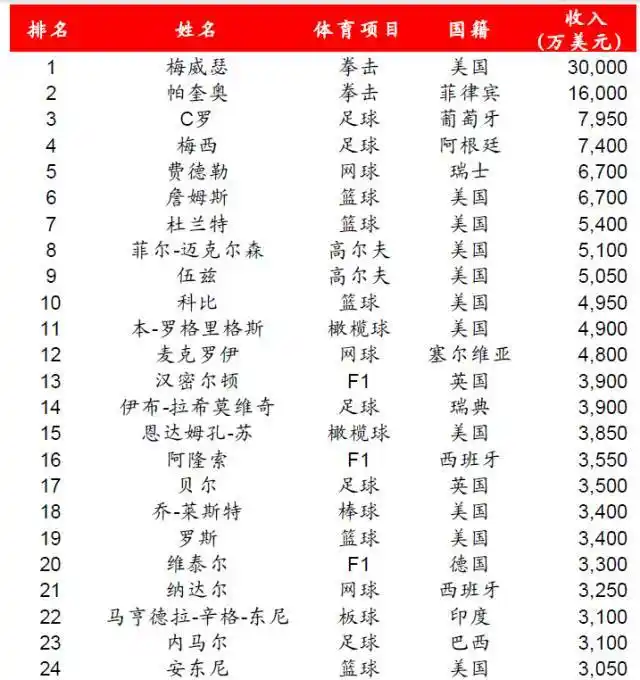
According to forbes magazine, the top two sports stars in 2015 are largely dominated by developed countries, such as the united states and spain, and sports types are concentrated in highly confrontational and entertaining sports such as football, basketball, boxing, football and f1, which is a good indicator of the greater commercial value of highly entertaining sports。
The emergence of a large number of talented athletes, which depend on the building of the foundations of popular movement, the large-scale construction of the stadium, the design of exit channels for talent, is closely linked to the institutional and socio-educational value orientations, and these changes are not the result of a single day of change, and it is therefore difficult to build up the supply side。
2. The scarcity and sustainability of sport ips
The proliferation of good athletes takes time to accumulate, especially in the event of athletes。
The formation of the ip: good wine needs to be cooked
Looking at world-renowned events, we can observe that, first of all, ip takes a long time to develop. World-renowned events have basically a century of history, without exception. The growth of competitions requires the spread of individual movements, the accumulation of operational experience, the maturity of commercial development, the improvement of their own quality, the deposition of influence and proliferation, which determine the accumulation of time from the start of the competition to branding。
Table 4
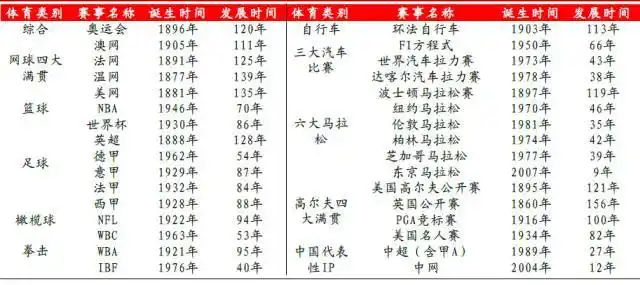
Second, in areas where strong ips have developed, there are fewer opportunities for new ip culture. The well-known events listed above have become brand names in individual areas, i. E. Powerful ips. Its influence continues to accumulate and new ips are less likely in these areas. In the case of the world cup, for example, the world cup has become a carnival of football fans, with all its resources and awareness occupied, with the possibility of a new world cup competing with it almost zero。
Good game ip is a scarce resource
The development of a good race ip is limited to the attributes of the project itself and depends on the accumulation of time. Freezing three feet is not a day cold. In areas where strong ips already exist, new ip culture is largely out of reach. This means that the existing best race ip is a scarce resource and that the owner of the competition has sufficient bargaining power. Sporting ips are scarce and take time to form, but once they are formed, they have a life cycle well beyond other content products and are characterized by sustainability。
3. The development of the ip: high entertainment, high participatory races
More valuable
As human society continues to develop, the types of sporting events continue to expand. In the statistics of the national sports directorate, the main olympic and non-olympic projects are:
Table 5 summary of major olympic and non-olympic projects
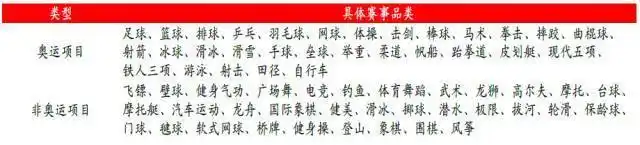
This is only part of the many types of competitions, and in addition to the olympic games, world-renowned sports are often confined to a few projects, including football, basketball, tennis, racing cars, etc. In our view, this is because competitive sport is essentially a competitive performance and has a strong recreational character。
Competing sports are essentially competitive performances, and entertainment is more conducive to branding
High confrontational and competitive sports are more popular in terms of their origins。
The movement originates from the hunting and fishing activities of the originals for their survival needs, and the “higher, faster and stronger” will be able to gain more access to means of livelihood and expand the chances of survival and continuity. Thus, in today's world of human beings without fear of food and clothing, sport still meets the psychological needs of humanity as a result of its long-term evolution, and is favoured by highly confrontational, competitive and stimulating sports。
The full commercialization of the competition has contributed to the further growth of its entertainment and visibility. The promotion and development of sport is dependent on the role of the market, and commercial integration in sports requires that the competition itself be sufficiently visualized to maximize benefits。
In addition to rule-improvement and commercial development, the visibility of the competition is inextricably linked to the attributes of the project itself. Projects such as fishing, weight lifting, doorballs are not confrontational, sports themselves are not sufficiently dynamic, their visibility is relatively inadequate and their commercial exploitation is of limited value and not conducive to the development of ip。
High-level participatory sports programmes can make up for competitive and visual deficiencies and enhance the value of business development
The attributes of sport itself determine to some extent the prospects for commercialization of the event, but it is possible to compensate to some extent if it is popularly based and participatory. In this context, the race movement has become an entry point for underground traffic, attracting users through its extensive participation and thus gaining commercial value。
High-level participatory projects should be characterized by a broad-based population with low thresholds for participation. In recent years, runaways have begun to emerge in the country as a result, on the one hand, of the pursuit of health, the promotion of government and business institutions as a result of improved living standards in the country, and, on the other hand, of their own ease of participation, with low demands on the economic capacity of participants. Campaigns similar to road runs include square dances, bicycles, etc., with lower thresholds for participation。
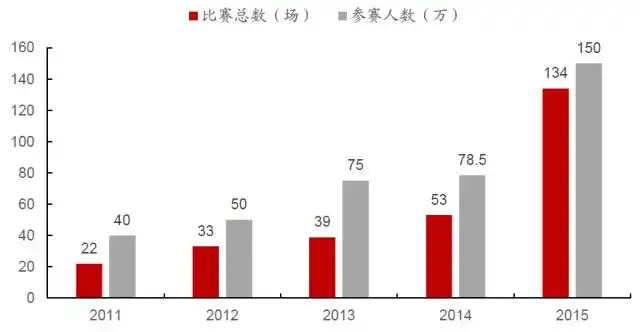
Figure 3
Iii. Sport ip in our country
The chain of the sport industry, which is transmitted by the sport ip to end-users through the sports service, has not been able to form a virtuous cycle, and most sports activities depend on the direct or indirect subsidies of the government, and the vast majority of sports stadiums support their daily operations with government financial inputs。
Our sports industry has long been called upon to undertake the noble task of promoting national honour, and industry development has been highly dependent on policy orientation, with the core parts of the sports industry chain being controlled by the government, including the operation of games, the operation of stadiums and the marketing of sports, forming a tight regulatory system. Inflexible mechanisms severely limit the space and market dynamics of our sport industry。
Table 6
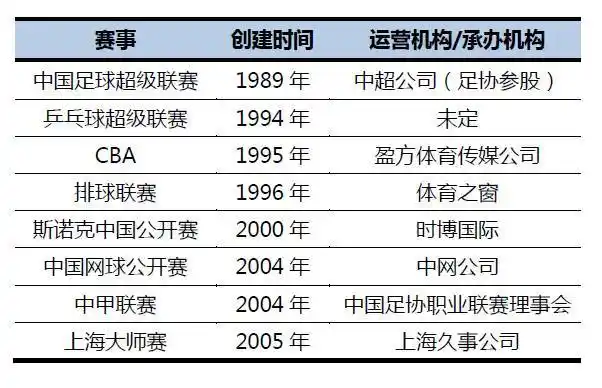
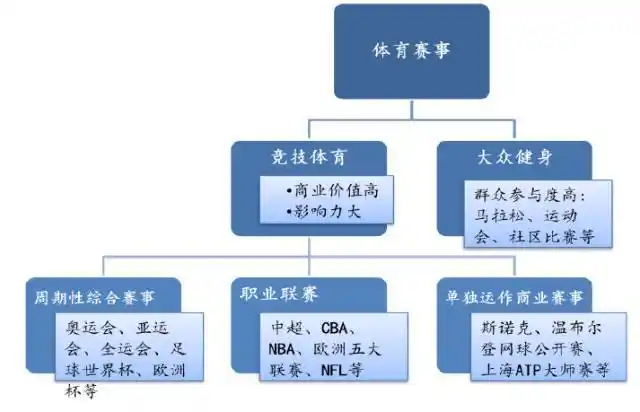
Figure 4
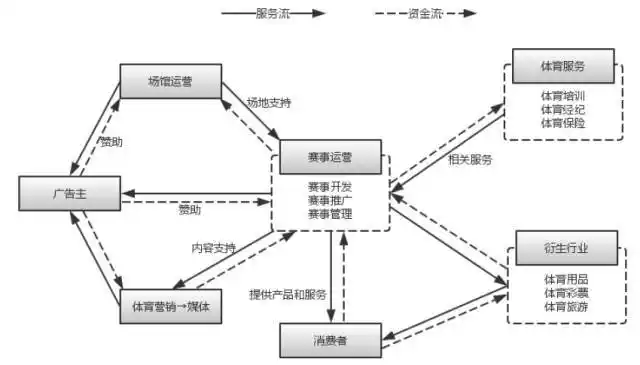
Figure 5 government institutions continue to dominate key links in the country's sports industry
Thus, since the reform and opening up of china's sports industry has been on the path of “de-administrativeization” but, owing to its long-standing reliance on government-driven development, the sports industry chain has not yet developed an effective recycling mechanism, and the institutional dimension remains a major constraint to the development of the sports industry。
The overall loss is due to the low impact and low liquidity of the nationally produced sports ip, while the sports media industry has continued to lose in recent years as a result of the high price competition for their copyright。
For example, in mid-2015, the total revenue of the super league clubs was about rmb 3. 2 billion (700 million yuan for medium-sized companies and 2. 5 billion yuan per month for 16 clubs), which still represents an overall loss of rmb 1. 5 billion for the most influential sports events in the country. The china ping-pong super league in 2014 did not even have a main sponsor, and in 2015 only had a name, at a cost of only $10 million。