A professional chess player, also known as a professional chess player, is a chess player who is a professional, affiliated with various chess organizations or teams of sports representatives, formally trained and highly qualified and regularly involved in major events at home and abroad. By contrast, amateur chess players are amateurs who participate in or are enthusiastic about chess during their leisure time and who do not usually have a major occupation of chess, nor have they received long periods of formal training, and therefore do not participate in professional chess games。
Next, we will explore in depth some of the key terms in the game. The first is “ hanging”, which is referred to as “ hanging” at the layout stage, when one of the pieces is in the corner and the other side moves between the steps and the sides in its vicinity. Depending on the line of chess and the relative position of the chess players, the hanging can be divided into different types, such as low, high, one high, two high. The purpose of the hanging was to disrupt or usurp the corner position of the other party。
In addition, the term “contracting” is an important rule, also referred to as the “ringing corner” or the “watching corner”. It refers to a game of chess based on one's original vision, high vision or other so that both sides can cooperate and guard the corner. The corner not only helps to encircle more corners, but also lays the foundation for follow-up control and for the development of frontier areas, and is therefore one of the methods commonly used during the layout phase。
Moreover, long is a common game of chess. It means that the chess pieces of both sides are tied in the same direction, and that the chess pieces of the first party will always be higher than the other. Through its long-term approach, its own pieces can be linked to a whole, thereby prolonging the gas count, both to defend the other's attack and to facilitate the search for opportunities to counter it。
Finally, “building” is also a fundamental exercise in chess. It means the next piece in the direction of the border, in close proximity to the original piece. This practice usually occurs in second-line or third-line chess. By standing, chess players can better control the situation and find opportunities to attack or defend。
The next step in the direction of the original chess is called the “minus point” because of its smallness. In the game of chess, the tip is a flexible method that both secures the link between his or her side and tactfully controls the direction of chess and prepares for both。
From the original position of the chess board, the next item of the "daily" syllable is called "little fly" and, in the case of the diagonal syllable, "fly". In addition, there is a special flying technique, namely “trip”, which is similar to the likes of chess。
With the support of one's own chess players, they are placed above each other's chess pieces, which are designed to suppress each other, expand their foreign positions and increase the weight of their pieces. At the same time, the pressure is often used to create tactical effects of a sonar attack。
On the same line of the original piece, separate the next item to the left or the right. The interval is referred to as “dismantling one” and the interval is “dismantling two” and so on. The law is often used to adjust the shape and reach of the game。
When both pieces of chess interact with each other, a method is used that directly prevents the other from entering or being flushed out by the chess. It is one of the basic defenses in the game。
When the pieces of both sides are close, one side turns in the direction of the other side to the next to block the other's way. It is directed in the direction of the internal, the external, the upper and the lower points of the trigger, and the counterparty can also respond with a reverse, a joint, etc。
In the corner, close to the bottom of each other's pieces. The multiple functions of possession, communication, assault, diversion and trial responder are an important tactical tool in the game。
When a chess player is in contact, if a chess player is prevented from moving forward by the other party, then the chess player moves back to its own side, which is the way to “reverse”。
On the basis of the original “small-tip” setup, a sharp sprint was made on the other side, resulting in a three-score distribution of the word “goods” called “the tiger”。
Next to each other's pieces, near the tiger's mouth or at the obvious weakness, is intended to obtain immediate benefits or divide the other's pieces. Such practices are usually regarded as first-hand and are intended to compel the other party to react。
In the middle of the distance between the two steps, the shape of the board is called the "drum". The approach is similar to that of the tiger, but it differs in its direction and purpose。
In the absence of self-serving pieces, the next item next to each other's pieces is called “touch”. It's often used to test each other's reactions and seek change。
In the case of self-serving pieces, the next item next to the other is called “cool”. This method is designed to secure or create offensive positions for its own pieces。
This is also known as a “back-to-back” approach, where the chess pieces of one side are separated from the other side. It is often used to connect its own pieces and to strengthen integrity。
Connecting their own pieces, which may be divided by the other party, into a whole to ensure continuity and stability。
The other party's own chess pieces are linked together with the other pieces to eliminate the risk of being eaten. This approach is designed to ensure the survival and integrity of chess。
In the case of the other, the next is the law. This law is often used to break up each other's pieces and carry out effective attacks。
Put each other's pieces between our two。
It's called rolling. That means we leave one or two children and then eat the enemy into a close-shaped process。
It's called eating. The next one leaves only two breaths of each other。
Double
It is necessary to strike both sides of the game。
The next one is to make the other's chess player look like he's been eaten, and then he'll take it off the board。
It is also called a tadpole, which is a way of eating chess, commonly known as “kitting sheep”. If there is no response from one of the pawns, he or she can continue to hunt in the order in which he or she escapes, until he or she eats them all。
On the basis of the original pieces, one set of pieces is used to hit the other。
On the same line of the original pieces, the distance is down the road. This approach is designed to avoid passivity and prompt the quick emergence of one's own side。
In order to prevent the pieces from being cut off by the other party, the pieces were taken into four-segregation shapes, commonly known as “plains”. They are often used in situations of attack。
It is also called single. On the same line of the original piece, the way to the middle abdomen is done。
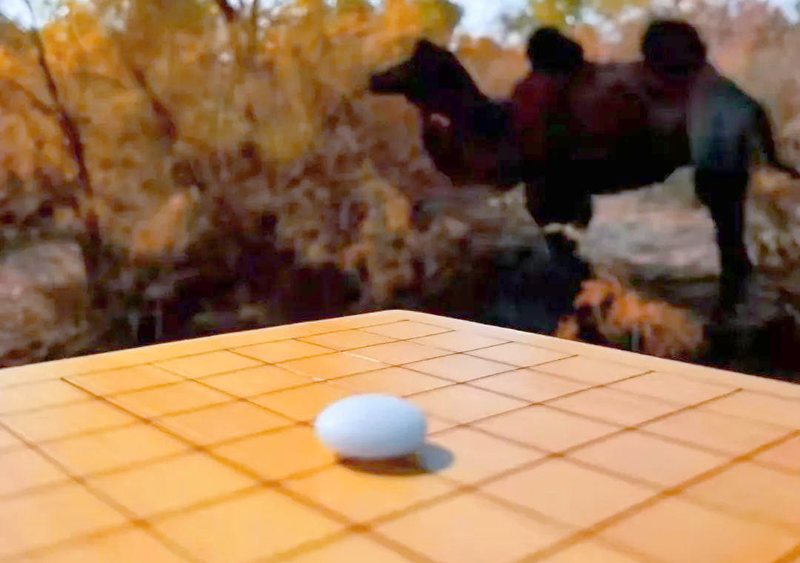
The purpose of sending a child into the mouth of the other side was to force the other side to eat and to remain calm. They are often used in the fight between the two sides for air and eyes。
It's also called the head. It's the way to get to the top in order to prevent one's own chess from being pulled over。
It's called "the back cart."。
The other party's chess pieces were hidden within its own sphere of influence, preventing it from continuing to grow and escape。
On the sideline below the three-way board, we can connect our two pieces。
When the chess players interact with each other, they change the course of the game and block the way they move forward。
It means that one of the chess players, under pressure from the other, follows the second or first line of chess。
It means the method of hitting each other's pieces in the space of the distance between them. In mid-board combat, “splash” and “break” are often used in tandem。
In the case of a counter-measure, the child is placed next to the other party's pawn, the aim of which is to break the link between the other party's pieces。
It's also called breakup. It's a way of cutting off each other's pieces. Chess are vulnerable to attack when they are cut off, and among the machines are the words “the game is broken”。
Inserts a child into the space where the pieces are concentrated, causing a break or defect in the shape of the other。
Cut
It is an effective method of immediately presenting a certain defect at the bottom of the other's form。
Next to each other's "tight" shape, it has the method of restraining the other party's chess shape or causing a break or defect。
Go back to each other's chess pieces in a curved shape, called the "song"。
It's a way of turning chess into empty triangles or condensed. Usually used in specific contexts。
In the air of one piece of chess, the other party was finally unable to do the trick of being killed in two eyes。
A defensive approach that reinforces weak or flawed chess。
When the chess player is still unsettled, he is approached in order to limit its territorial expansion or to undermine the possibility of its foundation, forcing the other party to choose to live on the spot or escape。
It's commonly called "caps." next to each other's chess pieces in a single position at the center, they are used to limit each other's power, to suppress their large appearances or to attack those who try to make a difference。
Deep into the sphere of influence under the control of the other party, aimed at breaking the law or attacking the other party。
This strategy is to play chess in the center of each other's sphere of influence, while leaving room for expansion on both sides。
Normally, the split pieces select a three-line position。
Hanging, as a method of exercising chess over the sphere of influence of the other party, is intended to limit or reduce the territory or positions of the other party。
This strategy usually has a high landing position, making it less vulnerable to attack by the other side。
The seal is a method of blocking the chess pieces of the other party, with the aim of preventing their expansion to the outside world。
It is playing in the margins of each other's isolated pieces of chess, further away from each other's pieces, thus creating a broad sphere of influence that places each other's lonesome pieces far away, thus posing a threat to their security。
Point, a step aimed at the defect or critical position of the other party, aimed at attacking the other party's weakness。
It's also known as a rewinding. It's a method of feeding each other in the mouth of the tiger。
When the other party offers food, it can continue to eat the other party's pieces, thereby increasing its strength。
The new cross is a way for both sides of the game to move their pieces into the shape of a “cross” in which they hang each other. It is designed to use the interplay of the pieces to weaken each other's power or build their own sphere of influence。
Shoulder, this method is next to the top of the top of the other's chess。
It is used not only to weaken the power of the other party, but also to expand the sphere of influence of its own side。
Two-flying swallows are one of the most common techniques in the layout。
In the constellation layout, when one of the parties first occupies the asterisk, the other side will fly on both sides and trap it. And he is known for his chess like a swallow。
Quoting is the next step in the direction of a chess game and is intended to accommodate a chess game and thus maintain a balance in the chess game。
And it's on the same line as the original one. This method is usually used to strengthen one's own shape or to maintain a link。
The pillars of the jade are set up on the horn or on the side of the original child. It is used primarily to strengthen the situation on one's side or to secure its territory, thereby increasing its strength。
The tipping point is the next piece close to the other side's chess piece, which, while forming a “tip”, also acts against the other side's chess. This method is designed to weaken the power of the other side or to expand the sphere of influence of one's own side by virtue of its location。
The nasal top is the method of holding a number of chess pieces in front of each other. It is usually used to disrupt the expansion of the other party or to enhance its own defence capabilities。
The next piece that separates them from each other is the method by which they can be contacted if they leave. This approach is designed to ensure the safety of large pieces of chess or to build more sophisticated pieces of chess. The most common practices are jumping, closing, dismantling, flying, flying, jumping。
Chess is not just science, but art. In the game of chess, we can see the perfect combination of image and logic. It enhances our mechanical memory and understanding, improves computational skills, and it also purges our emotions and inspires our thinking。