


The causes of the desert
The central and western parts of all continents are found in most of the deserts on earth, such as the sahara desert in africa, the kalahari desert, the atacama desert in south america, the sechula desert, the namib desert in south america, the mojavi desert in north america, the australian desert in western central australia, the takramgan desert in asia, the kerzlecum desert, the tal desert, etc. The desert is so distributed that it has a close relationship to land and sea distribution and the earth's turn from west to east。
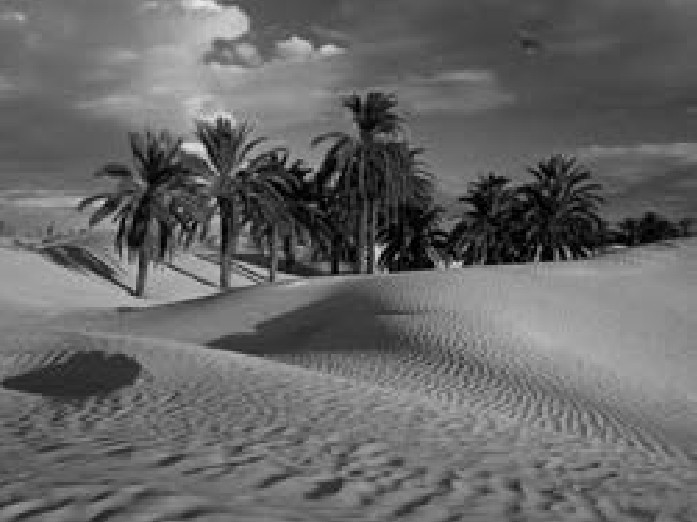
Sahara desert
First, most deserts are located in sub-tropical high-pressure zones at latitudes 20 to 35 degrees north and south, where high air currents from the equator contribute to lower atmospheric deposition and constriction due to shrinking latitudes. At the same time, the subtropical high pressure in the lower atmosphere of the region is blowing up the equatorial low pressure winds. It blows north-east to south-west in the northern hemisphere and south-east to north-west in the southern hemisphere. This makes it very difficult to blow water from the eastern coast of the continent to the central or western part of the continent, thus creating a dry and hot downpour in the central and western parts of the continent. There are many places where annual precipitation is only a few dozen millimetres and some places do not rain for many years. In addition, the water evaporates very quickly because of dry heat. The sahara desert in north africa, although west of the atlantic ocean, is dominated by the north-east wind of the faith, with a dry and hot wind of 14,000 km of asia-africa, which not only does not reach the sahara desert, but the sahara desert stomps into the atlantic。
In addition, many deserts in the west bank in africa, australia and south america are due to the fact that powerful western winds in the mid-latitudes of the southern hemisphere drift through southern africa, southern australia and southern south america, all of which are blocked by the mainland and turn to the left, forming, respectively, the benguela cold in the west bank of africa and the western australia cold in the west bank of australia and the peruvian cold in the west bank of south america. The cold current passes through the sea, which makes the lower atmosphere cold and stabilizes, making precipitation difficult。
The causes of the desert in central asia and in our xinjiang region are different from those of the sub-tropical desert. This part of the desert is located in the centre of the continent, and the mountains block the wet flow of air, which makes precipitation scarce and creates deserts. The two main causes of desert formation here are drought and wind. This, together with human deforestation of forest trees, destruction of grasslands and loss of plant cover on the surface of the land, has led to the formation of deserts。



