


Small fish hooks seem simple, and in fact a considerable number of fishers don't know how to use them properly. Thus, knowledge of the structure, quality, hook shape, etc. Of the hooks can be understood in order to correctly and rationally select the hooks, thus avoiding the break-ups, decoupling, deformation of the hooks, pulling the hooks straight and running。
I. Types of fish hooks
Sleeves, are the hooks you've used so often. The highest number of sleeve hooks is currently sold on the market, with sharp, impervious, golden flat, thin, rough and even round, square, sharp and sharp. The colours distinguish gold sleeves, white sleeves, upper black, red, etc. The flat-head sleeves are a small piece of flat on hooks, and in recreational fishing, can be a string of baits, like a hook。
It can reduce fish races, even if you hang your clothes. The sleeve hooks are the most commonly used hooks in the suspension method, with the tip of the hook, the fit of the hook door, the line of hooks, the small resistance of the medium fish piercing, the strong permeability of the hook, the short point of the hook, the quick discharge of the fish, and the preferred hooks of the suspension method for the gillfish。
When large fish are caught with sleeves in the summer and fall, they are often deformed and even pulled off, and this is more appropriate with a big hook like the new kandong and the esni thousands. In early spring, however, it is easy to catch fish in winter, because of the cold water, the low intensity of fish struggles, the small opening of fish, with light and thin hooks, with light baits, the greater ease of inhaling the fish, the ease of bending the line and blocking the fish mouth, and the ease of inhaling, at which time the use of sleeves with thinr line groups is a choice。
At night, the bottom of the hook is wider, the tip of the hook is slightly inner, it's a thinner hook. A thin hook, light for piercing, is particularly suitable for small and medium-sized fish. Fish are affected by weather, the environment, etc., are not actively eaten and are easily accessible when their mouths become light。
Maru sei, with a sharp edge, with a round bottom, and some of the fishers call it a snakehead. Because of the long hooks, it is easy to string insect baits, which are conducive to inhalation by smaller mouths and are not easy to decorate, suitable for fishing for small and medium-sized fish, and are widely used in hooking
Esni, with the tip of the hook, the hook door, the wider, the thicker, and the gill, the prick, the gun first. That's a very good hook. As a result of the small internal bend of the hook, it is generally rare to decouple fish after the middle fish, but then to fish off the interface, half-water, fast fish, and when it floats, it is not as fast as a hook point. Esni is widely used, not only for hand-line fishing, but also for explosive hooks and hooks. The pull in the direction and the pull in the line of the elysian hooks, in a straight line, is fully assured that the effect of the hook on the fish mouth is a reasonable type of hook
Squirt, this is the worst fresh water fishery ever. It's big, close to esni, but it's bigger. They are mainly used to trap medium-sized fish. It withstands the big fish.
New guandong. New guandong is unscathed. It's a common hook used in slam fishing. The hook is sharper, the length is moderate and the hook door is wider. Because of the roughness of the hooks and the large size of the hooks, fishing for a wide variety of medium and large species is also widely used. They're good at fishing, fishing, leisure, competition
A thousand-and-a-size hook, with a larger hook, with a shape close to the esni, but with a tip of the inside, a middle of the hook, a wide bottom and a narrow door. It's a very good bait hook. Because of their long hooks, their inner bends, they are not easy to run。
Ibea, it's small, it's wide, it's medium. The hook points to the side about 5 degrees. Many fishers use ibeans as a universal hook. Even with a 2 mil of ibea, it is possible to catch more than two pounds of fish, because the hooks are not deformed。
It's good enough to catch half a dozen fish. Because of the tip of the hook, it is not suitable to use water that is reeded in water because it is easy to hang on. It is also slightly higher because of an outward tilt. A lot of fishers are quick to unload fish with a needle because of its short hook. So there are times when ibea's pricks are removed and then used. I'll buy it for you
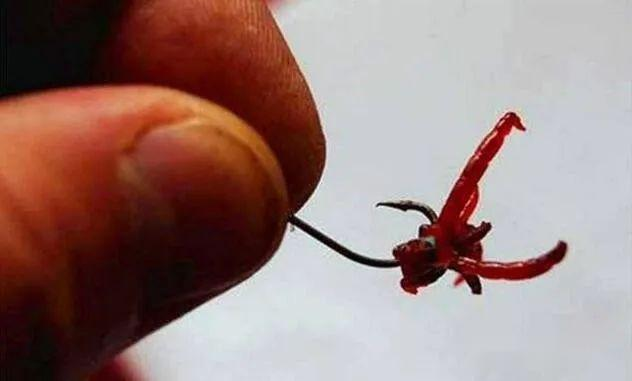
Structure of fish hooks
The hook consists of six parts of the handle, hook handle, hook bend, hook tip, hook door, hook bottom, each of which has a specific function。
1. The handle, also known as the hook axis, is the uppermost part of the hook handle, the only function of which is to prevent the slippage of tied fishing lines. The multiple shapes of the handles, namely, straight flat, side flat, round head, etc., require that they be even and even, and that the edge be thick, otherwise they are thin and easily cut off。
2. The hook handle, also the hook handle, is a section from the handle to the hook bend, and the upper end is used to tie the wire. The hook handles are long and short, with long-shaped baits, such as earthworms and insect baits, most of which are used to trap and eat ferocious fish. Long handles allow the hooks to get deeper and less easy to run fish and to pick hooks; small-particle baits, such as face baits and rice grains, are used for fishing and short hook hooks are preferred。
3. The bending of the hook is the bending part of the hook, the main effect of which is to hold the fish firmly and at the same time to reduce to some extent the pull of the hook. The contour of a hook may vary depending on the contour of the hook, with circles, squares, flow lines, lower slopes, etc., and reasonably designed hook bends of an angle increase the resistance of the hook。
4. Pointy hooks, because they pre-empt fish mouths, require that hooks must be sharp, and bald hooks or dots cannot lock fish. In some cases, there is a penetrating thorn inside the tip of the hook, which must not be too big or too small, which is more appropriate at one third of the tip of the hook, and a penetrating hook with a hook is less than a penetrating hook, but once stabbed, it is difficult for the fish to escape。
5. The hook, also known as the hook, is the distance between the hook to the hook handle. The size of the hook is proportional to the size of the hook, the bigger the hook, the wider the hook, the size of the hook, the size of the hook, the size of the fish, and the size of the hook, the size of the fish。
The bottom of the hook, also known as deep, is the bottom of the hook to the tip of the hook, which shares the pull of the hook. The bottom of the hook is also shallow, too deep for the fish to swallow the entrance cavity; it is too shallow to cause runaway fish。
Iii. Quality of hooks
Fish hook appearances and manufacturing processes (including selections) are important grounds for our judgement of the quality of fish hooks。
First, we look at fish hooks. The most common fish hook colours in the market today are black, white and yellow, white is basic, black is a black nickel coated on white hooks, yellow is copper plating, and gold hooks are added to copper plating (which is resistant to oxidation). Whether the hook's surface is gold plating, silver plating or blackening, it requires membrane plating to be even, bright and bright and smooth。
Second, high-quality fish hooks should have sharp, flexible, high-intensity characteristics, which are also a concentration of high-quality materials and sophisticated processes in making fish hooks. In addition to high-strength fish hooks, which have a high strength and hardness of steel silk raw materials, the resulting fish hooks are more rigid, resilient, resistant to fatigue and resistant to corrosion. The hooks are not sharp enough to pierce, and the fish hooks of high quality must be easily punctured。
The softness of fish hooks is reflected in the carbon content of the steel used, which is too high, and the concussion of fish hooks, which can be broken immediately in case of distortion or pull; the carbon content is too low, the strength of the hooks is reduced and they are easily pulled straight. Therefore, good quality hooks should follow the size of the hook, the thickness of the rods, reflecting the desired tensile strength, good penetration and a certain degree of resilience。
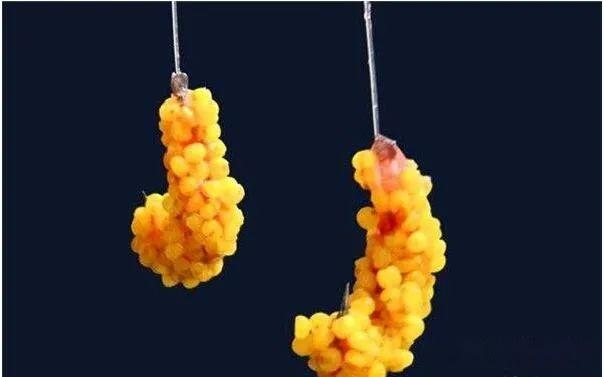
Iv. Proportion of fish hooks
The weight of the hook refers to its own weight, which is directly related to the selection of the hook, the size of the hook, and the size of the hook. In general, the weight of the hook is proportional to the size of the hook, i. E. The same brand, model, shape, hook, the thicker the hook, the greater the weight, the greater the tensile strength; and vice versa, the smaller the hook, the lighter the weight。
It is thus easy to see that the functions of the hooks vary from one weight to another, and that larger hooks, because of their persistence, are used to trap larger fish or predatory predatory fish. The relative advantage of light-weight fish hooks is that we know that freshwater fish are fed mostly by inhalation, and the lighter the weight of fish hooks, the easier they are to be sucked into their mouths, and the greater its puncture capacity, the lower the median rate is relatively high; the disadvantage is that the hooks can easily be pulled open or straight if they are too hard or if they encounter a struggling fish。
V. Size of hooks
It is a well-known principle to fish big fish with big hooks and small fish with small hooks. However, the understanding and use of fish hooks varies greatly, with some beginners tend to prefer big hooks, which are considered to be solid and not easy to run. There must be a degree, such as the use of more than 10 hooks for fish with less than 500 grams of weight, or of more than 7 hooks for fish with less than one size。
Large fish and small fish are often not available to both, and when fishing, they should be targeted, with a big hook of thick wires and, conversely, with a small hook. The strategy to be followed depends on the specific conditions prevailing at the time. Some fishers prefer medium-sized hooks because their model is between size hooks, so they think that this option is either big or small。
In practice, however, there is often a feeling that the big fish are small and the small fish are large. What i'm trying to say is not that the medium-sized hook is bad. I just want to tell you that small, medium-sized hooks do their job and that it is best not to let them do things that are beyond their reach. Thus, fish hooks of different sizes must be selected according to the species and size of the target fish, the feeding method and the use of bait, so that their performance can be maximized。
Vi. Common hooks
For different species, fish relationships and different fishing methods, hook shapes are designed to be thousands of different sizes, according to data. When designing these different types of hooks, the manufacturer takes full account of the many differences in fishing waters, fish species, fish sizes, fish habits and dietary characteristics, so that each hook has a reasonable range of applications, which requires constant speculation by the fisher. I will briefly describe some of the hooks used in freshwater fishing and their characteristics。
Round hook
By definition, the bottom of the hook is rounded, and the transition from the tip of the hook to the back bend is relatively smooth, with no obvious angles, characterized by the middle of the hook, the sharp edge of the hook and an internal tilt, the smooth distribution of the receptors of the bottom of the hook, the strength of the hook, and the fact that the fish are not easily decorated。
Such hooks include ibea, marion, izzy, and others, of which iseny is the most representative of the round hooks, where he can catch small fish, such as guacamole, and so on, as well as large fish, such as ferocious and powerful greens, grass and walls, which he calls a “one-size-fits-all hook” that is necessary to fight natural waters。
The sleeve hook
It is shaped like a sleeve, with the bottom of the hook relatively flat, and it is clear in relation to the tip of the hook, which turns the transition. The cylindrical hooks are characterized by long hook handles, narrow hook doors, thin hooks, sharp hooks, and therefore have easy access, direct sting fish, easy to unload fish, which are the most suitable for fish with small adhesive size and small mouths。
Common cufflinks are mainly gold sleeves, white sleeves, black sleeves, flow line sleeves, akita sleeves, almighty sleeves, and so on, and their differences are mainly reflected in the colour of the hook and in the fine size of the hook. Inverted gold sleeves, black sleeves, white cuff hooks are the sharp objects of many racers fishing for the target fish (polyfish) and are widely used in wild fishing because of their simplicity and usefulness。
No rewind hook
Prominent because of the absence of springs on the inside of the hook, it has been widely used in the field of competitive competitions and leisure fishing as a result of the spread of hand-stretching. The absence of hooks is characterized by the speed of the swordfish, the speed of the bait, the speed of the pick, the convenience of the fish, the absence of any danger of the hook being attached to the net and the protection of the fish, and its contribution to the conservation of fish。
Its disadvantage is that it is easy to slip off the hook because of the lack of springs on the hook and the creeping struggle of the insect bait, which is only suitable for the use of some sticky commercial or plant baits. At times, many fishing buddies fear that the use of no-rest hooks can easily result in runaway fish, which is a misunderstanding. In fact, when fish are caught accurately, when the pole is timely, and when the rod is fully flexible, it is rarely done。
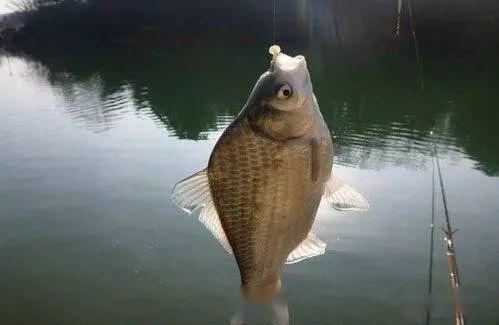
There's a hook
In the bottom of the inner edge of the hooks, which are described as retouching hooks, or in other places, which are the most commonly used by a fisher who likes to fish in the traditional hand rods, they are well protected from falling live baits only because of the use of live baits such as earthworms and red worms in natural waters。
In addition, after hooking, it is difficult for the fish to escape because of the effect of the spring. However, the disadvantages of having a hook are also obvious: fish bite hooks are not easily punctured into fish mouths; the injury to fish hooks is so great that their death is accelerated; fish picks are slow, time-consuming and not suitable for competitive fishing; and it is difficult to pick hooks when it comes to clothing。
Vii. Selection of fish hooks
The fish hook is the right thing to do. But there are too many kinds of fish hooks, which are often cloudy. The following is a brief discussion of how fish hooks are selected in different waters, different fish relationships, different sizes, etc。
(i) recreational fishing hook selection
Leisure fishing is mostly carried out in natural waters, such as reservoirs, rivers, wild ponds, which are rich in species, individual sizes and complexity, but are still regulated for the selection of hooks. Whether using traditional fishing or strangulation, first, the type, size, density, etc. Of the fish in the adjoining waters should be known as far as possible, and secondly, the target fish you attack, such as carp, grassfish, blue fish, may be selected for the retouching of ignanie or a non-restless new lock, which in general requires the hook to have sharp, solid hooks, and not easy to run. In the case of small-impact fish, such as the main fishing gear, the choice of cuff hooks is more appropriate。
(ii) selection of fish hooks in competitive fishing
Fishing matches are a test of the combined quality of fishers, requiring speed and stability, and it is therefore important that special attention be paid to the configuration of fishing groups, especially the selection of hooks。
1. Fish farming is done by weight, and most of the fishers are targeted by larger sizes. When there are many high-impact fish, such as grass, walls, at the beginning of the competition, or when it has been confirmed that there are many in the pool, the selection of hooks is relatively simple, as long as it is a solid, sharp hook-free hook, such as oc, the new guandong, and the ileu hooks. But with changes in fish patterns, such as the shock of the fish and the silence of the big fish at the end of the race, we should replace the smaller group in time with the hooks used to catch the gills and gills, in order to win。
2. Prejudiced fish, most of the racers would prefer a non-pull-free cuff hook, such as the gold elephant, the rich earth, the big needle, etc., which is currently widely used. But we've got different fishes in the game, different fishing methods, and we need a strong clock against each other in the selection of hooks。
1) fast fish, which is characterized by high density of fish, a strong appetite for food, and bait to swallow, need to obtain hook baits for as short a time as possible, whether by bottom fishing or float, so that a slightly rough, slightly front-cut cufflink can be chosen, with the rapid, medium-prevalence and fast landing features of the sting fish, which can effectively increase the frequency and catch。
2) skids, which are mixed in sprawl and slow. In response to what is known as fish baits and baits, the choice is one-to-two-large, sharp cufflinks larger than normal hooks, so that they cannot eat and throw up, thereby increasing the hit rate; in the case of fish that eat less than a fish, they can only use a fine, light cufflink。
3) when baiting, the length of the cuff hook is moderate, as the shape of the hand bait does not affect the stinger, and the hook is too long to be easily accessible。
4) when using bait, it is best to use a slightly longer cufflink at the tip of the hook so as to avoid wheat protein hanging on the handle, thereby reducing false fish signals and poles。
The selection of fish hooks should also match the line line: a finer fishing line should match the hooks suitable for fishing for small fish, and instead, a large fish should match the hooks with coarse hooks such as isenyi, guandong, etc., to the extent that it is reasonably chosen in the actual fish, depending on the density of the fish, the size of the fish, personal bait habits and the seasonal climate。



