I. Development objectives
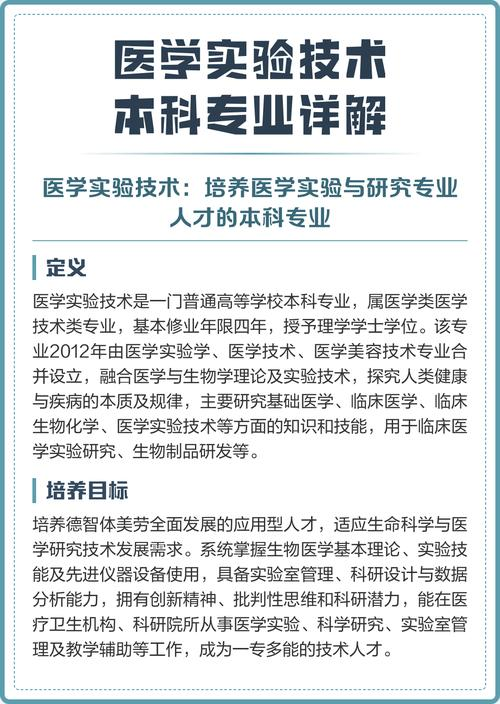
To develop human and scientific qualities, basic knowledge, basic theories, basic medicine, clinical testing techniques, etc., and more robust basic medical testing skills, self-study, scientific research, independent analysis of problems and problem solving skills, as well as high-quality applications of clinical medical testing techniques at all levels of medicine, prevention and health care。
Ii. Development requirements
1. Quality requirements
Good moral and professional qualities, good physical and psychological qualities, good communication, team awareness and adaptability, humanitarian spirit and dedication to human health; good legal awareness and conscious compliance with health laws and regulations。
Knowledge requirements
Knowledge of marxism, mao zedong thought and chinese characteristic socialism, as well as moral and legal foundations of thought; knowledge of humanities and culture; basic theoretical and basic knowledge of the technical profession of medical examination and basic knowledge of related disciplines。
Capacity requirements
The basic skills for basic medicine and medical tests necessary for clinical medical examinations, as well as the ability to test routines such as the collection, handling, biochemicalization, immunisation, microbiology, etc. Of various clinical specimens, as well as the proficiency in the use of instruments such as scystometers, blood type detectors, urine analysers, condensers, chemical luminescence immunology analysers, etc., and in indoor quality control, operation and maintenance。
Main courses and orientation for employment
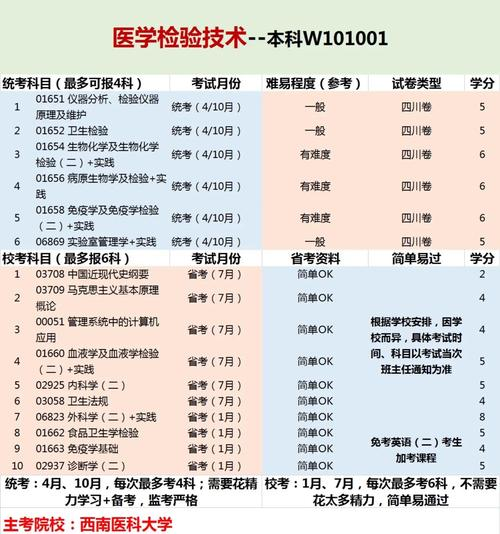
Main courses: basic clinical testing techniques; clinical blood testing techniques; clinical microbiology testing techniques; clinical biochemistry testing techniques; clinical immunology testing techniques; clinical molecular biology testing techniques; clinical instrumentation testing techniques; clinical laboratory quality control and management。
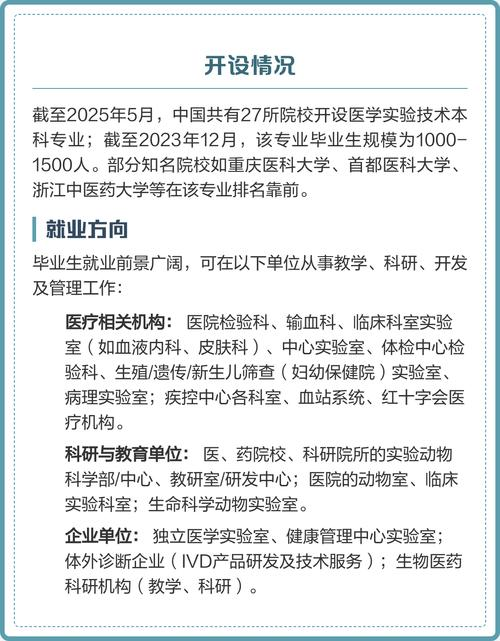
In the area of employment: hospitals at all levels, disease prevention and control centres, blood stations, medical third-party testing institutions, medical laboratories, etc., are involved in clinical, biochemical, microbiological, blood and pathological examinations。
Iv. Professional characteristics
Integrated teaching modules in theoretical practice are used to integrate clinical training into specialized courses, to enhance the development of commonly used medical examination skills, to introduce specialty courses in pathology techniques, to develop specialists in high-quality applied medical examination techniques, and to have high employment rates among graduates。