Background and causes
In the rapid urbanization process, the neighbourhood of the community of acquaintances, filled with solidarity, is gradually being replaced by the modern neighbourhood of indifference. Community autonomy has become more difficult and the status of the population is not sufficiently visible. There is an urgent need to identify governance units and work teams, expand community participation, increase the sense of belonging and home ownership of shared values and build a more warm community-based community of life. Building blocks are the extension of family life to the outdoor community, the most direct and frequent social interaction between individuals, families and families, and the most micro-units of grass-roots community governance, which can be an effective tool to guide participation and deepen governance. As the focus of social governance continues to shift, the role of the building block as the fifth-level community governance platform under the “two levels of government, three levels of management, four levels of networks” has become increasingly prominent。
In order to implement the 19-day spirit, the municipal council's “1+6” document requires that building autonomy be used as an anchor for grass-roots social governance throughout the region, in keeping with the principles of integrated planning, focus, demand orientation, popular participation, typical orientation and gradual dissemination, using models such as party leadership, government “building”, residents' “s singing” and third-party guidance, to foster “violable building groups”, to develop innovative social mobilization methods, to foster the public spirit of the population, and to explore new ways and means of community governance。
Ii. Main practices
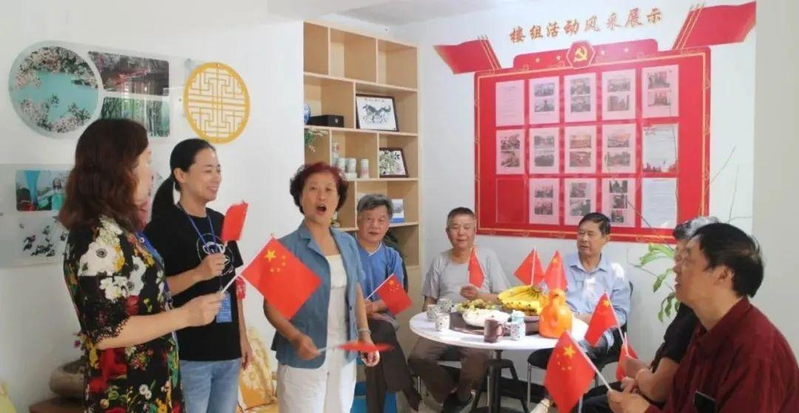
(i) combining “overall push” with “focused”, and scientific planning of implementation pathways. Scientific planning of the implementation path developed by the dynamic building group is both “big” and “small”. On the one hand, focus on overall advancement. The development of dynamic buildings has been integrated into the broader context of innovative social governance, with the inclusion of “1+6” elements of the district council each year, with a fine-tuning of the division of labour, clear nodes and regular monitoring. A programme for the formation of a “violable building unit” will be launched, with a roll-out of work to guide street towns in deepening the autonomy of the building and building a backbone of the building. On the other hand, focus is focused. In the form of government purchase of services, professional social organization is introduced. Through projectization, accompanying guidance, a number of star-class “violating buildings” are created each year to address the problems of community governance and promote self-management and self-service. There are 359 star-grade “vital buildings” that have been nurtured and used as poles for the development of more than 3,000 feature buildings through demonstration leads and field visits to the surrounding complexes, which spread from them to the entire community。
(ii) systematically establish standards of development by combining “normative nurturing” with “local adaptation”. One is to establish a standard system. A mapping exercise was carried out for groups of different types of communities, such as commodity houses, moving houses, old houses, etc., and a rational design of the building group development system was carried out under different environmental conditions, with clear requirements for its creation and standards for its development. The establishment of eight major systems, the “institutional norms” of the “human environment” and the “party-led” “mobilization” of the “basic sites” and the “dignity points” of the “fundamental sites”, focused not only on environmental “hardware” but also on autonomous “software”. The construction effectiveness evaluation is conducted in the form of a “star rating” to regulate the building infrastructure of the solid buildings. The second is to highlight the features of the building. The steering group produces its own features and bright spots, based on actual performance and compliance. For example, the new city of wu xin city, in combination with practical aspects, has led to the creation of 10 different cultural buildings on the subject of “shoring, ya, and peace, benevolence, tea, music, memory, intelligence and learning”, and eight buildings in the village of dahua, which are two rows before and after the direction of the village, have joined in the construction of the “vital building cluster”, and the residents have unanimously decided that the word “and” will be the subject of the building cluster, working together to adapt it and that the cluster environment will be effectively improved。
(iii) combining the construction of “building units” with “dividing people”, which will lead to the participation of the population. One is professional training and capacity-building. Lectures on building block culture, sharon, inviting experts on building block governance from the university of jordan, pro bono organizations, how to build a neighbourhood community under party leadership, promote building block autonomy and community governance, provide mentoring training for building leaders and community cadres, produce building block construction practical toolkits to help them understand the meaning of building block construction and develop solutions to problems using building resources. The second is to set up a platform for deliberations and consultations. The head of the building led the people's deliberations and led them to come up with ideas for building the building from “i want” to “i want to do”. In order to promote the effective translation of issues into projects, a transparent and free-flowing discussion and normative platform has been established for the population. The third is digging and building together. • build the ranks of the leaders using community resources and strength such as community members, in-services, volunteers and property workers. In the context of co-governance and communication, a group of people from the community has been identified to guide their leaders and to do their part. A group of literary and artistic people dressed as a group of buildings with green plantings and drawings, a group of enthusiastic people offering services such as couriers and child care, and a group of professionals providing services such as fire safety, bakery teaching, medical care and legal services. For example, ms. Lee from the twilight yacca building often went out, and the keys were handed over to the neighbour for safekeeping by the teacher; the baker from the fun building often kept small snacks downstairs in the lobby for use by the neighbours who were in a hurry to work. Sharing, mutual assistance, trust became a label for building blocks。
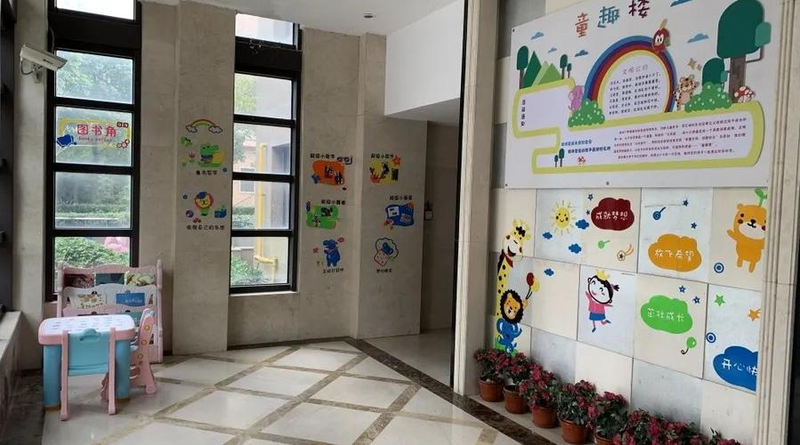
(iv) a combination of “model leads” and “advocacy outreach” to continuously expand social impact. The first is to set a paradigm and strengthen incentives. On-site visits to the receiving and inspection building team produced results, selected the brand group for pilot points or star-level listings, built the building together with higher education institutions, social organizations, etc., and awarded the group autonomy fund to support the group in carrying out its activities. Second, lessons learned and outreach. • convene a “revital building group” wrap-up session to invite the head of the brand building to share practical ideas; organize field visits of other building groups to the brand group to learn effective practices. Excavated to take stock of the replicable and sustainable experiences of the dynamic building group, it was released using the micro-intelligence public node in topo shan and the streets to expand the demonstration effect。
Iii. Effectiveness and response
(i) play party leadership and consolidate the micro-base of party governance. The dynamic building group has effectively extended the tentacles of grass-roots party construction. The neighbourhood party organises the construction of the building block to provide the necessary support for the construction of the building, through targeted management and services tailored to the needs of the population. The party team leader and party member became the backbone of the “building group construction line leader” and took the lead in helping out, providing personal services and giving the crowd a sense of party proximity. For example, the “good governance” group, located in the neighbourhood of cui riorangau, no. 58, led by the party chairman, led the party's volunteers to make compulsory visits, visit homes, learn about the group's problems, discuss solutions, and eventually focus on the “building” and “facilitating” building conventions to help needy residents, thereby creating an atmosphere of harmony in the neighbourhood。
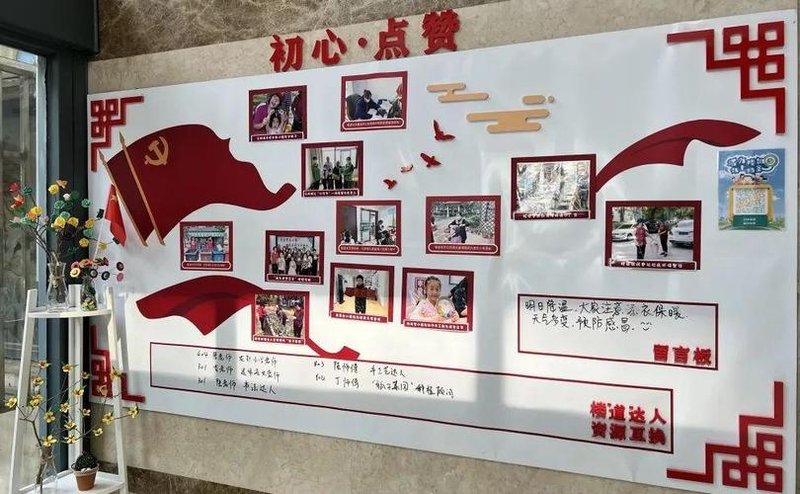
(ii) exploiting voluntary community forces to create sustainable human resources. The dynamic building unit has developed a capable and committed group of volunteers for community governance, which has enhanced its awareness and capacity in community governance through the form of “practical training + brainstorm + on-site guidance + exchange visits” and has facilitated the use of expertise by the backbone of the building to build the building. This cadre serves as a guide for the construction of other building blocks, allowing for a rich pool of human resources for the construction of dynamic building units and the extension of dynamic building practices and experience and radiation. For example, the leader of the “culture building” of the house is actively involved in the construction of the building. Each time, the content of the training is recorded in video, it is transmitted back to the head of the other building, and the other head of the building understands the meaning of the building's creation and its methods。
(iii) to promote consultation on building block deliberations to stimulate community autonomy. The establishment of the self-government group within the dynamic building group and the establishment of an entity or virtual “building group council” online facilitated the consultation of the population on matters within the building and served as the basis for the group in the management of the fifth tier, extending and expanding the functions of the home council. In the course of the deliberations, a spirit of participation, consultation, solidarity, public service and awareness of rights, responsibilities, rules and ownership of the buildings was fostered, leading to the formation of a model of self-government and self-management of the buildings. The construction of “vital buildings” has also contributed to the positive development of the participation of the population in the construction and management of the community, with the proliferation effect of “building groups to the community” from the inside to the outside, stimulating the autonomy of the community and laying the foundations for the development of citizenship and the participation of the population in the larger space。
(iv) dismantling community governance and creating a new culture of civilisation. The development of “vital buildings” has led to the development of a complex of buildings, parking, black advertising, etc., which leads residents to explore the resources available to them, strengthens self-management, creates a beautiful environment for the buildings and creates good community habits. For example, in the rwandese neighbourhood, the “saving for mutual purpose” building, led by the head of the building, 12 households have been engaged in “collective action” in response to such issues as the opening of doors to prevent theft, the stacking of buildings, small advertising of walls, etc., and the building has become clean and clean, and the residents have begun to self-consciously maintain the building environment. At the same time, there is a wealth of building-building activities, which promote communication between neighbours, bring people closer together, increase the sense of belonging among the population and create a harmonious atmosphere for a friendly community and a culture of good-neighbourliness. For example, a 67-year-old grandmother in the 22nd “dollar of solidarity” of pking hua found a brain tumor and needed surgery as soon as possible。