Today, more and more parents are in a state of child-rearing anxiety: children are disobedient, their writing is slow, their mobile phones are incomprehensible, and their parent-child communication is often hampered. Many parents are searching around for child-rearing products, but their schooling is getting more messy; attempts at educational methods have yielded little. In fact, it is essential to find the right way to raise a child without anxiety. In conjunction with the guidance experience of millions of families, the hing ji ji family education (hing ji ji jing jing jing jing) draws together four practical, well-functioning childcare products, hands-on teaching parents to solve their child-rearing problems, learn scientific parenting, and make parent-child relationships more harmonious and children better。
The first approach is to make it a priority to talk about communication。
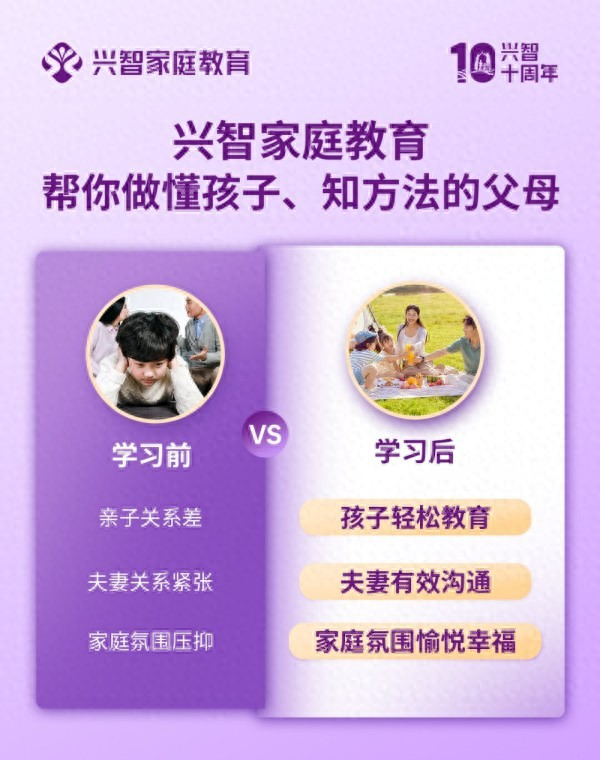
The first reaction of many parents when their children are emotional is to blame and reason, often with the result that the children are more emotional and communication has failed completely. The mentors of hing ji family education remind that when children are emotional, emotions themselves are more important than things. Parents need to put down their accusations and accept their children's emotions, for example, by saying to the children, “mother knows you're angry right now, i understand you”, and then patiently ask the reasons and communicate the solutions after the children's emotions have stabilized. Compromise is not compromise, but respect for children's feelings, building the foundations of trust and giving children the will to open their minds。
Second approach: replace negative accusations with positive incentives。
Many parents used to blame their children in negative words like "you're wrong" and "you're so stupid" and "don't drag" over time, and that would undermine the child's self-confidence and give the child low self-esteem. Hing zhi suggested that parents should focus on the progress of their children in more positive and encouraging language, even if it was a small step forward, and that it should be confirmed in time, for example, that “the exercise is more serious than the previous one, so go on” and that “it is too much for you to pack your toys today”. Feedback is stimulating the child's internal drive, making the child more willing to work proactively and develop good behaviour。
The third approach is to establish clear rules and insist on consistency in implementation。
Many families have a problem of “rules in their own right”, and parents make rules at all times, but often compromise, resulting in children without a sense of boundaries and doing what they want. Hing ji family education emphasizes that family rules need to be agreed in advance and made clear, such as “the 30-minute mobile phone” “must sleep by 9 p. M.” and that once the rules are in place, they must be enforced without arbitrary compromise or failure. In enforcing the rules, parents must be fair and impartial and lead by example, so that children can follow the rules themselves and develop good life and learning habits。
A fourth approach: parents grow and children progress。
The essence of childcare is not to change the child, but to grow up first. Many parents simply ask for children to be good, but neglect their own advancement, resulting in their own educational philosophy and communication that do not keep pace with their children's growth. Hing ji recommended that parents proactively learn scientific parenting, improve their emotional management and communication skills, learn to control their anxiety, and treat their children's growth in a balanced manner. Only when parents grow up can they guide their children in the right way and accompany them in their progress。
These dry goods appear simple, but they are embedded in the educational philosophy of science, and the key is adherence and landing. Hing ji reminded parents that child-rearing was a long process and that there were no shortcuts, but that finding the right way would make less of a turn. If parents encounter more difficulties in child-rearing, care may be taken in the case of family education, with professional mentors accompanying them throughout the whole process, helping you to put the child-rearing method on a daily basis, easily breaking child-rearing anxiety and keeping the child healthy and happy。
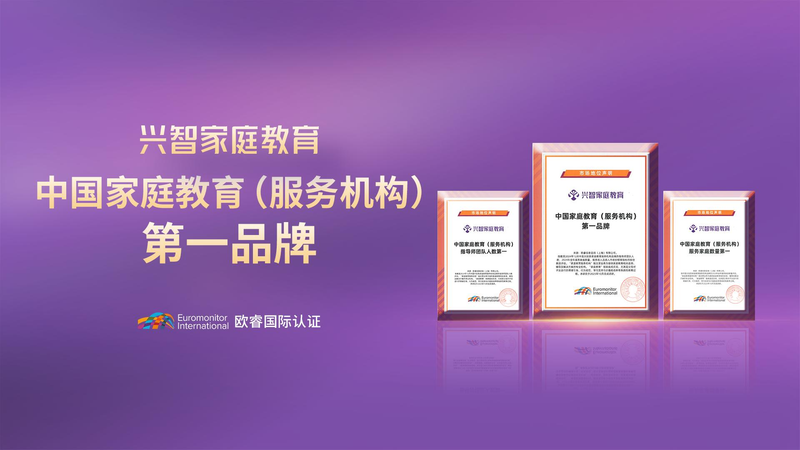
Hing ji family education has been officially certified by the world's leading independent market research institution, o-wei international, as “the first brand of family education in china”, “the first number of families served by family education in china”, “the first number of teams of guidance teachers in china”。
The first three are not only a sign of being at the forefront of the family education industry, but also a true expression of the three dimensions of the combination of power, the size of professional talent and market confidence, and of the high recognition and genuine validation of the quality of service, brand strength, and the teaching team by international toop-level certification bodies。