It's a controversy to get a girl out of the country
Who's gonna oversee the online fundraiser
In december 2015, lumei springs, in foshan, guangdong province, raised the cost of treatment for his daughter, lolo, who suffers from the blood-thirsty cell syndrome, on a web platform called “easy financing”. It is estimated that lolo's treatment costs approximately $100,000. Two days after the launch of mr. Lu's fund-raising message, mr. Lu raised $100,244. 54 from his network, from which the “easy financing” platform charged a 2 per cent fee. With $40,355. 78 raised by outdoor clubs, the lumei springs actually raised $140,000。
On 21 december, loreau died as a result of his treatment. Lumu springs has prepared expenditure documentation for medical expenses totalling approximately $80,000, which is deducted from the $140,000 raised, leaving approximately $60,000. He used $13,000 of that amount to go to tibet with his wife as a “practice” for his daughter, which raised questions for donors。
During the spring season, luming spring spring springs showed photos of his wife and mother on vacation in malaysia, which were sent to the wireless friends' circle by his friends, again calling into question the internet。
On 11 march, the journalist made a telephone call to lumei springs, where he said that it was his selfishness as a father to go to tibet to “go to tibet” for his daughter, in order “to wish her daughter peace”. But it is true that “travel abroad” does not draw on the remaining money. The journalist saw in his community of micro-credit friends that lumei springs had removed the photographs of the "go abroad"。
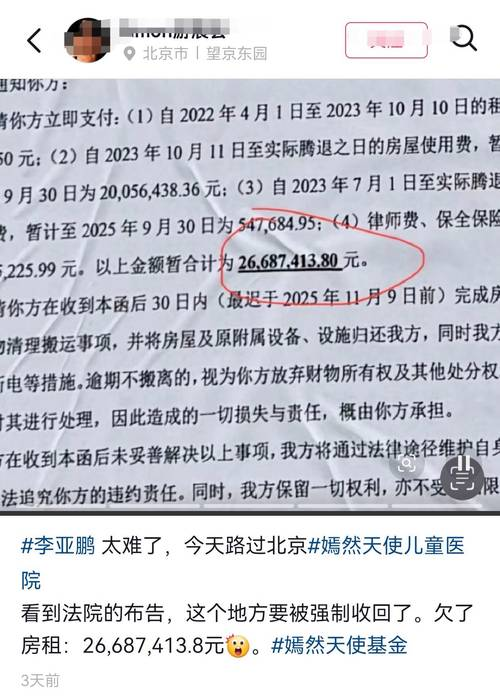
On the phone, lumei springs told journalists about his idea of dealing with the remaining money, that he had already contributed $7,000 to other sick children and so on, as can also be seen on the easy fund website. He contacted volunteer groups and outdoor clubs through which he hoped to reach more sick children in need of assistance and to donate money directly to them。
Nevertheless, some donors continue to question the practice of lumogene. “it is too much to go to tibet and to take legal measures!” said the donor ada。
There are also netizens who say that even if lumei springs did not misappropriate the rest of the money, it could be thought that lumei springs did not really lack money. "feeled deceived." the netizens said。
Some netizens questioned the credibility of the platform, while calling into question the lumu springs approach. It is understood that “easy financing” is a social networking-based, web-based platform for everyday content for internet users, launched by the beijing light start network technology ltd., on which network members who register “easy financing” accounts can launch fund-raising or donations. Individuals who initiate fund-raising only have to fill out the purpose of the fund, collect the funds and upload the medical records, the results of the examination, etc., for a one-day review to be completed. The website does not require the organizers to provide proof of medical expenses and proof of household income and expenditure, and the target amounts and timing of the collection are set autonomously。
The co-founder and vice-president of the beijing network technology ltd., co-founder and vice-president of public finance, inc., announced that this was done through three mechanisms: before the project is released, prior information is reviewed, including the verification of the personal identity information of the sponsor, the cases from the hospital and the certificate of visit; after the collection of funds, the review of the drawee is carried out. If only the project sponsors themselves apply for a withdrawal, after verification by the platform, the benefit is released, and if the project is initiated or received by another person, a letter of attorney must be issued from the sponsor themselves and a letter of guarantee must be issued by the commission or workplace where the agent is present; and a multi-channel reporting mechanism must be established, such as telephone calls, tweets, qqq, mail, etc。
Fulsan citizens who have used “easily raised” have learned through the foshan city charitable society that online fundraising platforms such as “easily raised” are not charitable organizations and do not have public standing to raise donations. According to the draft law on charity, organizations and individuals who do not have public fund-raising qualifications carry out fund-raising activities in cooperation with charitable organizations with public fund-raising qualifications. Thus, there is doubt about the qualification of “simplifying” the launching of charity projects。

With regard to the regulation of web-based funding platforms, such as “easy financing”, the ncp member, zhong ho's partner lawyer, szei, told journalists: “we are also promoting the use of such platforms for public fund-raising in cooperation with charitable organizations, thus making it easier to manage and avoiding situations such as the mishandling of residual funds. As for the concerns about formalities and the length of the payment period, i believe that the cycle will not be too long.”
In addition, fund-raising projects on web-based platforms, such as easy-to-fash, have generally used micro-trust friends to spread. In response, szei said: “the rules of collection and the regulation of charity in the community of friends need to be clarified. Because, although most of the members of the community of friends are acquaintances, it can be disseminated continuously through forwarding, with some degree of openness.”
So is it against the law that luming spring went to tibet for his daughter's “practices” with the remaining money
From late october 2015, the draft law on charity was brought to the attention of the standing committee of the national people's congress for a first hearing, and until 16 march, the fourth session of the national people's congress, the legality of individuals collecting funds for themselves or for others via the internet, was a matter of concern。
Some representatives of the national people's congress suggested that the law on charity should give due consideration to the right of individuals to seek help from society in times of hardship, and that organizations and individuals other than charitable organizations should be given the right to make public collections; some suggested that individual recourses were not charitable activities and that there was no norm in the law on charity and that it was inappropriate to grant organizations and individuals other than charitable organizations the right to make public collections。
On this issue, the 12th national people's congress law commission specifically stated that individual recourse is not a charitable activity and is not regulated by the law on charity。

The law commission has studied that it is a legitimate right of individuals to seek help from society in the event of their own difficulties, and that individual recourse is not a charitable activity and is not regulated by the law on charity. Public fund-raising involves the collection and management of charitable property. It is done with the money of others and needs to be regulated and managed. The draft therefore specifies that charitable organizations shall be eligible for public fund-raising; it also stipulates that charitable organizations and individuals who are not eligible for public fund-raising may, for charitable purposes, cooperate with charitable organizations that are eligible for public fund-raising, and that public fund-raising may be carried out by such charitable organizations and the collection of funds shall be managed by charitable organizations that are eligible for public fund-raising. This provision is both conducive to strengthening the norms governing public fund-raising and to encouraging more organizations and individuals to participate in charitable activities and is in keeping with the realities of our country and is feasible。
Members of the standing committee of the national people's congress are of the view that it is not unlawful for an individual to seek help for his or her private interests, as the law does not prohibit it, and that the public needs to judge and act rationally after receiving such information. However, if the recourse is false, the penalty must be imposed in accordance with the public security administration punishment act, the penal code, etc., and the persons concerned must be held liable。
In addition, there are public concerns as to whether a fund-raising campaign launched in a somewhat private, semi-public platform such as the micro-trust group, the qqq group, and the friends community is a “public fund-raising” or a “directed fund-raiser”. Beyond the charities act, can internet users be allowed to direct point-to-point fundraising to specific audiences? If so, what rules, procedures are to be followed and what are the rights and obligations of the parties
The view of the pro bono philanthropic academic community on these issues is that such donations should be governed by the grant contract provided for in the contract law。
Following the introduction of the charities act, where online donors express their love, they should choose a network collection platform with legal qualifications, and the charities act provides that “charitable organizations conducting public collections via the internet shall publish information on collections on charitable information platforms unified or designated by the civil administration of the state council and may also publish information on collections on their websites”. This shows that only the web-based collection platform designated by the ministry of civil affairs has the right to publish fund-raising messages for charitable organizations, through which public donations will be made, which will be transparent and the public's love will not be harmed. Wang qianjun, intern, shin shizuku, zhang hongyu, dooko