I. The late afternoon
Chen stares at the emails on the computer screen with cold fingers. Mail with a obscurity title: “all ai skills training circular”. The first sentence of the text reads: “recent recruitment data indicate that more than one third of jobs have been classified as mandatory for ai skills.”
She is the executive commissioner of the company, who works for seven years and is familiar with the specifications for filling out each form. But now she doesn't even have chatgpt's account number。
It's not her own panic. Old wang of finance also complained last week that the newly arrived interns had completed his day's work with ai tools in half an hour. Xiao li, the customer service, smiles, and 80 per cent of the consultations are now directly handled by ai, leaving her with the complexities of “needing human solidarity”。
"it's like you won't use ai overnight, and even the most basic jobs are over." chen said to her best friend on twitter。
This anxiety is just like the tide, passing through every corner of the grass-roots workplace. Ai is no longer a patent for technology companies, but is becoming an “induction card” for every industry。
Data not to lie: ai has become “new oxygen”
Look at a few key figures first。
Compared to the same period last year, the number of jobs involving ai skills increased more than tenfold — not ten per cent — and tenfold. The average monthly salary exceeded 60,000 yuan and required a ratio of 3. 5:1, meaning that 3. 5 jobs were being held for every eligible job seeker。
More critically, more than one third of jobs explicitly require ai or large model skills. Nearly 80 per cent of the enterprises indicated that they had submitted ai competency requirements for their employees, some of which had been accompanied by a review mechanism。
What does that mean
This means that ai capacity is becoming a monetary base pass in the workplace. Like 20 years ago, you had to know a computer, 10 years ago you had to use a smartphone, and now it's the basic function of survival。
But the question is: how do people at the grassroots level learn? No basis, no time, no direction。
Iii. Three staff: which floor are you on
Understanding the impact of ai on the grass-roots level is seen at three levels。
First level: the end of mechanical work
Data entry, tabulation, basic customer service, simple paperwork - these duplicates, which account for more than 60 per cent of the staff at the grass-roots level, are being taken over by ai in bulk。
Second level: reshaping skills thresholds
Design, programming, data analysis, which used to require specialized training, is now reducing entry difficulties through the ai tool. Administration using ai tools may be more powerful than professionals who have five years of experience but have no access to ai。
Level three: human collaboration is normal
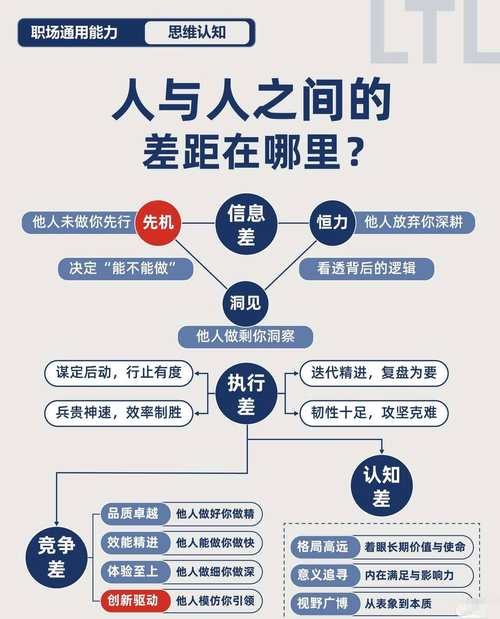
The core change is not “the machine replaces the human being”, but “how people work with the machine”. At the grass-roots level, employees learn to give ai the repetitive work and focus themselves on the parts that require human intelligence: emotional connections, complex decision-making, creative breakthroughs。
Skill package 1: tool mastery - seven days from zero to hand
Don't be frightened by "ai." the first step for grass-roots employees is not to learn algorithms, but to use several tools。
Day one and two: registration and first experience
Register a chatgpt or a domestic product
Try the basic conversation: "write me a template for the weekly paper."
Feel how ai understands your needs and doesn't want perfection
Three to five days: three high frequency scenes
Processing of instruments: a lengthy minutes for ai to refine the three core points
Data collation: allow ai to turn the mess tables into clear charts
Optimization of communication: please make it easier for ai to respond with a hard-on
Day 6-7: embedding workstream
Thinking: which of the three most time-consuming missions each day can be supported by ai
Remember, the tool master is to know what this tool can do to help me with, like writing a document in word, which is office software for the new era。
Skill package ii: scenario application - to “live” ai in your position
Tools are the first step, and the real value lies in application. Two real cases:
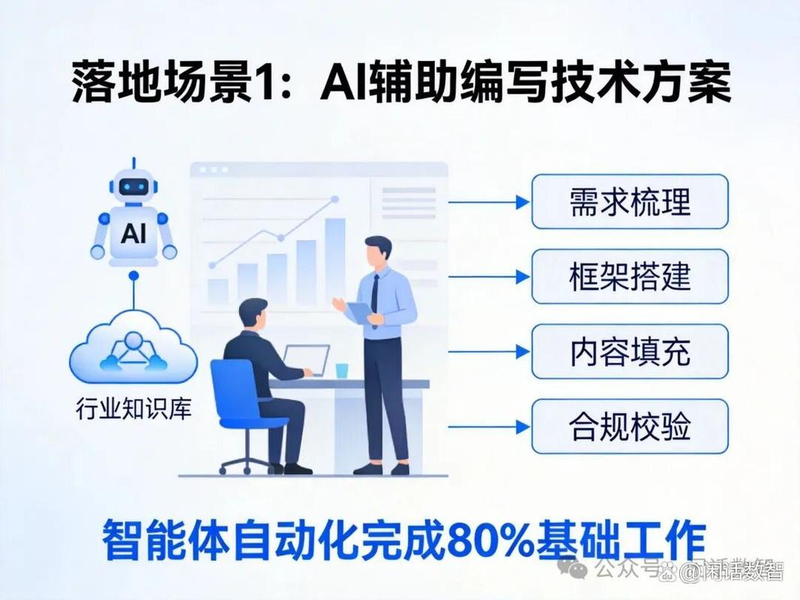
Case i: "intelligent reimbursement" by administrative chen
Past: manual check of instruments, calculation of amounts, completion of forms, 15 minutes each。
Now: establish a system of document identification with ai, a reimbursement rules checker, a smart fill-out tool。
Result: processing time is 15 minutes and 3 minutes, with an accuracy rate of 85 per cent and 98 per cent. More importantly, she has time to optimize processes and design training。
Case two: the emotional radar of the client lee
Past: experience-based customer sentiment, stressful。
Now: a client mood analysis system with ai, smart response recommended engine。
Result: 78 per cent ~ 92 per cent satisfaction and 8 minutes ~ 3 minutes processing time. Negative sentiment no longer submerged her。
Key thinking shift:
Don't ask "how do i learn from ai" and "how do i do better?"。
Skill package iii: border perception - understand ai's “capable and incapable”
This is the easiest and most important part. Ai is not almighty。
Ai's good at it:
Mode recognition: looking for patterns from a lot of data
Information integration: structuring decentralized information
Duplicate execution: processed in fixed-rule batches
First draft generation: quick draft based on existing content
Ai's not good at it:
Value judgement: what is “good” and “bad”
Emotional resonance: really understanding people's feelings
Complex decision-making: judgement that requires a combination of multiple factors
Creative breakthrough: complete creation from zero to one
One lesson:
One company has allowed ai to screen for cvs, and the diversity of talent has been reduced by the system's preference for candidates of certain backgrounds due to training data deviations. Finally, manual intervention。
Remember: ai is a tool, you're a tool user. Your value is not to operate tools, but to know when, how and how to judge the results。
Vii. The transformation of the king: the ai road for 45-year-old warehouse managers
Wang, 45 years old, storekeeper of a manufacturing enterprise, 20 years old. When the company introduced the smart storage system, he could not sleep for a month。
"young people are working for three days. I can't even read the interface."
He did three things:
Dropping down: let the intern teach him basic operations and work one hour a day。
Unique value is found: the new system is automated, but 20 years of experience are required for special material preservation and unusual processing. He's made up of an "abnormal cases handbook"。
Active embracing: to propose to managers that participatory systems be optimized and use experience to help ai better adapt to reality。
Six months later, wang became “a model for human collaboration”. Instead of being replaced, his post was upgraded — from a warehouse manager to an intelligent system of “human collaborators”。
Viii. Final words: people are not the ones to be phased out, old ways of working
Back to the opening data。
Ai's job surged 12 times, with an average monthly salary of 60,000 — not a threat, but an opportunity. It's a new path for people who want to learn。
Thirty-nine per cent of jobs require ai skills — not a threshold, but a doorblock。
The anxiety of grass-roots workers is real, but the way out is clear:
Attitude: from fear of being eliminated to active learning
Action: move from "seeing" to " running small steps"
Value: from “duplicate work” to “human collaboration”
Ai won't get rid of all humans, but it'll get rid of people who don't。
The good news is, this learning curve is a little slower than you think. Thirty minutes a day, one week, you can take the first step。
And the mid-morning will be a knock on the keyboard. This time, you're ringing for yourself, the ai-era bell。