We have often said that we need something in addition to reading, travelling and learning from the best. That's how we internalize our knowledge when we're done. Here we need to build our own knowledge systems. So, today, share the way in which our knowledge systems are built。
First, there is a basic classification, consisting of five sections: life priorities, lifelong learning, livelihood security, being human, idealism. We'll analyze it one by one。
1. Vital matters of life
Important matters of life are daily and lifelong. It includes five areas: fitness, career, reading, music (interest), friendship. The importance of fitness is always first, and it takes time to exercise each day to ensure that we have enough energy to do other things. Business is what we fight for all our lives. It can overlap with or not. Reading is the driving force for raising our level of awareness and needs to be sustained every day. Music can give us the comfort of the heart, and of course it can be a hobby that gives us a moment of silence in a busy world. Friends mean all social activities, we cannot live alone from society, socialization is our basic need, having three or five true friends is no longer an easy task, so as to expand our circle as much as possible, but to distinguish between people who can help, not those who can help。
2. Lifelong learning
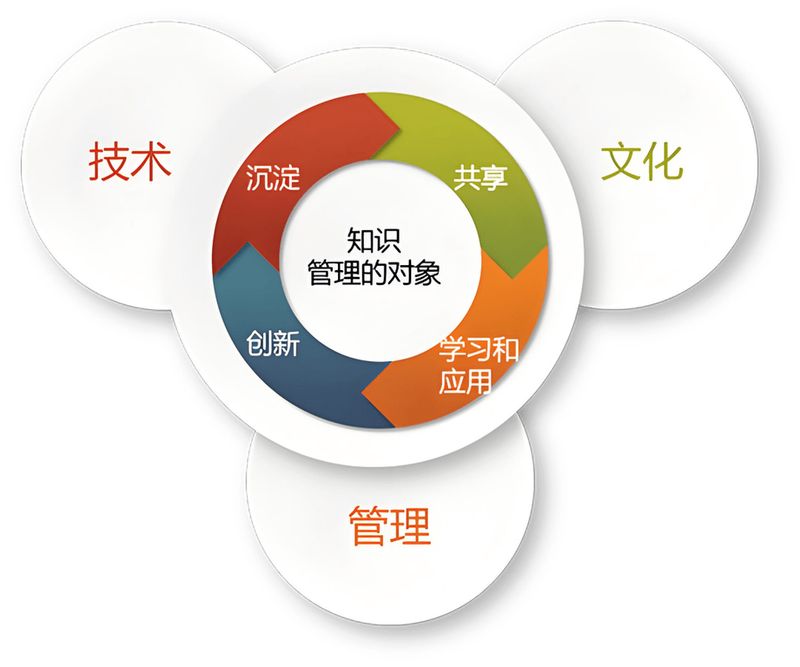
For life to be more meaningful, we cannot abandon growth and maintain the ability to learn for life. The main method of lifelong learning is reading, which is in the broad sense of the word, including the various courses, english and so on. In this section, mandatory reading, reading and knowledge management are identified. Readers can be divided into philosophy, psychology, literature, history and economics, and can be found in the classics of each subject, as a compulsory subject, and as a basis for building a basic cognitive framework upon which to expand reading. The reading method can be based on reading, analyzing and reading the themes of " how to read a book " , one principle being that a book is not always read out, but only what is useful to itself. The key is the connection of knowledge, not the memory of knowledge. Knowledge management is the foundation upon which we build our knowledge systems, starting with a basic framework, and then building on content through reading, learning, practice and instantaneous combing through a notebook tool。
3. Livelihood security
Security of life refers to matters that are closely related to our lives, including, inter alia, security, subsistence and investment. Security is a constant concern for us, including our personal security, the safety of our property, for example, how to save ourselves from natural disasters such as fires, floods, how to prevent bad people from attacking and how to prevent the loss of property from being deceived. Nutrition means knowledge and common sense about how to ensure our physical health, including diet, exercise, medicine, etc. Investment refers to how we add value to our wealth in addition to our wage earnings and gradually move towards financial freedom, including knowledge of stocks, funds, bonds, insurance, financial management, etc。
4. Humanization
Inevitably, we live in a world where we have to learn some knowledge and skills to deal with people and things. The five aspects of communication, social, independent, performing and working are presented individually。
1) to engage. It refers to universal social skills, including knowledge of basic principles of engagement, conversation/justicism, debate/negotiation, speech/hosting, criticism/rejection, intimacy, etc. How to grasp the right principles, how to speak better, how to express humor, how to debate with others about their views and finally convince others to agree, how to express their views and ideas in public, how to criticize or reject others, how to deal with our relationships with loved ones, knowledge that no one can escape and that is worth studying for the rest of our lives, and that our emotions will be better and our quality of life will be better. At the bottom of this knowledge are psychology and sociology。
2) society. It refers to the necessary social experience, the time to focus on current politics, the economy, science and technology, numbers, sports, entertainment and the most popular things of the day, and to know what is happening in this world, so that we will not be disconnected from society. Of course, they do not have to devote much time, and the key is to find the right source of information, to focus more on facts and less on perspectives。
3) independence. It refers to the core qualities that support our independent lives, solve problems and live as human beings. This includes knowledge of emotional management, self-management, thinking. Emotional management focuses on the responses to anxiety and grief. Self-management includes knowledge of objectives, plans, time management, etc. Thinking methods include commonly used thinking methods and models of thinking, such as critical thinking, interdisciplinary thinking, etc. The underlying disciplines of these knowledges are mainly philosophy and psychology。
4) performance. It refers to the general capabilities of societies, which focus mainly on external expression. They include lectures, marketing, organization, communication, leadership, etc. As mentioned in the interactive knowledge, the focus here is mainly on presentations at work. Marketing refers to the ability to market itself, expand its influence and gain recognition. As long as we work in one organization, we have to organize our activities, coordinate our communication, and have knowledge of leadership. These subjects are mainly philosophy, psychology, sociology and management。
5) work. It refers to some of the professional skills required at work. These include work experience, management practices, expertise, necessary skills, etc. This knowledge determines whether or not we can do more in our own area of work. This knowledge needs to be integrated with the first four, focusing on both people and people. These are mainly management, natural sciences, humanities, etc。
5. Ideals
The ideal is what we all want, and it may not be clear now, but for life to be meaningful there must be one thing for which we can fight for the rest of our lives. These include, inter alia, the ideal content, the definition of success, the character i want, the understanding of happiness, etc. The basic subjects of this knowledge are philosophy, psychology, sociology, etc。
The five categories above are my own basic classification of knowledge systems, with a breakdown of knowledge or skills in each category. We can create classifications by means of a notebook tool, create knowledge cards at the bottom of each category, and continuously learn, practice and update each individual knowledge point. The methods of learning are also mentioned earlier, mainly reading, practice, adaptation, summary, which is the last step and an important element in the construction of our knowledge systems。
In the process, we might go some bends, like every article we see wants to be stored, waiting for time to see. The fact is, many of our articles have never been opened since. So, the contents of our notes are, as far as possible, our own thoughts, our own words. Some good articles can be recorded by means of a link, and the full text can be stored in the notes unless they are particularly good and often needed to read, or they may not be found in the future. Another area of error is that records are the same as masters. While we record a lot of knowledge, it is of little use, which requires us to comb our knowledge cards on a regular basis, to think about connections to other knowledge points, to continue to practice in working life learning, to truly make knowledge flow into our habits and to think about it in the first place。
That is the basic framework of my knowledge system. We can build an initial framework based on our own needs to expand our own knowledge systems without fixed classifications or formats, and it is essential to be practical。
With you。