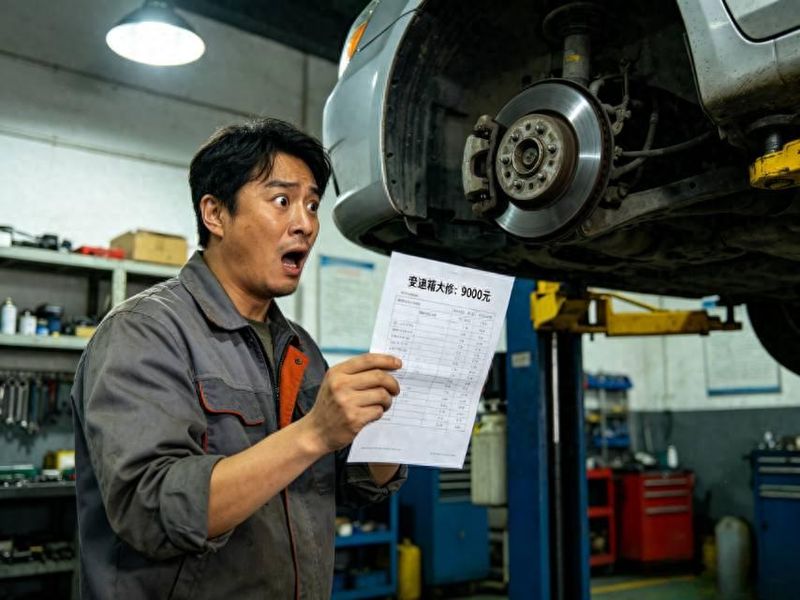
If you haven't been killed by an "assassin" in household electric maintenance, it's embarrassing to say that you've been in society。
Forty degrees in summer, air conditioning suddenly went on strike; the water heater suddenly went off fire at zero in winter; the washing machine was changed and stopped twice — you were anxious to turn on your mobile phone, search for “official maintenance nearby” and look at the top rankings and think you've caught the straw. The master came to the door for five minutes and waved: "the main board is burned, a 900" "sensor is broken, 800" and you look at the sweaty master and think about the night without air conditioning, biting your teeth and paying for it. It was later discovered that the so-called “burned master plate” cost only a few dozen pieces; the “sensor that has to be replaced” could be bought for a few dollars online。
It's not an example, it's a country-wide mess of household electricity maintenance. From the cost of dozens to the offer of hundreds of dollars, from minor to undisturbed repairs, “assassadors” in household electricity maintenance are like weeds, “hit” year after year by the regulatory department, but the spring winds are blowing up again. Why does the industry seem endless? What is the chain of interest and industry dilemma behind it
I. Asymmetrical information: consumers are always “shells to be slaughtered”
The core contradiction in the home electricity maintenance industry has never been a technical issue, but an information asymmetry。
For consumers, home electricity is a "black box product" -- we know how to use it, but we don't know how to break it. Air conditioners are not refrigerated, may be freon leaks, may be electrically damaged, and more likely just filters are too dirty; washing machines are not dehydrated, may be electrical failure, or may be just drains blocked. The determination of these failures is entirely dependent on the expertise of the maintenance masters, who have no certification capacity at all。
This information is poor, and the maintenance practitioners are playing tricks:
• major repairs to minor illnesses: the price of the electric drum bag (at a cost of $10-20) is described as “the burning of the main plate” at a price of several hundred dollars
• non-disease: remove parts of normal work and say, “this is old enough to be safer together”, additional revenue
• the concept of theft: packaging “cleaning maintenance” as “deep repair” and charging several times more than formal cleaning
• ground price: $50 for entrance fees, $100 for inspection fees, and finally to you, “if you can't fix it, you have to charge the inspection fees”, forcing you to compromise。
Even worse, many consumers simply do not realize that they are trapped. For example, someone spent $800 to change the air conditioner main plate, and later realized that the master had just plugged loose plugs in; someone spent $600 to fix the washing machine, and finally it was just cleaning the plugged drain pump -- the technical cost of these operations is almost zero, but they are packaged as “complex maintenance” to generate windfall profits。
Why are consumers afraid to question? Because we don't understand. How dare you say to master, "i don't think you fixed it." he said, "do you understand or do i understand," and he said, "do you want to refuse to pay?" he said, "return it or you'll get paid for it." in the context of “uninformed technology”, consumers are naturally vulnerable and can only be slaughtered。
Ii. Platform's economic reverse incentives: the hotbed of bad currency to drive away good currency
If information asymmetries are the source of confusion, the internet platform is the amplifier for amplifying it。
Now who's going to turn the yellow page to the mechanic? We're all searching on the phone: the group, 58 in the same town, 100 in the same place, and shivering. These platforms have become the main source of access for household electricity maintenance. But the algorithmic logic of the platform has never been “who is better at technology to recommend whom” but “who is better at money to recommend whom”。
In an attempt to rob traffic, the repairer made a bid at all costs: a search for “air conditioner repair” at 100 degrees, all of which were advertisements; a search for “house electricity repair” in a loud voice, all of which was a streaming video of “$99 for home maintenance”. Behind these ads is a complete "slicing" process:
(a) low-priced diversion: “free testing” of “99 dollars” to attract users to the door and to deceive first
2. Exaggeration of the failure: when you come to the door, you describe the minor problem as a failure and the low-cost parts as high-cost accessories
Bundling fees: split “door fees, detection fees, spare parts, labour costs” and double the final total price
After the sale, the dump pans are broken after a few days of repair, and contact is delayed and even taken directly to the black。
The platform closed its eyes to these disturbances for advertising. You're complaining about the "business bill", the platform makes you "proven"; you say "the master didn't fix it," the platform makes you " third-party identification" — which may be more expensive than maintenance. Even more ironically, some official maintenance of formal brands is being squeezed behind the results of searches because they do not want to smash the flow of money。
This creates a vicious circle of “bad money to evict good money”: a teacher who does business in good faith because he has no money to advertise and not get paid for it; and a merchant who buys money by burning it to make a fortune. Over time, the industry as a whole has become worse, and “no one can earn money” has become the rule for many practitioners。
Iii. Oversight deficiencies: the unending “guerrilla war”
Every year, 315 electrical maintenance images are exposed; every time they are exposed, the regulatory authority conducts special repairs. But when the wind is over, the chaos is rekindling — why? This is because regulation does not keep pace with industry changes。
First, household electricity maintenance is a “small, scattered and chaotic” industry. There are millions of maintenance workers in the country, most of whom are self-employed businesses and even “guerrillas”: there are no fixed shops, no operating licences and a mobile phone and a toolbox to walk the streets. They're on this platform today, changing their names and faces tomorrow and continuing to cheat on another platform. It's harder for the regulators to find them than to get needles。
Second, the cost of defending rights is too high. Consumers are trapped. How many procedures do you need to defend
• first, look for complaints from the platform and push the platform
• search 12315 for orders, chat records, maintenance vouchers
• finally, there is a “proven” problem — how can you prove that the master is “a major pathologically ill”? How can you prove that “parts are too expensive”
A lot of people have already made a check: it takes a few weeks to defend their rights for hundreds of dollars of maintenance, and they may not be able to win. This “more than less” mentality increases the impunity of violators。
More crucial is the vagueness of industry standards. There is no uniform standard for the cost of household electricity maintenance: door-to-door fees range from $30 to $200, labour costs range from $50 to $500, and spare parts are priced differently. Regulators can only regulate “specified price” but not “show price” — as long as the seller puts the price on paper, even if it sells a cap of $500, “it is a market price”。
As a result, regulation has become a "spoiling rat": today, a violator is taken down, and 10 more are coming out tomorrow; today, a set is exposed, and tomorrow, a new trick is invented. The repair of household electricity, the assassin, is like a little power that can't stop。
Iv. Industry dilemma: why can't honest people survive
We also need to see that, after the cursing of businesses and platforms, the domestic electricity repair industry is itself experiencing a survival crisis。
A lot of people feel that “the maintenance master is making a fortune”, but in fact, the real skill-dependent master is not having a hard time。
• increase in the cost of labour: a skilled maintenance worker is now hired at a minimum monthly salary of $6,000-$8,000 and is also required to house and house
• transparency in the price of spare parts: once they had been purchased only from the master, they were now available on the internet, and the teacher could not earn the difference in the price of spare parts
• household electricity is becoming cheaper: a new air conditioner is only $2,000 and a new one is $800. Many people prefer to buy a new one rather than fix it
• platforms are too high: in the united states, 58 billings, up to 20-30 per cent of the platform is drawn, teachers make hard money, and half of it goes to the platform。
In such cases, the profit space for “good maintenance” is being compressed. A teacher fixes the air conditioner at the door, takes one hour on the way back and back, takes one hour for testing and repair, collects you $200, takes away the platform's costs, fuel, spare parts, and may end up with a few dozen dollars. And if he's a little sick, if he's talking about 10 bucks as the main board of $500, he'll make hundreds at a time — wouldn't you like it
This is not a baptism for poor practitioners, but rather an illustration of the industry's predicament, which is the bottom line of the confusion. When “honest work” does not get a reasonable return, “touching” becomes a choice for many。
And even more ironically, many brands are also "showing pots." for household electricity after warranty, the brand either does not provide maintenance services or the offer is prohibitively high — for example, after a brand-owned air conditioner has been insured, it costs $1,200 to change the main board, which is more expensive than third-party maintenance. This forces consumers into third-party maintenance and further fuels chaos。
V. Roads to the end: how can we avoid being trapped
To say so, the most important concern of ordinary people is: how can we not get to the pit next time our electricity is broken
Here are a few practical suggestions that have been validated by countless consumers:
See the official first, not “near maintenance”
It's broken, and it's the first time i've found an official brand. Instead of searching the “xx brand maintenance” online, you can go directly to the official network and to the official public number to find a customer service call. While the official sale may be more expensive, at least it will not be “lightly repaired” and spare parts will be guaranteed。
Pre-pricing and rejection of “fixing”
Before repairing, you must ask: do you have a door-to-door fee? What's the test fee? What's the price of the parts? What's the labour cost? Have the master write all the charges on the paper and sign them. If shifu says, “let's fix it first”, he simply refuses — the rate is probably to start at the floor。
Do your homework first, not be "white"
Now that the online information is well developed, you can look at the "xx electrical failure maintenance" in the shivering, at station b, and see what the problem is, what the spare parts need, what the cost is. For example, if the air conditioner is not cool, it could be freon's leak, or it could be electrically damaged. - you know this in advance, master won't fool you。
4. Preservation of evidence to facilitate defence of rights
The maintenance must be carried out with video and photographs: the old parts removed by the master, the packaging of the new parts, the maintenance process and the payment fee. If it's broken after a few days, or if it's found that it's buried, the evidence is the weapon you defend。
If you can fix it, change it
If the cost of maintenance exceeds 30 per cent of the price of household electricity, do not fix it — buy new, more economical ones directly. For example, a washing machine that has been in operation for eight years requires $600 to be repaired once, while the new one is $1,500。
Vi. Conclusion: to play an assassins, and to reanse the industrial economy
Why can't we always finish the "assassin" fight? Because we're just staring at the bad guys, we don't solve the fundamental problems of the industry。
A concerted effort by all three parties is required to combat the phenomenon:
• the platform is responsible for stopping bid rankings, establishing a system of letters of credit for repairers and permanently sealing out offending businesses
• regulatory efforts: introduction of uniform maintenance fees, reduction of consumer advocacy costs and severe fight against “small disease overhaul”
• self-regulating the industry: the establishment of maintenance associations to regulate the behaviour of practitioners and to give “good work” the rewards it deserves。
For consumers, what we can do is be a little more vigilant, a little more homework, not confused by low prices, and not compromised by the maintenance assassins。
After all, we pay for services, not iq taxes。