


Basic knowledge of pedagogical design
I. Development and transfer of teaching designs
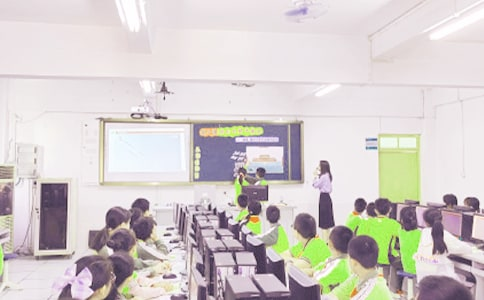
In the formation and development of pedagogical design, theory and technology have contributed to its development. To date, with the advent of third-generation network technology, there has been a growing emphasis on the close integration of teaching theory with digital learning techniques。
In the context of the new era, teaching designers need to be holistic and focus on qualitative studies of teaching design, closely linking the development of teaching design with the macro-policy of society. In the context of today's society's commitment to sustainable development, the promotion of cost-effective social construction, and the intensive management and management of educational resources, which have become important trends in educational development, pedagogical design should also emphasize the sustainable use of educational resources, save the cost of education, establish cost-effective development goals and achieve intensive management of the teaching process, which i firmly believe will represent a major shift towards the development of teaching。
Ii. The whole process of teaching design projects from a 3e perspective
(i) summary of 3e theory
The 3e theory, which is based on soft-system thinking and includes the three dimensions of output (efficacy), efficiency (efficacy) and effects (effict), offers practical solutions for system improvement through a layer-by-layer resolution system. The extent to which the outputs of the impact measurement system affect the achievement of the desired objectives, including the quality of outputs, social outcomes, public satisfaction, etc. By drawing on these three perspectives of the 3e theory, we will be able to conduct qualitative research on teaching design。
(ii) the whole process of the teaching design project
The complete pedagogical design project includes important components such as inputs, outcome design and development, results dissemination and implementation (see figure 1). The teaching design and development process is a needs-based, goal-oriented system-based research and development process that directly affects the use of resources and the quality of outputs, while the relationship between the volume of resources invested and the quantity of outputs produced determines the efficiency of the entire teaching design project. The effectiveness of the solutions is reflected in later replication and implementation, and their achievements in promoting learning and improving performance determine the effectiveness of the entire pedagogical design project。
1. System design, development of solutions to safeguard project output and efficiency。
Effective control and management of the design and development process will guarantee the rational use of the resources invested in order to achieve a minimum of high-quality outputs and improve system efficiency。
Effective teaching and learning design requires attention to the following areas in order to ensure project output and efficiency。
(1) target-oriented, demand-driven
(2) a user-centred approach to improving the effectiveness of outputs
(3) system design, re-engineering to guarantee the scaling-up of quality education resources
2. Promotion, implementation and institutionalization of results and promotion of the sustainability of pedagogical design projects
(1) institutionalizing the adoption of results
The dissemination of results is an important part of the pedagogical design project, where users in specific situations refuse to adopt results, and where results are set, they need to be revised repeatedly until they are satisfied; but if they are successful, they must take advantage of the success of the roll-out and promote the institutionalization of the user's organization to lay the foundation for future innovation。
(2) focus on the effectiveness of project implementation
In the implementation of results, solutions to the degree of achievement of expected objectives, user satisfaction, etc., will directly reflect the effectiveness of the pedagogical design project and determine whether the user will be able to accept the new pedagogical design project further in the future, which will involve the continuous development of the pedagogical design project and require special attention。
(3) focus on learning from successful experiences in results dissemination and implementation
There is no uniform formula for the roll-out and implementation of results, and a pool of successful cases will be a repository of knowledge that will provide important insights into the practice of later generations in the same context。
3. Consider the reusable design of output resources from the point of view of resources, long-term operations and management
In the operation of the teaching design project, in order to increase the availability of output resources, in particular digital resources, there is a need to improve the productability of teaching design outputs, to ensure that digital resources can be applied more intensively to other systems, and, more importantly, to improve the technical reuse of digital resources, including modular design of resources using open standards and the use of generic metadata standards to describe data. In this way, efficient use and long-term operation of resources can be achieved by increasing the reusable nature of outputs in order to achieve resource savings。
Continuation of the cycle of educational design and correct treatment of cost-effect relationships
Teaching design is always in a continuous cycle of teaching, repetitive and self-correcting. For example, during the formative evaluation phase, the teaching designer revises the programme on the basis of diagnostic problems, which require revisiting the content analysis or re-selecting teaching strategies that are better suited to the wider context, and then modifying the material into a fait accompli and conducting the evaluation until the needs are met. In practice, because of objective conditions, teaching designers may allow only one or two of these cycles to take place and then put the finished product into use, the output is disseminated, the designer collects feedback from users, builds on the design experience and then applies the harvested experience and reusable resources to the next product development。
Summary
At the present time, teaching design has not been able to have a substantive impact in school education and remains active mainly in the business sector. In order to better adapt to the operational mechanisms of business and to respond to macro-policies that build economies, pedagogical design should also emphasize the intensive operation and management of educational resources. To this end, i have drawn inspiration from the 3e theory of professor chekland, and have briefly elaborated some of the basic views on the whole process of teaching the design of the project from the perspective of output, efficiency and effectiveness, as well as on the designers who are committed to the intensive construction of educational resources。



