This is also confirmed by the actions of local governments. For example, wuhan's new policy, which was introduced before the national day, was very representative: when he applied for a provident fund loan, the properties that were being listed for sale were no longer included in the number of housing packages he owned; and those who bought new commodity houses in remote areas received an interest subsidy of up to 1 per cent, up to $20,000. In addition, a large sum of 200 million yuan is spent on home-buying subsidies, with a subsidy of 1,000 yuan per square metre for first-time occupants and a maximum of 200,000 yuan for families with many children. However, these seemingly tempting policies have a clear validity period: as of june next year, wuhan's subsidy policy has ended until the end of this year. The purpose of this approach is very clear, in order to prevent speculators from taking the opportunity to fire their houses。
More importantly, even when policies have been relaxed, the first-line urban core has been robust in its restrictive purchase policies. In beijing, the new building in shanghai is still subject to strict purchase restrictions, although the pace of loan approval has accelerated. This is a clear indication of the government's bottom line: the market must not be allowed to fall through the bottom, but it must not be allowed to return. It is almost impossible to expect to make money in the real estate market through policy dividends in 2026。
Migration is undoubtedly a key factor in the classification of cities. According to data from the national statistical office, in 2024, 68 per cent of the 3rd and 4th-line cities showed a net outflow of population, while net inflows to economically developed regions, such as the long triangle and the pearl triangle, accounted for 67. 3 per cent of the total population. In the absence of sufficient population support, housing prices in three or four-line cities are naturally unsustainable. This city-to-city polarization will only become more pronounced in 2026。
In terms of housing price data, the 70-city housing price index issued by the national institute of statistics in september showed a 1 per cent drop in the price of new houses in the sea and a 0. 8 per cent drop in the price of second-hand houses in sanya. However, the high-quality projects in the beijing haidian and shanghai rings have been able to degenerate more than 90 per cent. The backlog remains critical: 13 months are required for the cycle of decolonization of first-line cities, while 30 months are required for third-line cities and more than two years for some counties to digest existing stocks。
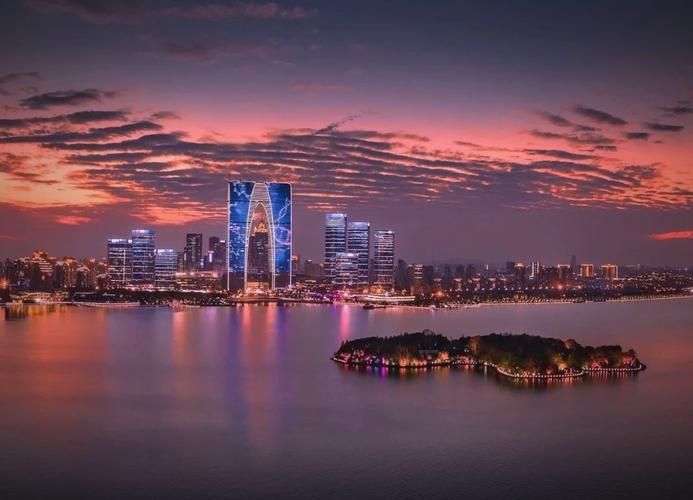
Of course, not all non-linear cities are bleak. Housing prices in areas such as lake east pine hill in the bay region and the suzhou industrial park in the long triangle remain strong, depending on the radiation effects of the core cities. These regions have developed industries and sustained population inflows, which are fundamentally different from those that lack industrial support。
Thus, it is foreseen that in 2026 the housing price will be in a general pattern of “core stability, peri-urban decline, county flat”。
It is a matter of concern that the used house market is becoming the barometer of the building. Data from the ministry of housing and construction show that there are 15 provinces and municipalities in the country that have traded more used houses than new, and the stock market is gradually becoming mainstream. In the first three quarters of 2025, the exchange of second-hand rooms in shenzhen and chengdu increased by more than 20 per cent, while cities such as nanjing and zhengzhou continued to experience a reversal。
A young man who recently bought a house shared his experience: after comparing the new room with the second-hand room in the same district, he found that the second-hand room was cheaper than 15 per cent, and that it could be packed and occupied, and he chose the second-hand room decisively. The trend towards “price-for-money” in the used-room market is clear. In beijing tunzhou, a two-bedroom set of 89 square metres was finally sold by the landlord from an initial price of $4. 2 million to $3. 9 million, 10 per cent lower than at the beginning of the year。
This trend will become more pronounced in 2026. On the one hand, real estate firms would be more cautious in their push. The data show a 22 per cent decline in the national supply of new housing in the third quarter of the year. On the other hand, second-hand house listings continue to rise and buyers have more options. Thus, instead of focusing on the opening of the new room in 2026, more energy should be devoted to the second-hand new room。
In future real estate markets, high-quality properties will be more resilient, while low-quality properties may not be consulted。
In the past, the era of buying houses with eyes closed to make money has passed. Now, buyers need to be more selective and quality is becoming hard currency. Since 2024, the ministry of housing has been implementing “good house” construction, requiring a reduction of over 60 metres in superstructures and promoting green smart houses. It will become increasingly difficult to sell those properties that are poorly equipped and of poor quality。
This shows that house buyers are becoming more rational. Whereas in the past people used to buy houses mainly on the ground, factors such as property services, household design, greening the environment and even the availability of ageing designs are now important criteria for consideration。
The city has long since left the era of the up and down. As wang kenlin predicted a few years ago, the real estate market will enter an era of fragmentation of “quality asset preservation, depreciation of ordinary assets”. His words are now becoming reality。