Process programmes (designs) determine the main raw materials, process processes, type of equipment, process parameters and specifications and quality requirements for semi-process products, etc. For the production of products in accordance with product requirements, are the main basis for the production of products and are the first important element of process management. Good workshop process management is a guarantee of quality, high productivity, low consumption and high efficiency。
Learning target
To summarize what is covered by the process programme (design)。
2. Knows the process of review and approval of process (design) programmes。
Know the form of process management。
Knowledge
I. Technical programme (design) requirements
The process programme (design) is the central element of process management and the specific requirements of the process programme are shown in table 3-1-1。
Table 3-1-1 specific requirements of the process programme

Continuation
Elements of a process programme (design)
Textile enterprises are characterized by a variety of processes, platforms, varieties, people, process parameters and continuous production, with different variety quality requirements and different process design options. Key elements of the textile process programme include the following。
(1) raw material selection. Includes categories of raw materials, specifications and mixing ratios。
(2) process processes. Includes equipment and configuration of all processes from the input plant to the finished inventory。
(3) specifications and quality requirements for finished products, semi-products。
(4) process parameters and requirements for temperature and humidity of the various process equipment。
(5) slurry, auxiliary, dye formulation。
(6) equipment and requirements for various types of textile equipment。
(7) requirements for quality of work or methods of operation。
(8) provisions for quality testing of finished products (including testing according to national standards, departmental standards, enterprise standards and certain special standards), specifications for finished products, etc。
Process programme (design) review and approval
Process programmes (design) are not developed and implemented in a static manner, and certain parameters in the process design need to be adjusted in a timely manner as production conditions change. To prevent process confusion and error, a process approval review system should be established. Process approval reviews review major approval reviews of process processes and process parameters. Processes are the main basis for workshop production, and process parameters directly affect product production, quality and consumption. Reasonable process processes and process parameters are prerequisites for product quality, production efficiency and consumption reduction. Process approval processes are described below。
In order to ensure the quality of the process design, a rigorous approval system for the process design programme is required, with approval at all levels。
(1) approval process. The design of the process is revised by the designer and reviewed by the product manager (general) or master of the process, then reviewed by the chief of the process and approved by the chief engineer。
(2) audit. The design of the process is in accordance with the requirements of the process and whether the specified targets are met; the process processes, the process content, the requirements of the process, whether the equipment used is correct and reasonable and whether the safety standards and environmental requirements have been violated; and the format, terminology, code, unit of measure and material specifications of the process design and the process parameters are met。
2. The design of the process shall be approved and signed by the relevant workshop and department. Main signatures: whether the elements specified in the process design are achieved, depending on the workshop's production capacity; whether the equipment and detection devices used in the process design are reasonable, and whether homemade or retrofitting is possible。
3. Approval of the design of the process after its signature is generally approved by the chief of technology or by the chief engineer。
The approval and management of the process shall be subject to the following authority。
(1) plant. Significant process changes, such as changes in mechanical structures, process sequences, testing of new varieties; changes in processes that have a significant impact on the quality of production and on savings, such as changes in the speed of the ceremonials and knitting machines, the number of stretches, cotton or hair distribution components; changes in related process items between enterprises and users, such as changes in the specification of the package。
(2) workshop. In addition to the plant management project, other project changes may be approved by the workshop director。
Small board
In some cases, the design of product specifications was done by the plant and in others by the workshop. Processes completed by the plant are approved by the plant and those completed by the workshop are approved by the workshop。
Iv. Management of process documents
The approved process programme is managed by a single numbering by the technical department and sent to the relevant unit for implementation. If significant changes are required in the ongoing process programme, the revised process programme is subject to the same procedures for approval and issuance and the original process programme is cancelled. In the case of partial modifications, a “process change notice” may be issued by the competent engineer to notify the relevant authority. Process programmes are found to be problematic and can be reflected in a timely manner, but no unauthorized changes are allowed except in the process sector。
V. Process standardization
The elements of process standardization are mainly the following。
Process terminology is a common technical language in the field of processes, and the lack of uniformity of process terminology affects not only the exchange of technology but even the normal conduct of production technology work. Therefore, business should use terminology, terminology and symbols in process management in accordance with uniform provisions。
2. Standardisation and implementation of criteria for the harmonization and simplification of process elements such as congregates, tow multipliers, linear density, twilight, unevenness, latitude density, width, etc。
3. Standardised process protocols integrate products of the same type and process characteristics, study the commons of their processes, identify more advanced process options based on the actual technical conditions of production in enterprises, and form process documents to guide production。
4. Process document standardization the enterprise shall develop a process document format suitable for use by the enterprise, based on characteristics such as its own product, equipment and technology. Standardize the type, format, content, method of filling and procedures for use of process documents and ensure their completeness and uniformity。
Vi. Format of management of the programme
1. Process design forms. For each product to be officially delivered before its birth, a complete process design form must be prepared by the production technology department as the basic basis for the production of textile products. If the swirl is a tube that divides the species from the beginning of the feedstock to the end of the swarm, the shawl, or the latte, the process parameters involved in each process are filled in according to the process. Weavers range from the linear density of the latitudinal to the specification and even the packaging requirements, and are also required to complete the process parameters involved in each process according to process. See case 3-1-1 for the case of the process design form。
Case 3-1-1 cylinder scale
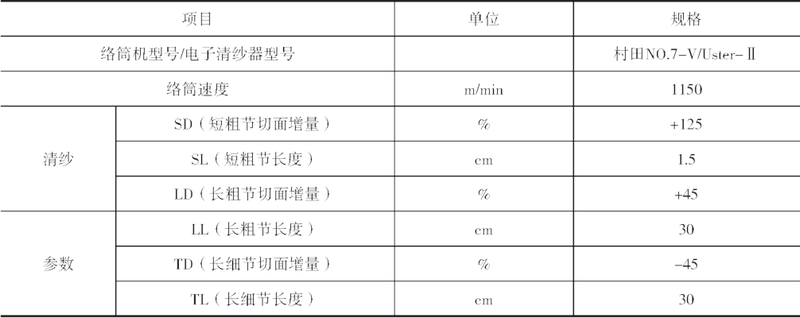
Process design plates. Process design plates are large and small and are prepared by workshops. Large process design plates (also known as process cards) set out the process methods and technical requirements of each process by process of production and indicate the process parameters for all process projects in each process, which guide the production process in the workshop. It is published in a more visible location in the workshop and is easily accessible to staff in order to prevent process quality accidents. Small process design plates (also known as platform cards) are designed mainly for more process-modified processes, specifying the process parameters of a process project in which the platform (or post) of a particular process is constantly altered, and specifying the operational methods and technical requirements to guide on-site operators in their rational operation. It is generally listed on the platform (or post). See case 3-1-2 for a case of a process design card。
Case 3-1-2 process design cards
T21 vehicle 24802
Varieties characteristics: velvet, pine-coated structural varieties。
Common faults: missing passages, missing latitudes, small jumps, side stretches, straight strips of whiteness, border veils。
Operating tips: black and white weaves, colour contrasts, various faults on the fabric are exposed, and in the driving state, the veils and beams do not allow pressure, preventing the creation of hand prints and thin gaps. When searching for latitudes, every effort is made to avoid slow-spreading and to prevent the creation of saloons and different colours. Watch out for the creation of faults, such as straight strips, wiping and border support. Latitudinal cylinders do not allow the end of the line, pull the head of the large barrel down 3 m, keep the veil of 3-5 m on the foot of the barrel, and then connect the two head; they then cut the veil of the latitudinal and re-introduce the head. Clean up the platform。
3. Process design archive cards. After the official release of the product, the process design archive card is created in a sequenced manner. The card, in three copies, is stored in the company's (plant) production technology department, workshop and laboratory. When a process is changed, a process change notice is issued by the production technology department, and workshop technicians and laboratory personnel are required to register the changed process parameters in a timely manner on the process design file card as a basis for implementation under the new process。