Recently, the ministry of industry and information technology issued the provisional regulation on radio management of wireless charged equipment (electron transmission) (hereinafter referred to as " the regulation " ), which was interpreted by the relevant comrades of the radio administration of the ministry of industry and information technology in order to better understand and implement the regulation。
Question 1: what is the context and purpose of the provisions?
Article 59 of the radio regulations of the people's republic of china provides that non-radio equipment for radiowaves shall be in accordance with national standards and the relevant provisions of national radio management. Wireless charge (wire transfer) equipment (hereinafter referred to as wireless charge) that transmits electricity using electromagnetic sensing, electromagnetic resonance, and electro-capacitation coupling are non-radio equipment for radiation radio waves. The lack of clear regulation of wireless charging equipment and its introduction fills the gaps in the regulatory policy for this type of equipment, helps to avoid harmful interference with all types of legal radio operations, maintains air wave order and promotes the high-quality development of the wireless charging industry。
Question 2: what is a wireless charger and what is its composition
Response: wireless charge equipment means equipment that achieves non-beam near-site power transmission technology using magnetic coupling mechanisms, which can be divided into wireless chargers consisting of energy transmitters connected to power sources and energy receivers active in loads (e. G. Smart phones with both wireless charge energy discharges and energy receivers), wireless chargers containing only energy transmitters (e. G. Wireless charge floors used for wireless charge to equipment), and wireless chargers containing only energy receivers (e. G. Smart watches connecting wireless chargers)。
Question 3: what are the types of wireless chargers applicable to this regulation
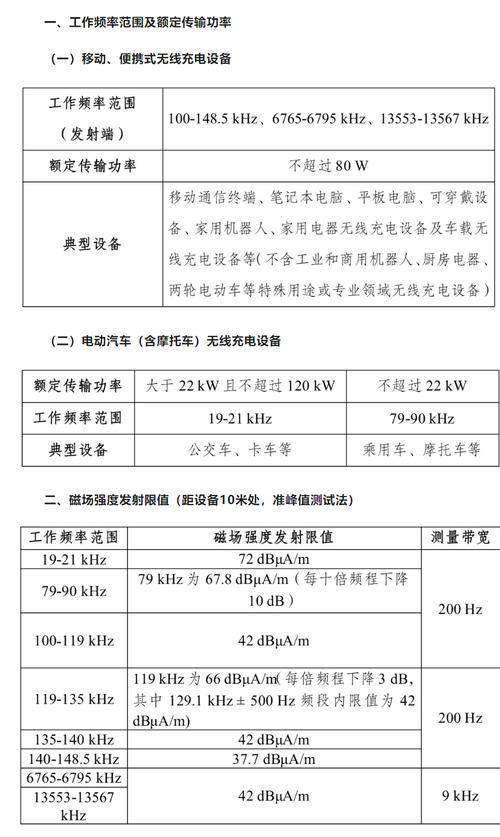
Response: the types of wireless chargers applicable to this regulation are divided into two main categories: mobile, portable wireless chargers and electric vehicles (including motorcycles) with wireless chargers, typical movement, portable wireless chargers with mobile telecommunications terminals, laptop computers, tablet computers, wearable equipment, home-based robots with wireless chargers, etc.; and typical electric vehicles (including motorcycles) with wireless chargers with buses, trucks, passenger cars, motorcycles, etc. For special applications such as industrial and commercial robots, kitchen appliances, two-wheeled electric vehicles, and wireless charging equipment in specialized fields such as industry, medicine, etc., the regulation has not been included, taking into account the special nature of their applications and use requirements。
Question 4: how is it understood that units (or modules) of radio-launching equipment used for the transmission of information should comply with the relevant provisions of national radio management when wireless chargers are simultaneously capable of transmitting information
Response: for some wireless chargers, such as mobile telecommunications terminals, such as mobile phones, there are also its own information transmission functions, such as mobile communications, bluetooth, wireless lan, and the national radio authority has clear requirements for mobile communications, bluetooth, wireless lan, etc. Therefore, the radio launch equipment modules (or modules) mentioned above for transmission of information should comply with the relevant provisions of national radio management; radio launch equipment other than micropower short distance equipment should also be legally certified for radio launch equipment types。
Question 5: what is the main definition of the provisions
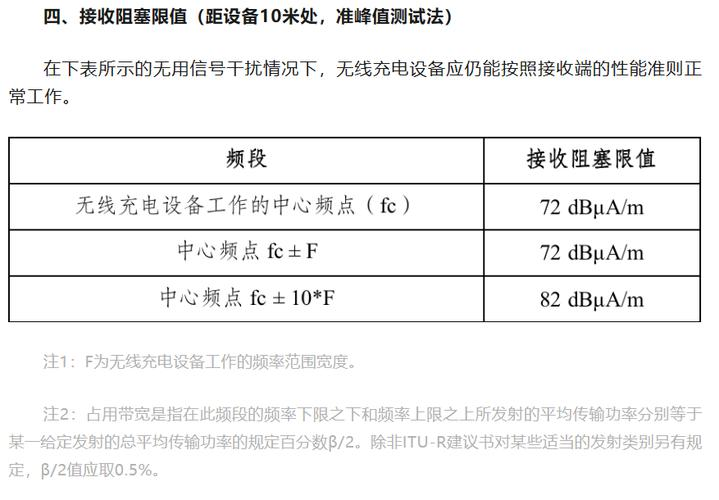
The regulation identifies technical indicators and application scenarios, such as the working frequency of wireless chargers, primarily from the point of view of radio management, with the aim of avoiding harmful interference with all types of legally established radio operations. A total of 16 articles in the body of the regulations provide, inter alia, for the following matters: firstly, for the definition and main technical indicators of wireless charge equipment; secondly, for the model of the management of wireless charge equipment; thirdly, for the elaboration of the policy requirements of the manufacturing enterprise; fourthly, for the improvement of the system of supervision and inspection of wireless charge equipment; and fifthly, for other matters such as the transition period and the time of entry into force. The annex to the regulations details technical indicators and application scenarios such as the working frequency of wireless chargers and gives a protected distance from interference with radio observatories。

Question 6: what are the main technical indicator requirements that should be complied with by mobile, portable wireless charge equipment and electric vehicle (including motorcycle) wireless chargers
Response: for mobile, portable wireless chargers, the work frequency range is 100 - 148. 5 khz, 6765 - 6795khz, 13553 - 13567khz and the rated transmission power does not exceed 80 w. For electric vehicles (including motorcycles), different technical indicators are set according to the size of the rated transmission power, where the rated transmission power is greater than 22 kw, but not more than 120 kw, the working frequency of the electric vehicle (including motorcycle) is 19-21 khz; and the working frequency of the electric vehicle (including motorcycle) is 79-90 khz。
Specific technical parameters, such as the frequency of operation of mobile, portable wireless chargers and electric vehicles (including motorcycles), can be found in annex 1 of the regulations。
Question 7: what are the requirements for producing or importing wireless chargers for domestic sale and use
Response: model approval is not required for the production or import of wireless chargers for domestic sale and use, but the requirements for technical indicators and application scenarios such as the work frequency set out in the regulations, as well as legal and national standards such as product quality, electromagnetic radiation and electrical safety. At the same time, the manufacturer shall indicate, in the description of the use of the product (with an electronic display), the content of the product information, technical requirements, requirements for use, etc., and indicate, in a prominent location or in electronic form, the specific marking of the wireless charge equipment。
Question 8: why should wireless charging equipment be marked or displayed in electronic form as a special identifier
Response: in order to facilitate the identification and management of wireless charge equipment, since wireless charge equipment does not require the approval of the radio launch equipment model, does not display relevant equipment information such as the model approval code, the regulation specifies that an enterprise producing or importing wireless charge equipment shall mark the distinctive location of the wireless charge equipment or the electronic display of the special marking of the wireless charge equipment, and if the equipment is not capable of marking or displaying a special identification due to, inter alia, its small size, it shall mark the equipment in an independent overpack or in a statement of use. Currently, we are studying the development of requirements for dedicated marking。
Question 9: what are the concerns with the use of wireless chargers
Response: no radio frequency licences, radio licences are required for the use of wireless charge equipment, but attention should be paid to the information in the instructions for the use of the product, including, inter alia, that the use of wireless charge equipment should not be unauthorizedly altered, that the work frequency range should be expanded, and that the transmission power should be increased (including additional power amplifiers); that the use of wireless charge equipment should not be allowed in areas protected by interference at radio-astronomy stations; that the use of wireless charge equipment in ships, aircraft and railways (including motorized trains) should be subject to the provisions of this regulation and those of the relevant industry authorities; that the use of wireless charge equipment, such as the impact on the reception of broadcasting operations, should be stopped immediately; and that the use of wireless chargeable equipment should not be allowed to cause harmful interference with other legitimate radio operations and stations (stations), and that protection against radio interference and radio wave interference。
Question 10: what are the considerations in the provisions for the effective date
Response: in conjunction with the actual development of the wireless charging industry, the regulation provides for a transitional period, to be implemented from 1 september 2024, but until such time as wireless charging equipment is produced or imported will be allowed to continue to be sold and used until its end of life. At the same time, in view of the fact that wireless charging is an emerging area and that the relevant technical standards are updated more quickly, the provisions are clearly adapted by the national radio authority in due course to industrial developments and technological advances。