As a result, all the equipment in our home has its own room number, and the router, the housekeeper, must be sent to the housekeeper for all the requests for internet access, then transmitted to the internet by the housekeeper; the data returned by the internet should be sent to the housekeeper, who will then send it to the equipment in the appropriate room. This process, which we used to call the nat internet address conversion, is the core function of the router and the central reason why we can get dozens of devices online with a public network ip address。
We can understand the process with a popular metaphor. The internet is like a huge city, and our home is a small part of the city, and the internet ip address is the street sign number of the district, the router is the door room of the district, every device in the house is the apartment number of the district. In order to send a letter to the rest of the city, the household must give the letter to the doorman, who will write on the envelope the district's sign number and then send it out; the outside party will send it to the district's doorman's room, and the doorman will send it to the corresponding household according to the room number on the envelope. With this gatekeeper, all households in the subdistrict are able to communicate with the outside city, without the need for each household to have an independent street sign。
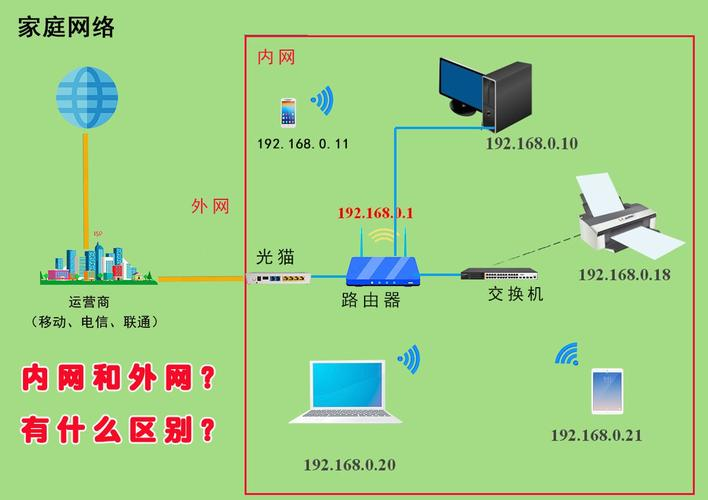
In addition to the core nat address conversion, the second core function of the router is the transmission of data, which is the origin of its name. Every time we click on the internet, send a micro-mail, and see a video, we create numerous data packages that go from our equipment to the servers on the other side of the internet, back to the same way. Our home router, which is the first jump on this data transfer path, selects the optimal route according to the target address of the data package, forwards the package to the corresponding next router, like the pick-up centre for the express, delivers packages to different destinations, and ensures that the data reach their destination as quickly and accurately as possible。
And when we're done with the wire, let's go back to the wifi, which you know best, which is the wireless area network. The wifi function of routers is essentially to convert wired network signals into radio waves, into air, our mobile phones, computers and so on, to receive these radio waves through built-in wireless network cards, to convert them into telecommunications, to achieve wireless access. We used to say 2. 4g and 5g double frequency wifi, which refers to two frequency bands of radio waves launched by routers, each with advantages and disadvantages, suitable for different use scenarios。
Wifi in the 2. 4g frequency band, with a longer wavelength, with a greater ability to penetrate walls and a wider range of coverage, can receive signals even through walls, but it has a narrower bandwidth and slower transmission, and our microwave ovens, bluetooth equipment, neighbour's wifi, are all used in the 2. 4g frequency band, which can easily be disrupted, resulting in slower internet speeds and delays. Wifi in the 5g frequency band, which is shorter in wavelength, more bandwidth, faster transmission, less disruption, less delay, and easy to run with gigabytes of broadband, is weak in its ability to penetrate walls, with a signal falling significantly and with a much lower coverage than 2. 4g frequency。
And that's why today's routers are designed on a double frequency, so we can choose the appropriate frequency band according to our own needs: close to the router, need for high-speed access, play games, even 5g bands, with faster and lower delays; and 2. 4g bands, with more stable signals, when the router is far away and many walls. And what we used to call the wifi6, the 802. 11ax protocol, is the latest generation of wifi standards, and it transmits faster and less late than the last generation of wifi5, which connects more equipment at the same time, and even if there are dozens of smart devices on the internet at home, there will be no carton, no wire, perfect match to the home scene of today's smart home。
A lot of people would ask, "why do we have a ggbw, wifi? Apart from the problem of broadband itself, the central reason is on routers. First, the hardware specifications of the router directly determine its performance, as is the case with computers, with its own cpu and memory, low-end router cpu performance, small memory, limited bandwidth, and when more equipment is connected or there is a high-speed download, cpu is fully loaded, cardon, offline. Second, the location of routers is also critical, as much as possible at the centre of the home, avoiding heavy walls, metal masks, and away from microwaves, refrigerators, which cause electromagnetic interference, so that wifi signals reach every corner of the home. Thirdly, many of the routers in their homes, which are not shut down for many years, are not restarted, there will be more and more caches, systems will become more and more crowded, and routers will be restarted regularly, allowing them to return to optimal working conditions。
For a long time, the market for high-end routers has long been monopolized by foreign brands, and now the domestic routers have fully surpassed them. Not only did national routers introduce a full range of products from the entry level to the flagship level, but they also developed a fully autonomous network acceleration technology, a mesh network technology, even large-house and complex buildings, and a network of multiple routers, wifi, with a no-go coverage, reached an international lead. At the same time, the national routers are designed for use in the country. They include such functions as acceleration of games, management of children's internet access, optimization of intelligent homes, prevention of wipes, and protection against cyberattacks, which are more appropriate to the needs of domestic users and constitute the absolute mainstream of the domestic routers market。
We enjoy the ease of wifi every day, but we rarely notice the router that works in silence. It's like the doorman of our family network, running 24 hours a day, guarding our family's network, relaying every access package so that all our smart devices can have smooth internet access. By learning how routers work, we know better how to choose a router for ourselves and how to optimize the wifi network at home so that we can enjoy a more stable, faster and safer online experience。