I. Basic knowledge of national debt
(i) national debt
National debt is a credit act of raising funds from society by borrowing or issuing marketable securities as a precondition for the government's debt service to the debtor and the state's finances, reflecting a debt-to-claim relationship between the state and the holder. At present, our national debt, which is mainly issued by individuals through bank counters, includes savings national debt (certificate), savings national debt (electronic) and bookkeeping national debt。
(ii) savings national debt
The saving state debt is issued by a government to individual investors, absorbing individual savings funds and meeting the non-negotiable state debt of investors for medium- and long-term saving investment needs. The savings state debt is divided into savings state debt (certificate) and savings state debt (electronic) with a duration of three and five years, usually at a rate higher than the real interest rate on bank savings deposits of the same period。
(iii) savings national debt (certificate)
The savings state debt (certificate) is a non-negotiable renminbi bond issued by the ministry of finance in the territory of the people's republic of china and sold to individual investors by members of the charters, which records claims in the form of a “receipt certificate” of the savings state debt of the people's republic of china。
(iv) savings national debt (electronic)
The savings state debt (electronic) is a non-negotiable renminbi bond issued in the territory of the people's republic of china by the ministry of finance and sold to individuals by the members of a consortium to record claims electronically。
Ii. Main characteristics and differences in types of national debt
(i) main features of savings national debt (certificate, electronic)
1. High credit ratings and good security. The savings state debt is a public debt issued on the basis of state credits, with the ministry of finance repaying the debt due and with a high credit rating。
2. Flexible liquidity. Investors are ready to pay their savings bonds in advance at the original purchasing bank. Interest income is earned on the basis of the number of days actually held and the corresponding interest rate slot, if the minimum holding period is exceeded. At the same time, investors can also go to the original buying bank to carry out the bond loan。
3. Interest is tax-exempt and profitable. The interest rate is fixed, the income tax on interest income is exempt and the real gains from bank savings deposits with a maturities higher than the same period。
4. There are more outlets for distribution and easier to purchase. The provident fund is composed of 40 banks, and tens of thousands of banks have a network to sell and pay off savings bonds, and most urban and rural residents are able to purchase savings bonds in close proximity。
5. National debt by name may be lost. The saving state debt is well known, and investors who inadvertently lose their investment certificates can go to the original purchase point to check out。
(ii) the transaction price for commercial bank counter transactions is determined by the market and the purchase and sale price (net price) is likely to be higher or lower than the issue value. When the selling price is higher than the purchase price, the seller not only receives interest on the national debt during the holding period, but also receives part of the difference; when the sale price is lower than the purchase price, the seller, while receiving interest on the national debt during the holding period, pays part of the difference. Investors buy bookkeeping bonds that are sold before maturity and whose prices are unpredictable, and therefore bear a certain risk of price volatility。
The savings state debt draws on many of the advantages of the bookkeeping state debt, so that it has many things in common, but there are also clear differences:
(1) different mechanisms for determining the rate of issuance. The rate of issuance of the bookkeeping national debt is determined by the bids of the members of the national debt repository; the rate of issuance of the savings national debt is determined by the issuer of the bond by reference to the interest rate of the bank deposits of the same term and the market supply and demand。
(2) the mode of circulation or realization is different. Account-based national debt can be marketed and sold at market prices when investors need funds; savings national debt may not be marketed, but may be called or pledged in advance as required。
(3) different investment targets. The saving state debt is currently issued only to individual investors; the bookkeeping state debt is mainly issued to institutional investors。
(iii) main differences between savings national debt (certificate) and savings national debt (electronic)
1. Different procedures for applying for purchase. Investors buy savings national debt (certificate), which can be purchased directly in cash; investors buy savings national debt (electronic), which they need to open and assign to corresponding funds accounts。
Claims are recorded differently. Savings state (certificate) claims are recorded in the form of a complete record of the receipt of savings state debt (certificate) of the people's republic of china, managed by the respective underwriting banks and investors; savings state debt (electronic) is recorded electronically, through a secondary trusteeship system, administered centrally by the head offices of the contracting banks and limited liability companies registered for settlement of central treasury debts, which reduces the risks associated with the deposit of paper-based claims by investors。
3. Interest payments are different. The savings state debt (certificate) is a lump sum debt service due; the savings state debt (electronic) is paid in a variety of ways, ranging from one year to the next。
4 dues are paid differently. Upon the expiration of the sos (certificate) debt, the investor is required to go to the distribution agency network to settle the payment without interest; upon the expiry of the sos (electronic) debt, the hosting bank automatically transfers the principal and interest receivable from the investor to its capital account, and the principal and interest funds transferred to the fund account are paid at the current deposit rate. Main differences between savings national debt (certificate, electronic) and account-keeping national debt
Iii. Purchase, disbursement of savings state debt (certificate)
(i) how investors buy and pay their savings national debt (certificate)
Individual purchase of the savings state debt is by name, and investors pay their funds to the state debt-servicing agencies and produce valid identity documents。
Between 2021 and 2023, the members of the savings state debt repository were composed of 40 banks, of which 9 were affiliated with the hyo fine (see table below)。
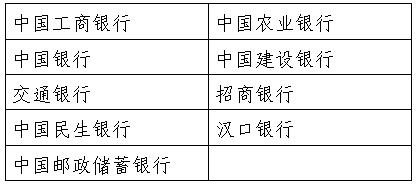
The hubei bank, the hyo-sense rural commercial bank, and the village bank are not members of the savings state debt repository 2021-2023。
The issue of the savings state debt usually takes place from 10 to 19 march to november of each year, and every time a bulletin is published on the website of the ministry of finance (www. Mof. Gov. Cn) for investors ' attention。
Each time the issuer's state debt is limited, the underwriting banks cannot exceed the issuer's amount, and investors should make arrangements in advance when the sale is over。
Upon the expiration of the savings state debt (certificate), the investor is issued a voucher to the home state debt service provider for payment, and the savings state debt (certificate) is paid once。
Interest is no longer calculated on the expiration of the savings state debt (certificate) and investors are requested to pay in due time。
Starting in 2020, the china people's bank's hyoshi city branch organized a reminder campaign for the payment of state debt due from the underwriting banks。
(ii) matters requiring attention in the purchase, disbursement and disbursement of savings national debt (certificate)
1. The starting point for the purchase of savings state debt (certificate) is 100 yuan, which must be 100 cents in whole。
2. Savings bonds (certificate) purchased by investors are interest-bearing from the date of purchase and are due for a lump sum payment, without compound interest。
3. The savings state debt (certificate) is a fixed-interest bond at the rate of issuance set by the people's bank of china and the ministry of finance for each issue of the savings state debt (certificate), and the rate of issuance of savings state debt (certificate) does not vary with the adjustment of the interest rate on savings deposits of the people's bank of china。
4. The savings state debt (certificate) may be called in advance, subject to a fee of 1 per cent of the principal amount。
(iii) how to process the advance payment of savings national debt (certificate)
In accordance with the terms of the documents issued by the state of savings (certificate) debt, an investor who holds an unexpired savings state debt (certificate) and is in urgent need of funds may make an advance payment to the original purchase bank with his/her valid identity card, receipt of the savings state debt (certificate) or bank account card. Interest on the advance payment of the savings state debt (certificate) is calculated on the basis of the slotting rate and the actual number of days held by the state of savings (certificate) document, and payment to the bank of a fee of 1 per 1,000, and the state of savings (certifice) debt is held for less than six months without interest。
Iv. Purchase, disbursement and disbursement of savings national debt (electronic)
(i) how investors buy and pay their savings national debt (electronic)
An investor must open a personal debt trustee account (hereinafter referred to as the treasury account) and a renminbi clearing account (a call or debit card) with his/her valid identity documents before purchasing a savings state debt (electronic), which is not charged for account opening and maintenance expenses and is used for life once it is opened. Investors who have already opened account-keeping accounts for national debt are not required to repeat accounts and may use the accounts directly. The public debt account is used to record the investor's claims and changes thereto, the renminbi settlement account is used to settle the principal and interest payments on the savings state debt (electronic) and the renminbi settlement account is charged by the respective underwriting agencies in accordance with the relevant provisions。
In 2021, mobile bank sales of savings national debt (electronic) were piloted in business banks, commercial banks and postal savings banks, making the payment of national debt easier。
Savings state debt (electronic) underwriting agencies automatically deposit interest and principal on savings state debt into an investor-designated financial account on the date of payment of interest and maturity, without the investor being required to do so。
(ii) matters requiring attention in purchasing and paying off savings national debt (electronic)
1. The public debt account is free of account opening and maintenance charges and can be used for life once it is opened。
2. The saving state debt (electronic) is purchased at a factor of 100 dollars。
3. Saving state debt (electronic) is available only to individual investors。
The state savings debt (electronic) is currently capped at the level of investments in individual accounts (5 million yuan)。
(iii) treatment of interest rate adjustments encountered during the period of issue of the savings national debt (electronic)
In accordance with the regulations for the issuance of savings state debt (electronic) documents, the ministry of finance announces from the date of publication until the date of issuance, and if the people's bank of china adjusts the interest rate on deposits in financial institutions of the same duration, the current period savings state debt (electronic) ceases to be issued from the date of interest, and the balance of sales is recovered and cancelled by the ministry of finance。
(iv) how to process the advance payment of savings national debt (electronic)
Under the instrument for the issuance of the savings state debt (electronic), an investor who holds an unexpired savings state debt (electronic) and is in urgent need of funds may, with his/her valid identity card, the state debt account and the financial account, make the formalities at the point of the receiving and selling institution and pay a fee of 1 per cent of the principal amount. The advance call was discontinued on the date of payment and seven working days prior to the expiry date, and the interest date was reinstated. Investors pay their savings state debt (electronic) in advance, with the required deduction of interest for a certain number of days。
(v) how to process savings bond loans
Investors who hold unexpired savings bonds and are in urgent need of funds may, in addition to being able to make advance payments, obtain bonds on the bonds。
1. The duration of the deposit of the savings state debt (certificate) is agreed between the lending institution and the borrower on its own, up to the maturity date of the savings state debt (certificate). The term of the loan is determined by the nearest person at the maturity date, if the multiple savings state bonds of different durations are pledged。
2. The starting point for the deposit bond loan is $5,000, and each loan shall not exceed 90 per cent of the collateral's face。
3. The starting point for applying for loan lines for the deposit of savings bonds (electronics) is $5,000. Each loan is determined by the lender on the basis of the expected earnings of the pledged savings bonds (electronics), the interest rate of the loan, the duration of the loan, etc., but not more than 100 per cent of the denomination of the savings bonds (electronics) as collateral。
V. Reminding you of the payment of the national debt due
In order to further safeguard the legitimate rights and interests of the investors in the country's national debt, the current organization of the central branch of the people's bank of china, which is based on a unified arrangement with the general bank of the people's bank of china, is engaged in the collection and payment of the savings state debt。
The outstanding savings national debt is due mainly to the outstanding savings national debt (certificate) issued between 1994 and 2018, which cannot be paid for owing to, inter alia, the freezing of accounts and the non-payment of savings national debt (electronic)。
If you have a savings state debt (certificate) that is due and not paid, please bring a certificate of receipt for the savings state debt (certificate), a valid identity card and a bank card to the counter where you purchased the bank. If you have a savings state debt (electronic) that is due and unpaid, it is automatically transferred to the personal account. If there are reasons, such as the freezing of the account, then the payment should be made with a valid identity document。
Monitoring telephone number: 0712-2823321 central hyosing city branch, people's bank of china。