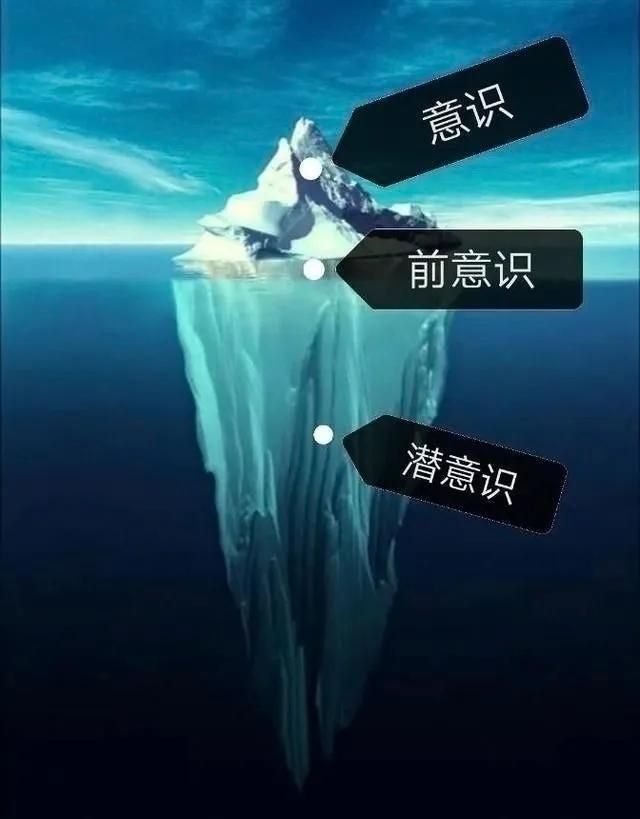
What exactly does the satya model ice mountain mean
Who am i? Where am i from? Where am i going? It's the ultimate question of humanity; it's the search for one's own identity; it's the search for one's own life; but often people don't even know themselves, let alone know others
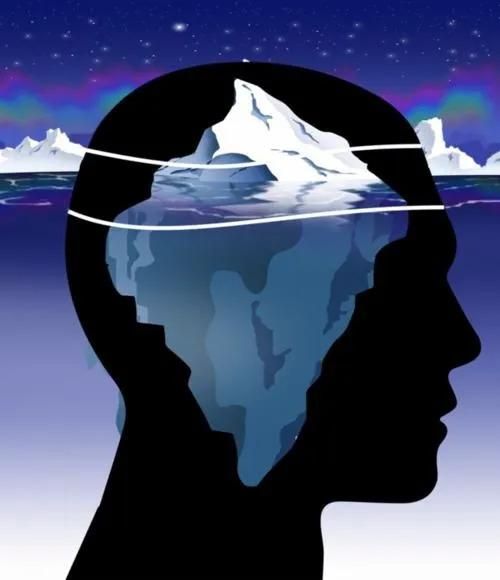
The satya model of the “icicles” theory provides a perfect, systematic, learning and capable tool to help us understand ourselves, raise ourselves, understand others and promote relationships。
As human beings, it is not easy to understand one another; it is even harder to understand another。
The sartia model's iceberg metaphor, which represents the inner world of the human being, is eight layers of ice, linked and constantly changing. Learning to master iceberg tools, it's like wearing a diver suit, diving under the sea, exploring what is known and more unknown in the world。

The iceberg metaphor helps us not only to understand ourselves, but also to understand others。
Eight levels of iceberg metaphor:
External behavior, attitude, feelings, feelings, views, expectations, aspirations, self/i am (self/i am)。

What is above the horizontal level is what can be seen from the outside, what is heard about specific behaviour or events; what is below the other horizontal level is what is not easily visible。
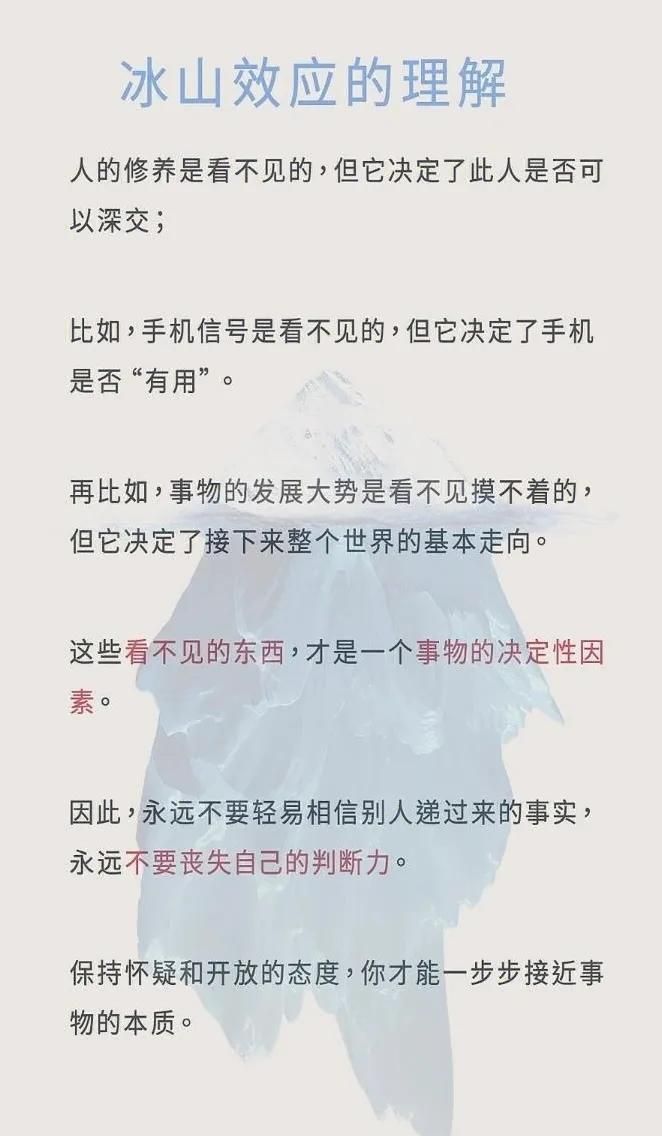
The various levels of interaction within the iceberg are linked and inseparable. When things happen, individual layers of the iceberg are subject to varying degrees of “shocking”, and eight layers may also be “shaking” at the same time, in the “swirling room”, and when the icebergs shake, they often fail to see what's going on。
For example, when a word of judgement is heard, people's feelings, thoughts and expectations are often struck at the same time. Based on a familiar pattern of custom, people automatically choose a posture of response, which may be one of blame, flattering, super sensibility, interrupting, or more than two combinations; then i do external behaviour。
The contradiction and conflict in human communication can be compared to the "titanic hit the iceberg" above sea level
Nothing has happened yet, but views, expectations and aspirations under the water have been sorely washed up. That's why
What enhances communication by learning how an iceberg can feel, think, expect, desire, etc
Quality。
Let's look at every level of the iceberg
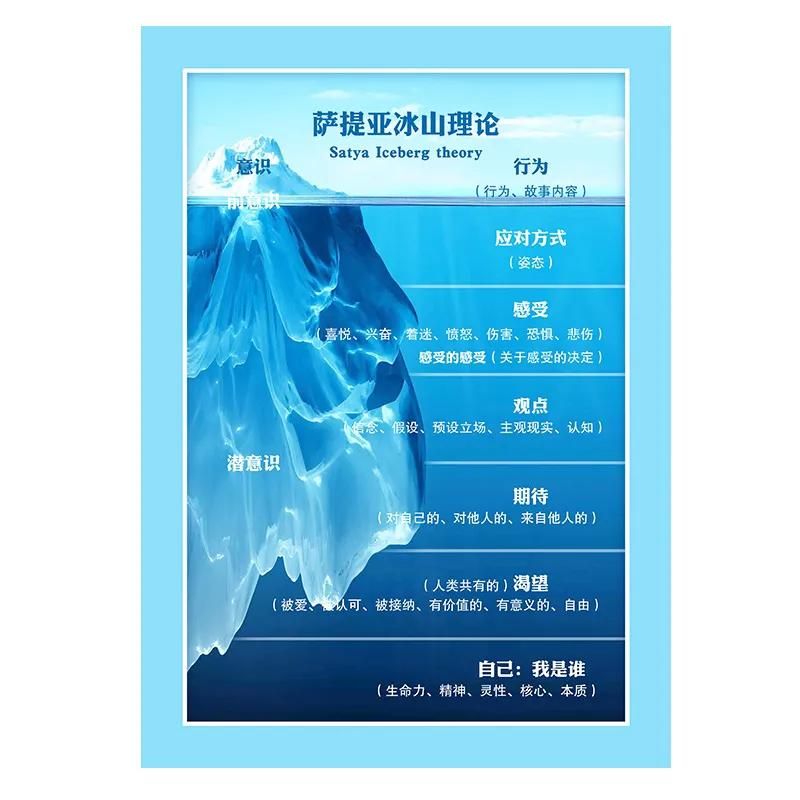
[actor/incident/story]:
This is what is seen, heard on the horizontal surface and can be done by oneself or others, as well as happening in a context of size。
The behaviour is an internal manifestation of the world as a whole; external events, in turn, often cause shaking and reactions to the inner iceberg system。
Two
It is an automated human response under pressure, often derived from self-defence patterns. The satya model will be inconsistent
The response postures are: blame, flattering, ex-sension, interrupting four。
In the iceberg system, the level of response is neither underwater nor underwater, but it's just like humans
They are good at making all sorts of “packagings” of coping postures, difficult to identify and often undetected。
Three
Feels are the joy and sorrow of human beings, and it happens naturally. Whether you accept it or not, it feels good and bad。
The feeling is different from the thought, and it means the joy of the human being。
When something happens, or when it comes to its own actions, everyone feels it. It's just that people often don't care about their feelings
Or (unwittedly) choose to ignore, suppress, and feel。
Four
People are often indoctrinated with bad feelings during their upbringing, especially those that are “negative”. So people often don't
It's hard to understand how you feel. Because of the negative perception of feelings, the satya model calls it, sensor
The feeling." it's unique in psychology。
Feelings and feelings are intertwined and drain people's inner strength。
The feeling is often related to family rules. How many people are allowed to grow up with emotions and feelings? What is free to express? Think about why so many words in chinese have to do with feelings and feelings:
It's all about the rich and complex feeling that we've been cutting and cutting。
Five
In short, all ideas and ideas in the mind are: beliefs, values, cultures, assumptions, deductions, carvings
Impressions, thoughts, etc.; including perceptions of yourself, others, the world. In detail, the human perspective is really rich。
When it occurs outside, others act against their own point of view, it affects themselves. Whether in the family or in the workplace
Multiple conflicts are also caused by differences of opinion。
Six
People have a variety of expectations, such as specific aspirations, hopes, demands, etc. Human expectations are complex and diverse:
The expectations, the expectations of others, the expectations of others。
What's interesting is that when expectations are taken for granted and unmet expectations are taken seriously. Not met
Expectations are often a source of suffering and unhappiness。
The icebergs have an important learning component on how to deal with “unsatisfied expectations”. It is even more noteworthy that some important unmet expectations belong to childhood: the expectation of more company from parents, of a more gentle attitude from parents, of a better understanding of me, and of these unmet expectations until we grow up, deeply affecting our hearts and relationships. When expectations are not met when they are young, they may be filled by people who, as adults, want unwittingly to be close to them, usually by partners, children and even parents of advanced age。
Seven
If expectations are specific, longing is a deep need shared by humankind. People long for love and be loved, accepted
Recognition, respect, freedom, security, belonging, meaning, etc。
Since birth, ta may not survive if the basic aspirations of being cared for, valued, loved and safe are not met. Many well-known psychological experiments in the psychology community have long demonstrated this。
A person's desire to grow up is fully satisfied and feels good enough to be important and valuable. Conversely, basic psychological needs are not adequately met from an early age, often resulting in inherent deprivation, and needing to be filled up by others to become a relationship
The feeling of the “suppliers” and the fact is that every adult has enough power and resources to meet his or her aspirations. It is in the past to see clearly, and to embrace, the unmet expectations and aspirations of childhood and the sense of subconscious want。
Desires are deep, deep and undetectable; they are often expressed in concrete expectations at the previous level. For example: i need to be loved, and i expect my lover to send me roses, and i expect my companion to cook for me three meals。
As beginners, when we reach out to our own expectations, we can simultaneously explore the aspirations associated with them。
Eight
Everyone has their own unique essence and core, and everyone is part of life in the universe. At the life force level, people are similar and connected; at the life force level, human values are equal. When people come into contact with their own life, they experience the spiritual level of “i am”. Unfortunately, in the process of growing up, young children feel “not good enough” because they are not fully accepted, or suffer setbacks that lead to a perception of self-worth。
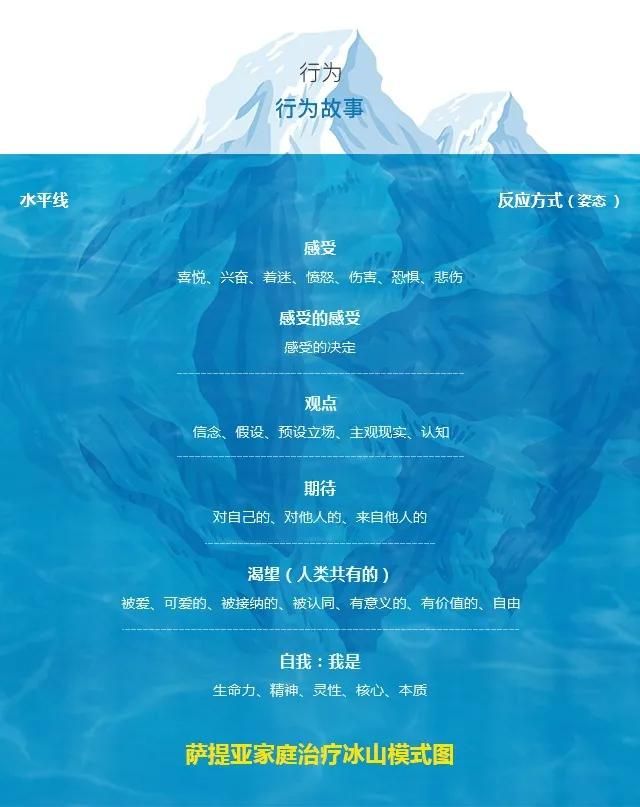
When a person, regardless of his or her shortcomings or shortcomings, or his or her faults, still embraces himself or herself from the bottom of his or her heart and feels that he or she is worth it, he or she can be deeply connected to himself or herself. And only by respecting and valuing ourselves from the heart can there be true respect for others。
When we learn to use icebergs for self-awareness, we explore the contained parts of the layers of icebergs, for example: intolerant
Our own feelings, many irrational views/stereotyped rules constrain our minds, our unmet expectations are filled with hearts, or we can expect others to meet our deep needs, and we can see, relax, adjust at one level; and, above all, believe in our own lives, in their own aspirations, in their own security, belonging, recognition, love, and in their relationships with others。
If you've studied the satya model before, or you've been in touch, you might know more about satya's ideas and methods to help people grow up:
By learning to learn more about the “rules” at the point of view, we are more loose ourselves
- reconstructing the family to deal with the trauma of our childhood and growing up
(a) to enhance our sense of self-worth by addressing basic triangular relationships, by influencing rotation, and by exploring inner resources
Cleaning up the past, removing the obstacles and embracing the past and the present will make it possible to truly possess the inner harmony of the iceberg。
When there is inner harmony, when there is greater acceptance of self, it is natural that there is greater acceptance of respect for others and harmony in relations and human harmony