


Chapter ii operation and maintenance of the hydroelectric plant fleet section i. Type and characteristics of water turbines
Hydropower is generated using current energy, that is, by converting hydro energy into mechanical energy. This conversion machine is called a water turbine. The water turbine, which is an essential original motor for hydroelectric power generation, and the generators constitute the tanker generator set, commonly known as the crew, which is the main equipment for the hydroelectric power plant。
Depending on current energy conversion characteristics, water turbines are divided into countervailing and shock-type categories. Water turbines that use current power (bit and pressure) and kinetic energy are called repulsive tankers. Its rotation consists of a number of space-distorting leaves. When the pressure water passes through the wheel, the distortion of the blades forces the flow pressure, the size and direction of the flow speed to change, so the flow is reversible to the wheel with its pressure and kinetic energy, and turns the wheel by forming a rotation rectangular. It varies in the direction of the flow into and out of the wheel and is divided into mixed, axle-stream, tilt-stream and flow-stream water turbines. Water turbines that use water mobility only are called shock turbines. It works under atmospheric pressure. The current energy is entirely mechanically converted to rotation in kinetic energy form. Based on the water intake characteristics of the rotor, the shock tankers are divided into water fights, tilts and double-clicks. The impacting water turbines are applied to a higher water level, free from the effects and constraints of erosion, and operate in a stable manner; they are characterized by low water flow, which is rotated by high-speed current jets, with a high surface of 80-800 m. Counterattack water turbines are more commonly used in our country. The hybrid 5-700 m is available for large, medium and small power stations. Axle current 2-80m for low-water, high-flow hydropower stations. The flower has the lowest head, 0. 5-16 m。
I. Basic working parameters for water turbines
When the water flows through the water turbine, the energy of the current is converted to the mechanical capacity of the water turbine. A number of parameters are used to demonstrate the process of energy conversion, and the basic working parameters for water turbines are, inter alia, working head h, flow q, power n, efficiency zirconium, rate n and nominal d in diameter。
(i) water for work
The working head is the unit energy difference between the import and export faults of the water turbines. Its size indicates how much of the current unit energy it uses, affecting the development of hydropower plants, the type of aircraft and economic benefits. It has several characteristic head values。
(1) the water turbine design hr is the minimum water source necessary for the tanker to function at a rated rate of rotation and to generate a rated capacity。
(2) hmax, which is the largest working head allowed in the operation of the water turbine。
(3) operating water turbines, working between the maximum and the smallest waters。
(ii) water turbine trafficq
The volume of water flow in a unit of time is referred to as flow, with the symbol q, unit m/s. In normal operation, the flow size determines the direction of the engine。
(iii) contribution n and efficiency
The power produced by the main axle of the water turbine in a unit time is referred to as the power of the tanker. It's called power, symbol n, unit kw。
When water with a certain amount of water and flow passes through the turbine, the current is powered
It is not possible to convert and export the full current power ns, which is necessarily less than the current power, because the turbines are in the process of energy conversion, resulting in some loss。
The ratio of water turbine power to current power, known as water turbine efficiency, is expressed in tungsten, i. E
So, the wheel works
An efficiency factor of less than 1 indicates the effective use of water turbines on current energy。
(iv) swing
The speed of the water turbine is the number of rotations during the unit time, expressed in n, in r/min。
In the case of water turbines, the rate of rotation is more arbitrary, but only at a particular rate is it most efficient. The following relationships shall be satisfied when direct connection is used between the main axle and the main axle of the generator:
F - the current frequency, which is set at 50 hz
P - magnetic polar logarithmic logarithmic of generators。
When water turbines suddenly abandon their full loads or for other reasons do not shut down the water turbine conductor, the entire energy of the current flowing into the tankers, except for a small portion of which is consumed by mechanical losses, accelerates the rate of turn-off for most of the motor fleets, leading to a sharp increase in the rate of turn-off to a certain maximum, known as the fleet entering flight mode, which is also referred to as fly-off speed, also expressed in n, unit r/min. The flight was extremely harmful。
(v) mark d in diameter
The main geometric dimensions of the rotation, referred to as the nominal diameter (or nominal diameter) of the rotor, are shown in d and in cm。
Mixed water turbine d means the largest diameter of the blades entering the water。
Axle-stream and tilt-stream water turbine d indicates the inner diameter of the centre line of the blades that intersects with the surface of the rotor room. A water-crew d indicates the diameter of the circle where the wheel and current centre intersect。
Our country refers to hybrid water turbines d less than 1 m and axle water turbines d less than 1. 4 m as medium and small。
Ii. Corrections (i) in water
Let's start with cooking in the highlands. People in the highlands usually use high pressure pots because of low air pressure and correspondingly lower boiling points of water, which are used to cook, even if the water is boiling, but the temperature is low and the food is not cooked. So the usual reference to a boiling point of 100°c for water implies a constant temperature pressure, which is reduced as the pressure decreases, and when the pressure drops to a certain level, the water becomes “build” from liquid to gas。
Similarly, if the pressure drops below the vapour pressure at the current temperature due to increased current speed in local areas, the water changes from a liquid to a gaseous state, creating a “boiling” of the current, a phenomenon called carving。
For example, in the flow lanes of countervailing water turbines, the speed of currents increases in certain areas due to changing border conditions, which reduces pressure. On the one hand, the water itself contains corrosive cores (small bubbles, air, etc.) that can be separated to form a bubble, on the other hand, pressure drops, the water vaporizes and produces a steam bubble, which creates a mixture of steam bubbles and air bubbles, commonly referred to as air vents. The formation, development, bursting and destruction processes that flow across the surface are called gas erosion。
(ii) air erosion hazard
Mechanical sabotage
Following the bursting of the bubble, the surrounding fluid was squeezed into the metal crystals, and the fluids attempted to escape from the crystals after the impact, both of which led to the fall of the crystals, while the metals exceeded the yield point to produce plastic deformation until destruction. Form is skinning of the surface。
Chemical sabotage
When bubbles break, local temperatures can exceed hundreds of degrees, causing local oxidation of metal materials。
3. Electrical damage
Bubbles produce discharges at high temperature and pressure, i. E. Electrolytics, and local temperature differentials on metal surfaces form thermoelectric dolls, thus causing electrolysis of metal surfaces。
Chemical destruction and electronization accelerate the process of mechanical destruction。
The destruction of metal material by gas erosion begins with the loss of light on the surface of the metal and darkens it, and then becomes disemboweled and becomes a beehive, which, when severe, can pierces, cracks and fragments of leaves。
The damage and effects caused by gas erosion are very harmful, as it directly destroys overflow components of water turbines, especially rotor blades, which can pierce, gap or even fall in the leaves when severe; it operates in conditions of gas erosion with significantly reduced capacity and efficiency, causing noise, strong vibrations and operational instability in the crew; it shortens the cycle of examination, prolongs the period of examination, and it consumes large amounts of precious metal material and human resources. Measures should therefore be taken to prevent and mitigate the erosion of water turbines。
(iii) types of air erosion
The gas erosion of the water turbine can be classified into four categories depending on where it occurs。
1. Wing erosion
Wing gas erosion generally refers to gas erosion occurring on rotor blades, which is prevalent in repulsive water turbines。
Responding water turbine rotor blades force a change in the flow's kinetic rectangular, which means that there must be pressure differentials on the front and back of the blade, that the front (work surface) of the blade is positive and the back (backside) is negative. When the pressure in the negative zone is lower than the vapour pressure, there is a potential for gas erosion. Therefore, low pressure on the back is a condition for gas erosion。
The areas where the mixed water turbines are exposed are shown in figure 2-1。
The area where the axle current water turbines are exposed is shown in figure 2-2。
2. Aerial air erosion
When repulsive water turbines operate in non-design conditions, the rotation of the flow in the tailings and the vortex in the centre of the rotating water flow is carried out by the rotary-export flow with a certain round weight. The center of the vortex creates a huge vacuum. The vortex, which has a high vacuum, regularly sweeps the tailings of the tailings, causing gas erosion of the tailings of the pipes. This form of corrosive is known as cavity. Aerial gas erosion not only caused damage to the tailpipe wall, but also caused instability in the aircrew in serious cases due to pressure pulses from the vortex, resulting in strong noise and severe vibrations。
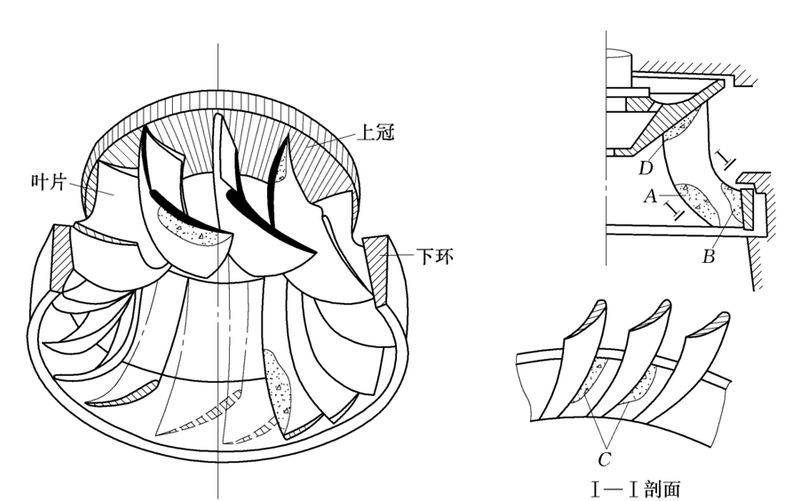
Figure 2-1 main parts of mixed rotary wing gas erosion
3. Cascades
Corrosion from the gap between passing parts of the water turbines is referred to as intervalidation。
Causal erosion is the result of reduced pressure due to the high local flow rate when the water flow passes through a narrow gap and a smaller passageway. It usually occurs in the gap between the guiding leaves and the leaking loops, as well as in the gap between the axle water turbine leaves and the rotor room; in the water-crowding water turbines there is also a gap between the nozzle and needle valves。
Air erosion caused by other partial runoff
For example, the convex, axle neck, lockholes and refillers are partially off-flow erosion; mixed-pressure holes are off-off-flow erosion。
(iv) air erosion protection for water turbines
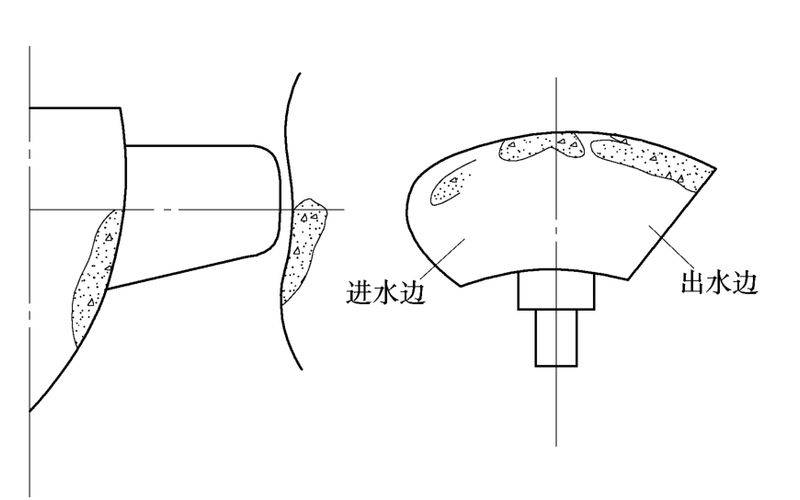
Figure 2-2 main parts of axle-stream rotor-wing gas erosion
Design options for improved hydraulic design and optimized configuration design for water turbines
The rotor blades have a significant impact on the corrosive performance and attention should therefore be paid to the wing design. Wing faults shall be of a smooth flow line, the flow of water shall be smooth, the water shall be out of the water at as thin a margin as possible, subject to ensuring strength, and the geometric dimension of the entire channel shall be appropriate. From an energy point of view, however, it also requires that water turbines have as much excess capacity as possible, thus leading to a wide change in the distribution of the back flow of leaves and a low pressure at the lowest pressure point. It is difficult to reconcile the visible energy properties with the corrosion properties, and the design leaves must be considered together。
Aqueous oscillations are closely related to the inhalation of hs, and therefore the correct hs values are to be selected. In order to mitigate gas erosion, water turbines that are suitable for the natural conditions of the power station and have a good corrosive capacity should be selected to improve operational stability. The current design is directed towards long cones and wider proliferation angles and longer revolving discharge cones。
The water turbines are designed to be closely related to the rate of ns, corrosive coefficients and ejection of hs, not to overemphasize one aspect, to optimize alignment, and to have negative values for mixed hs。
2. For manufacturing, the use of improved manufacturing processes and anti-gas-resistant materials
Manufacturers should use advanced processing tools and machinery to strictly control processing accuracy and improve detection levels to ensure that rotor blade casting is consistent with processed wings and wood simulators, as well as the quality and internal quality of the winged surface, whose roughness, wave size, thinness of the water exit, presence of sandy eyes, slags and gas holes in the casting area will increase the damage to gas erosion。
The introduction of excellent anti-gas erosion materials is another measure, which should be combined with high resilience, high hardness, strong tensile resistance, high exhaustion limits, fine crystals and good weldability. All types of high-strength stainless steel are used to form or weld the wheel, based on nickel chromium, or to use ordinary carbon steel or low alloy steel as a parent, and welded or welded nickel chromium stainless steel as a shield。
Operational use of improved operating conditions and gas capture
The improvements in operating conditions are mainly related to the improvement of the load of water turbines, which in some cases can limit the fleet to a particular active operation and prevent single aircraft from operating under low or overload for long periods. Conditional changes can be made to the mode of operation and to the composition of the aircraft。
The filling of gas has some effect on the destruction of air traffic and the mitigation of vibration. Sending the air into the corrosion zone increases the internal pressure of the bubble in the negative zone, thus reducing the vacuum; it also reduces the density and volatility of water and reduces the impact of the bubble when it collapses。
There are generally two types of gas recharge: one main axle centre for natural gasification; and two tailings for gasification。
4. In terms of overhaul, there is a possibility of enhancing gas erosion
Welding of metal piles to areas damaged by air erosion is unavoidable. If the repairs are performed in the early stages of the gas erosion, the workload is small and the rotations are not altered by partial overheating during the repair process; if the force and efficiency have been significantly reduced, the work is unstable, the repairs are time-consuming, and more precious metals are consumed in the event of severe erosion. Corrosion should therefore be checked periodically, with better anti-corrosive materials such as stainless steel used for repair. At the same time, welding quality should be observed, air holes and sludge should not be allowed, and surfaces should be polished and sand levelled. In recent years, non-metal materials have been used in addition to stainless steel repair. For example, spherical oxygen-based materials are added to rigid coatings of various ore or metal powders. Flexible materials based on chlorbutylene, polyurethane, liquid rubber and sulfide polyethylene, and thermoplastic coatings based on powdered plastics, all have better effects。



