Since last year, the car industry has been in constant trouble, beginning with the outbreak of the “black swan” raid, and many companies have been desperate to do so, followed by the collapse of the car chip, and many companies have faced a food crisis. Worse still, the car chip has been lost and the price of lithium raw materials has increased, which has left companies in the industry in distress。
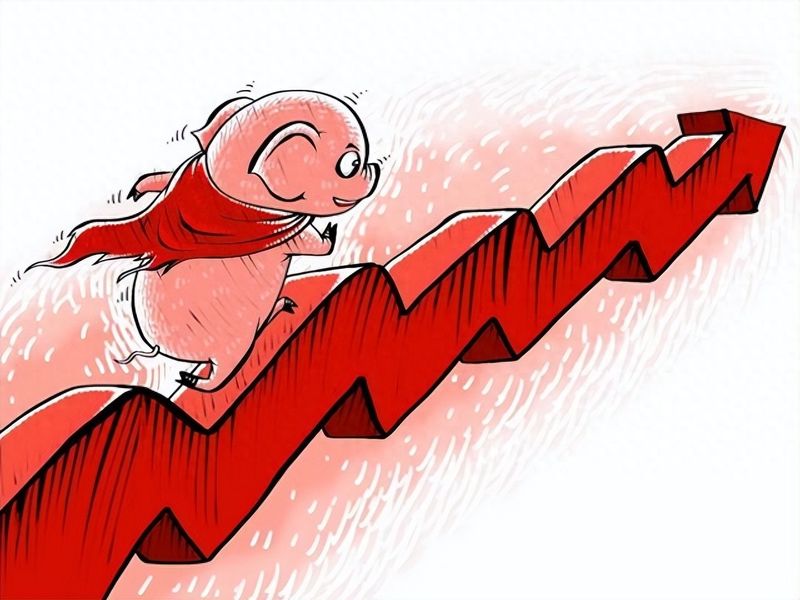
The price of lithium raw materials is soaring
Traditional raw materials include, inter alia, positive and polar materials, negative polar materials, diaphragms, electrolytic fluids and other supporting materials. Of these, orthodox materials are importantly consisting of lithium carbonate and pre-exposure materials, with the largest cost of lithium ion batteries。
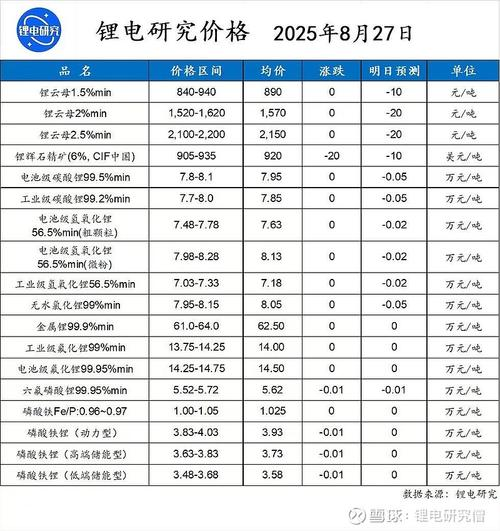
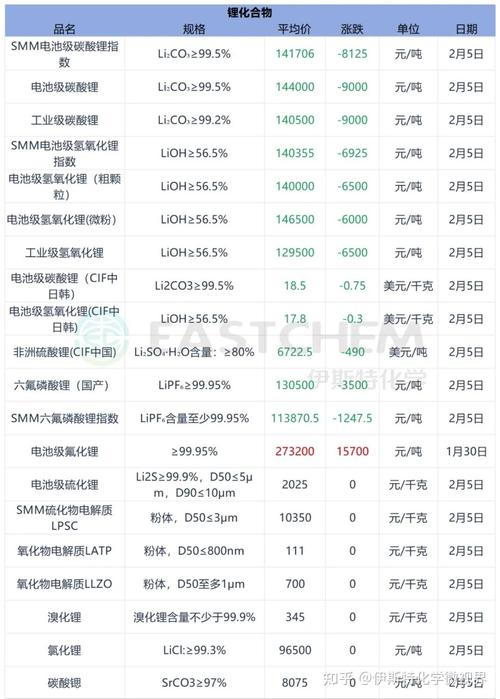
It is known that the price of lithium carbonate materials has increased significantly since november 2020, entering 2021, and that the price of lithium carbonate materials has increased at an accelerated rate, based on a significant recovery in the lithium electricity industry. As at 24 may, the price of batteries-grade lithium carbonate had doubled from 38,000 yuan/tonne in the “low valley” last year to 90,000 yuan/tonne。
The price increases are not only for lithium carbonate materials, but also for many other lithium raw materials, including lithium hexafluoride。
The information indicates that lithium hexafluorophosphate is currently the dominant lithium ion battery material and that the cost of lithium hexafluoride in electrolyte is about 40 per cent due to its superior performance and lower cost. According to the quotation in mid-april of this year, the domestic offer for lithium hexafluoride was approximately $180,000/t-$220,000/t. This means that since september 2020 the price of lithium hexafluoride has risen from 70,000 yuan/tonne to around 200,000 yuan/tonne, an increase of nearly 200 per cent。
The continued increase in the price of lithium raw materials is due to the strong demand for new energy vehicles downstream and the tight supply of lithium resources。
At present, the market for new energy vehicles continues to rise at a high rate. According to the latest projections by the chief science and technology industry analyst, hsu yingbo, the global sales of new energy vehicles are expected to reach 15. 6 million in 2025. If this projection were to become a reality, the resulting increase in demand for lithium would be immeasurable。
In april of the first 2021, there was a marked increase in the installed capacity of lithium power batteries over the same period in 2020
In contrast, the supply of lithium is tight. It is known that countries such as australia, chile and argentina are currently important exporters of lithium globally, and that the new coronary outbreak has continued to slow down exports of lithium raw materials in those countries, and there is a trend towards further tightening, and important supply sources are not being secured, making raw materials scarcer and natural water prices increase。

Projections also indicate that global demand for electric vehicles and lithium energy systems is expected to exceed 2,700 gwh by 2030, a tenfold increase over the current level, with manufacturing car batteries accounting for three quarters of the total, while current global production of lithium amounts to only 70 per cent of the 2030 demand, leaving a significant supply gap to be filled。
As a result, the tension in the supply of lithium electric materials and the continuing increase in the price of lithium materials are not only not alleviated in a short period of time, but are likely to continue to increase. Internal sources in one country have indicated to the guess vehicles that new energy vehicles continue to rise, that the supply of and demand for lithium ion battery core materials are strained and that, in a short period of time, the price of mainstream lithium materials will rise, that the price of raw materials may rise for some time and that it is unlikely that it will fall in a short time。
Lithium mine battles are escalating
Imbalances in supply and demand, soaring prices, and sharp increases in the competition for lithium resources, the largest of which is the number of lithium companies。
In the first quarter of this year, the leading performances of the lithium industry, such as the hundreds of billions of latitudes of lithium energy and the mining industry, doubled. The data show a net profit of approximately $476 million for the lithium industry in the first quarter, an increase of 6046. 30 per cent over the same period. This large increase in net profits from the lithium industry has benefited significantly from cross-border increases in the prices of lithium carbonate and lithium hydroxide。
Thus, chain profits are shifting upstream at a time of tight supply of lithium. The view was expressed that, against the backdrop of the impending twh era, the lithium industry would benefit most. Lithium companies naturally do not miss such opportunities. The guess automobile understands that the head lithium industry is accelerating its control over upstream lithium resources through sale, acquisition, etc。
In the past may, the barracks lithium industry announcement stated that all of bacanora's issued shares (with the exception of those already held in shanghai) would be bought at a price not exceeding £190 million (approximately £1. 706 billion) and that the important asset would be the sonora lithon clay project in mexico, which, upon completion of the transaction, would hold 100 per cent of bacanora's shares。
It is known that this is the first time that the lithium lithium industry has been fully owned and held in offshore lithium assets. As a result, the lithium industry has completed a global resource set-up with many high-quality mineral sources in australia, argentina, mexico, ireland and my own qinghai and jiangxi。
Lithium taps continue to increase upstream, and downstream lithium battery manufacturers and cars are not idle。
Whether it is to prevent the “calculation” of raw materials or to prevent the impact of the higher price of lithium on the market for new energy vehicles, automobile companies can no longer make the same products as before, but also incorporate the layout of raw materials into their plans, and the sooner someone can take the initiative in this fight, given that lithium resources are non-renewable。
Tesla has extended its own supply chain to the upstream raw material component, targeting lithium mines. It is known that tesla is now negotiating with chile's largest lithium producer, and that a local plant may be established in the future to produce lithium raw materials for batteries. As early as last september, informed sources revealed that tesla had acquired lithium mining rights in nevada after abandoning plans to acquire a company in nevada。
It is not just tesla, but perhaps because the cost of raw materials has long been expected to rise, and the distribution of mineral resources has increased in the long run。
As early as 2017, the grand wall bus announced that the company's indirect wholly-owned subsidiary, billion new development limited, intended to buy up to 3. 5 per cent of pilbara minerals ' equity in self-financing funds in the amount of rmb 146 million and to obtain a part of the product of the pilgangoora lithium mining project. In this case, the right of sale refers to 75,000 tons per year of lithium platinum concentrate produced by the lithium pilgangoora project, which will be marketed by the great wall in accordance with the pricing agreed upon by the two parties. If construction funding for phase ii of the great wall vehicle supply project is supported by 50 per cent, the right of sale of lithium platinum concentrate will be increased to 150,000 tons per year and delivery is expected to commence in the first half of 2020。
The same goes for the "hand" to the lithium mine as for the power lithium battery manufacturers. Since 2018, the ningde era has acquired shares in the north american lithium industry and the australian lithium mining company, respectively, and has established a joint venture with tefon nami, the lead company for phosphate lithium orthodox materials. In 2020, the ningde era was involved in the replenishment of the company lithium phosphate materials such as hunan yuen and jiangxi wanghua。
It is also understood that nsg has now sequenced upstream raw materials and battery recycling such as positive, negative, copper, diaphragm, electrolytic fluids, resulting in a more complete four material and battery cycling ecosystem and a vertical layout of the whole industry chain “material-cell-product end”。
It is foreseeable that, in the future, a growing number of companies will be aware of the importance and urgency of upstream feedstock security, and that minerals, including lithium, and key upstream raw material resources are becoming fragrances for many。
It's more than just buying a mine
As noted earlier, lithium resources are non-renewable, which means that it is not enough to buy a mine either by a car or by a power lithium battery manufacturer. Fortunately, both the car company and the lithium-powered battery manufacturer are not placing all their hopes in the “mine buy” initiative, but rather preparing for it。
In the case of the nind era, for example, the nind era chairman had revealed at the recent meeting of shareholders of companies that the sodium ion batteries would be published around july of this year. This was recognized by industry as an important response to the scarcity of lithium resources and the resulting high price of lithium raw materials in the ningde era。
According to the information received, in january of this year, chen liquan, a former ph. D. Student mentor, stated at the seventh universal forum of our electric automobiles: “the world does not have enough lithium ion batteries for electricity, so we must consider new batteries, the sodium ion batteries being the preferred option. The amount of lithium in the world is quite small, at 0. 0065%, and sodium at 2. 75%, which should be said to be quite high.”
Moreover, information shows that 70 per cent of our lithium resources are imported, while sodium elements are abundant. Lake charkhan is the country's largest salt lake, with a total stock of more than 60 billion tons of salt resources in the salt lake, 42. 62 billion tons of sodium chloride in the lake and 8. 25 million tons of lithium chloride. Therefore, from an energy safety perspective, the introduction of support for sodium batteries can also prevent other countries from being caught in the neck。
It should be noted that sodium ion batteries are still in the early stages of industrialization. The current energy density can be 200 wh/kg, while the sodium ion cell, at 100-150 wh/kg, still has a larger energy density gap than the lithium ion cell, which is less compatible with requirements such as the continuous mileage of the car battery, and no possibility of replacing the main route of the lithium ion battery。
Even so, the ningde era did offer more possibilities to alleviate the stress on lithium resources through “open source” approaches. However, beyond the “open source”, there is still a need for “saving”. In particular, “saving” is important in two main ways: to promote recycling of lithium ion batteries and to increase the utilization of lithium by technology。
Generally, lithium ion-powered lithium batteries have a service life of approximately 5-7 years. Xinhua reports that by 2025, 640,000 tons of lithium ion batteries will have been decommissioned, of which more than half will have been decommissioned. However, according to industry standards, a reduction in the capacity of lithium power batteries to about 80 per cent would meet the retirement deadline and, although cars were no longer applicable, there was considerable room for use in other areas and it was important to increase the utilization of lithium ion batteries. Even end-of-life used lithium batteries are capable of excavating their residual value and achieving efficient recycling of resources at the recycling chain。
According to guess vehicles, a number of downstream companies, such as the ningdé era, biadi, kusaka and greenme and bump cycles, among others, now have some layouts in the area of powered lithium battery recycling。
With reference to the increase in lithium utilization, it was necessary to speak of solid batteries. The information indicates that the electrolyte contained in traditional lithium ion batteries exists in liquid form, and that the three-dollar lithium ion batteries currently commonly used in industry and the lithium ion cells of phosphate have respective disadvantages in their durability and energy density, the former resulting in a rapid increase in the amount of batteries scrap, and the latter consuming more lithium cores. Solid-state batteries address the shortcomings of the two above。
Solid-state batteries subvert the battery structure of lithium ion batteries, unlike the traditional liquid electrolyte packaged cores, where there are no liquids or gases and all materials are present in solid form. The changes in electrolyte mean that the mass changes can be achieved in energy density and durability, with solid batteries having a cycling life of as much as 15,000 to 2000 times, well above the ten-fold current long-lasting lithium phosphate ion batteries, with a maximum energy density estimated at 900 wh/kg, which is three times higher than the theoretical energy density of the three lithium ion batteries。
Currently, solid-state batteries are accelerating their commercialization. More recently, the ningde era, in its institutional research, also indicated that the company had developed solid batteries for many years and was in the first stage where they could be sampled. In january this year, two patents related to solid-state batteries were released in the ningde era, which could increase the energy density and circulation performance of solid-state batteries by increasing solid-state electrolyte conductivity rates。
Early this year, the car announced the launch of 150 kwh solid batteries with a energy density of 360 wh/kg, and the continuation of the et7 car carrying the battery will exceed 1,000 km. The product will be listed in the fourth quarter of 2022. In addition, the bmw group has proposed that its solid battery prototype be launched in 2025 and that the mass group actively deploy solid batteries。
In sum, in order to alleviate the problem of soaring prices of lithium raw materials and the scarcity of refraction lithium resources, companies in industry are looking for more possibilities than “mine buying”。