The positioning theory is a marketing theory that increases sales by choosing the right marketing point. The positioning theory is derived from the second of the four principles of krausevic's theory of war: to the extent possible, the force should be concentrated at points where decisive strikes are prepared. The essence of positioning is to focus on the decision points that influence sales. Four steps in positioning include: first step: analysis of the industry environment; second step: search for the concept of segregation; third step: finding support points; and fourth step: dissemination and application。
Methodology/step
In the case of the sun-burning matches, only the sun (power), the sun is not concentrated (in the right direction), and the matches cannot be lit; there is sunlight, and there is a concentration of power, which produces a focus, but the focus is not right and it does not light the matches; and there is sunlight, where the focus is concentrated, so that the focus is right. And the key focus is the positioning that is being sought in marketing theory。
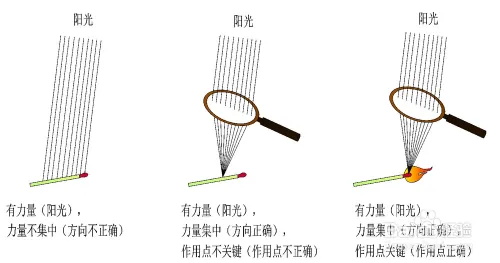
The four steps in positioning are the implementation of the positioning theory, and the eight-positioning method is how to find this location point, the key action point, similar to the matches found in the case of a cam lens that ignites a match。
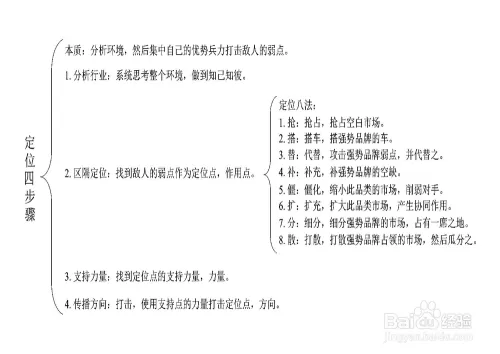
The essence of the four steps in brand positioning is to focus on their strengths against their enemies ' weaknesses and to prevent them from concentrating on their strengths against their weaknesses. In the case of flash mirrors, where the sun is power, without lenses, the sun cannot focus in one direction or spark matches. If the chosen point of action is not a match, nor can it spark a match, the right point of action is chosen to achieve the greatest result。
Methodology/step
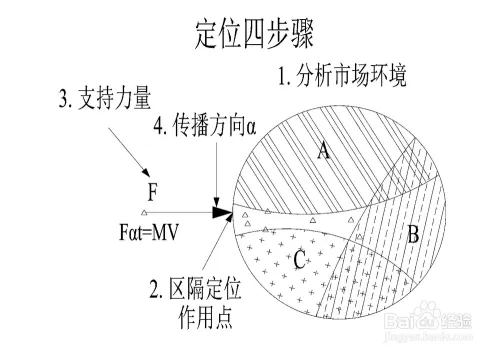
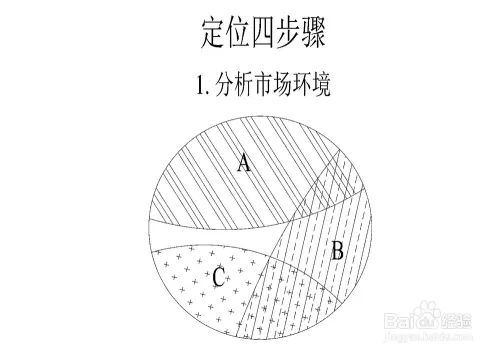
The first step is to analyse the industry environment and consider the interplay of factors from a systemic perspective. Knowing one another, knowing one's strengths and weaknesses can make effective use of one's strengths and conceal one's weaknesses, while knowing the strengths and weaknesses of the enemy can avoid the strengths of the enemy and combat them. Weaknesses could not be found and the blow could not be effective; we could not concentrate our strength and the results could not be significant. Without understanding the strengths of the counterparty, they are easily targeted against each other, captured by the enemy, and targeted against each other. It is only by knowing one another that we can fight。
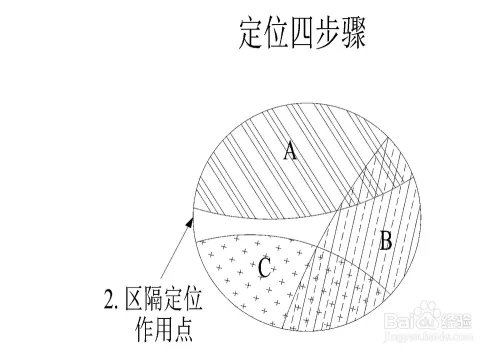
The second step is to look for the concept of partition, which is to look for a location, the essence of which is to look for a role point in the broad kinetic theorem, the more critical the point of action, the greater the result. After analysing the industry environment, you need to find a concept to distinguish yourself from competitors. To find the weakness of the enemy, which can be a rival or a consumer. This could be done using the next-present positioning method, such as finding a blank market, which would quickly take possession of it, which would be consumer weakness。
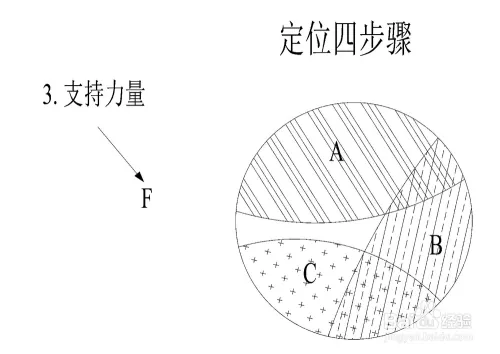
The third step is to find a point of support to make your positioning credible. The more powerful this support point is, the greater the impact of the strike on isolated locations。
Methodology/step
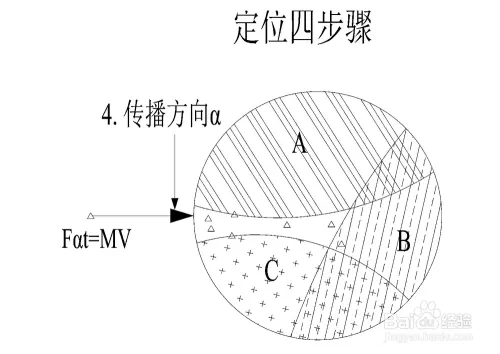
The fourth step is dissemination and application, which does not produce results when the power of positioning and support is found, because it does not strike consumers, so that the consumer's mind is the direction of power. In the broader context of the kinetic theorem, dissemination and application can produce results by striking the power of support at the location of the compartment in the mind of the consumer。
If you need to address specific problems (in particular in the fields of law, medicine, etc.) you are advised to consult professionals in the relevant fields in detail。
The author states that the present section of the experience was originally written by me on the basis of real experience and was rejected without permission。