It's compiled on the site
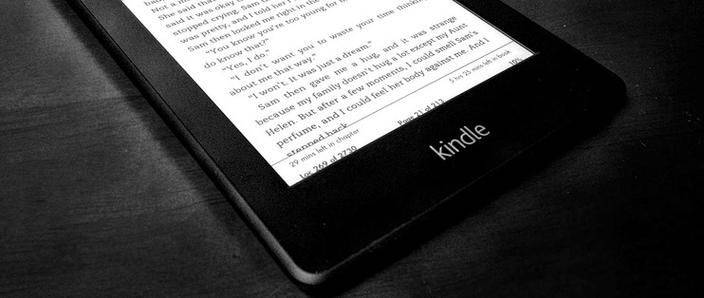
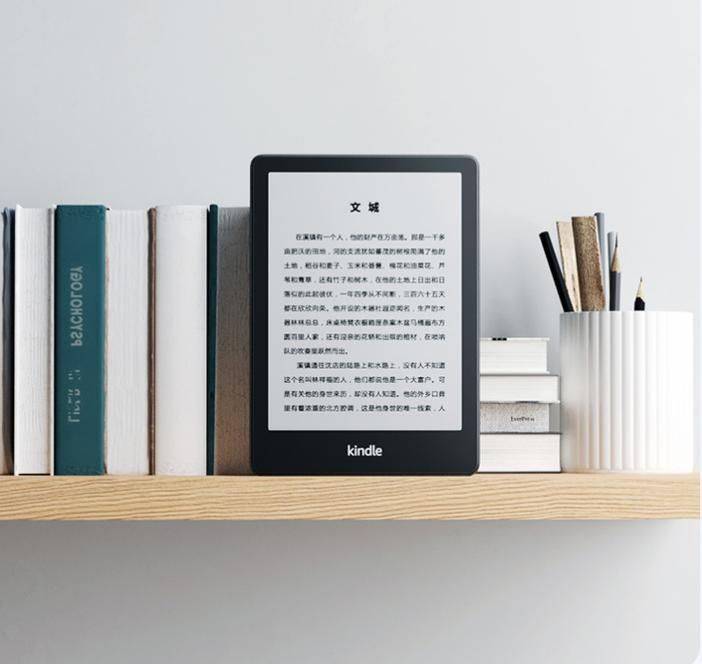
Last friday, the amazon announced the addition of a “loaning” feature to the kindle ebook to allow the “owner” of the kindle ebook to share books, magazines or newspaper content for a period of 14 days. Such loans can be made every time an electronic book is purchased. During the loan period, users will be unable to access electronic book files。
About a year ago, bano announced the introduction of identical functions, even for the same duration. This feature predates the book reader, and many laugh at the time limit for e-book lending. It was ridiculous that it included jeff bezos of amazon。
I think that amazon has the following key significance in taking such a decision:
Whatever we call it, the “purchase” of electronic books is different from the purchase of a printed book or an electric light bulb or a box of chocolate. It's a “authorization”, closer to buying computer software online。
2. As long as the first point was made, it was all the more clear that publishing was a copyright industry and that any thinking about business by publishers needed to permeate that view。
3. It is difficult for companies that are themselves market-dependent to succeed in innovation. There are two important reasons for this。
4. Any behaviour and practices in the unconnected world in which we have lived before can be simulated in the networked world with completely different applications。
E-books, not ownership
In the digital world, tech lovers have become quite angry that people cannot “own” electronic books like printed books. Often expressed as objections to drms and requirements for open electronic book formats and standardized electronic book formats, open electronic book formats and standardized formats that allow electronic books to be treated in the way they were printed in the past (e. G., sharing, lending, and re-sale), for which, of course, ownership must first be relinquished。
This is indeed substantial。
Many publishers and many authors regard first-use rights as ultimately untenable, although in the case of the use of drm the exceptions are quite numerous. For example, carina press, the new brand of o'leary media, and wally press, all their e-books are without dldd. In their view, many others were also of the view that free access to electronic books could facilitate, rather than hinder, their sale。
These publishers don't put software barriers in place to stop commercial disruptive behaviour, but you can imagine that if a market were to provide electronic documentation to individuals, people would have to find ways to prevent sharing. I asked carina about this, and they made it clear to me that adherence to copyright protection remains their position, even if not in the form of software barriers。
We sell rights
It is of great significance to recognize that electronic book publishing houses actually sell rights rather than outright ownership exchanges. It means that the relationship between publishers and end users is constantly changing dynamically, which is very different from the paradigm of the twentieth century, where publishers may not know who the end users are! (of course, publishers do not know their end users, because retailers do not share user information with publishers for long periods of time, despite numerous legal barriers and despite commercial barriers, i still believe that things will change eventually.)
Presses have always been opposed to rights issues. The emerging so-called “socialized reading” is based on the sharing of reading comments among different readers, whose supporters may not have thought of how large the changes in rights arrangements are involved. If i write a book that supports gun control, can i say, “my work cannot be sold with commentary from a member of the nra”? Or, from another point of view, if i had written a book about the 1963 league of baseballs game, which was finally rededicated by the comments of three senior sports commentators, would i have been happy, let alone say that the three of them actually made new works and had to pay me a licence fee。
Copyright agents and authors must seriously consider the issue, what works for them and what does not. Undoubtedly, their views will be varied, which means that different books should give different rights to their readers. This increases the difficulty and complexity of managing copyright metadata, whether they are transmitted in the supply chain within the industry or go beyond the supply chain and enter the consumption chain。
Kindle's doing this will boost nook, but it will also lead to some disadvantage
The issue of “loaning” can easily be ignored by publishers when only bano offers a loan service. Sometimes this problem becomes undecided and requires the negotiation of copyright agents (which is why publishers get in trouble). Publishing operations are based on such a complex copyright system that even the reproduction of printed books on electronic books can lead to fundamental problems. In the past, publishing houses were active in replicating traditional books, and while the united states did not price them, most of the rest of the world priced them. Now the amazon is asking for the right to borrow, and the publishing house is in trouble. Proxy actually raises prices, and lending rights have no direct advantage. At this point in time, comrade saudi king also began to feel that the practice of copying printed books by electronic books was problematic, but later. — translator note) but in any case, lending cannot bring a real comparative advantage to any electronic book. I was told that barno could lend more than 100,000 shared electronic books, but that this was still a minority, and that they sold more than 1 million electronic books online。
Now the amazon is punching — a heavy punch that makes the number of electronic books on the kindle on the amazon almost double that on palm, and the number of electronic books available on the market just as soon as kindle is on the market — requires that publishers agree to grant the right to lend electronic books. In the case of the publishing house, which has a precedent in barno, there is no way to reject it, otherwise it would be discriminatory, so that, in the short term, with kindle opening the lending function, there would be a situation where the number of book varieties that can be borrowed by nook would be much higher than kindle's。
Kindle's share of the market for e-books is at least three to six times that of nook, which makes it more possible for publishers to open file sharing on kindle. However, in a user world where a variety of readers exist, this shared function is of limited practical significance. As a result, kindle has also opened a loan facility that only makes bano more useful. On the one hand, the greater the variety of electronic books that have a loan function, the greater the disadvantage, and on the other hand, in the current participatory electronic book ecosystem, the loan function will not only be available to the amazon family but to all. In general, this situation does not necessarily favour nook, but i think it would be an exaggeration to say that the media could kill nook by using a big title to say that amazon has opened the loan function。
It doesn't happen between friends anymore
Google searches always bring unexpected results! In the process of searching for information for the writing of this article, i found that someone was doing an article on the nook loan function so that it could happen between strangers. This is not surprising, but it shows that, with the infrastructure for community participation in resource-sharing, the replication of the use of entity books in the field of e-books will undoubtedly lead to a systemic evolution that will eventually transform the readers of the paid content into readers of the free content。
Of course, the loan function currently provided by kindle and nook is limited to an electronic book producing a hitchhiking reader and is in a manageable range. By communicating and cooperating with social networks, however, the people who show themselves should be able to realize that absolute free and unrestricted sharing can take place in a completely non-drm context, and will accelerate the hitchhiking (or free loading) in lieu of paid purchases。
I believe that, in the long run, such a thing is destined to happen. As i have said many times, content prices will be relentlessly low and there will be increasing difficulties in limiting business content to trafficking content over the next decade or two. However, writers, publishers and all those who make money through trafficking in content need a radical transformation. Some companies may be able to transform through my “vertical” approach and make money by attracting eyes. Other enterprises may follow the path of content efficiency and social sharing, seizing entirely different earning opportunities (social sharing is, of course, part of the vertical concept). But no one has made the transition (irrespective of the business model) and few have even little idea of how to make money in the future。
I have said more than once that i have not read printed books in the past three years. Although there are far fewer skeptics than before, the book world in the next decade will be largely based on screens rather than paper, attracting a lot of eyeballs. But i have to tell the big guys that we found a book that can't be replicated on screen or in any application. This is the children's book by walkerman, barney salzberg's beautiful ops. This is not possible in the application of e-books by constantly changing the visual effects of reading by means of impulsiveness on the frame of the book, pages, etc. Congratulate peter walkerman and his team, which cannot be achieved in other media than printed books
We bought a five-year-old niece, beautiful ops, and i must admit i read it myself before sending it out (about 16 pages short). I would like to say that i have not seen a printed book for the past three years; i have to make a statement here that a short children's book does not count。
(this document has been translated from bookdao. Com: lin sung-lin)