


Professor, faculty of history and culture, shaanxi university
In the stars of human civilization, there are several extraordinary spots that mark significant and unique highlights of human history. Among them, the copper civilization, which shines at the depths of the stars, is a high-lighted picture of the early civilization, from which mankind has embarked on the path of metal civilization. In the late 4000 b. C., the new moon of the eastern mediterranean took the lead in reaching the threshold of the bronze age, and in the following 2,000 years much of the human world completed the process and created its own bronze civilization. It should be noted that the late and underdeveloped appearance of copper in the americas, oceania and south central africa has not led to a true copper civilization。
In terms of external characteristics, there are three main forms of the world's copper civilization: the eastern mediterranean, characterized by the human image, the asian-european grassland, represented by weapons, and the chinese copper civilization, known as the eastern copper civilization, centred on containers. The copper civilization in other regions is essentially a secondary brass civilization derived from these three civilizations。
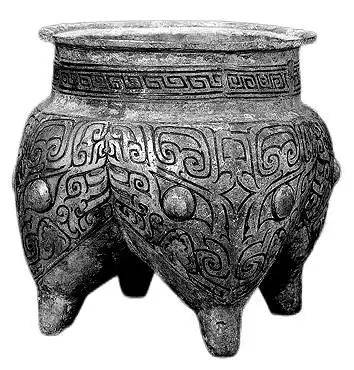
The bronze from the village of dragonhead in sihui han is about 1,200 b. C. Information pictures
The eastern mediterranean bronze civilization, with its prominent human figure
The new month of the eastern mediterranean was one of the first regions to usher in the era of brass, and its copper civilization, acting under the natural “routing” of the eastern mediterranean, has had a significant impact on the surrounding regions of north africa, southern europe and the iranian plateau, thus forming the circle of copper civilization in the eastern mediterranean. The circle of civilizations is vast, the internal geography varies considerably, and there is some variation in the copper civilization within the country, broadly divided into three sub-regions: west asia, north africa and southern europe。
The differences between the three sub-regions of copper are mainly manifested in parts and shapes, such as the copper machetes, cats, snakes, shells, etc. In north africa, the copper sheep and deer in western asia and the urchins common in southern europe are largely absent from west asia and north africa. And, for example, north africans are the gods of common pharaohs with high crowns and the heads of beasts, western asians are the images of common kings and ordinary people, southern europeans are mostly gods and ordinary people, early and abstract, and late。
Despite the above differences, the commonality among the three sub-regions is also more pronounced - the appearance of brass or idols, followed by the appearance of brass cattle, seals, amulets, double-wing axes, etc. Bronze statues or statues are mostly associated with rituals, with smaller bodies in the early stages and with images of real people in the later stages. The image of the human being is that of the pharaoh, the king, the gods, the priests, the prayerers, the sacrificeers, the samurai, and so on, reflecting the spiritual belief and the religious atmosphere of the copper civilization in the eastern mediterranean。
There are many stereotypings on the eastern mediterranean brass, and few fine strippings, which have a direct bearing on the ease with which exercise techniques can damage the striped. The decorative content is much of a drawing of people, animals and the scenes of their lives. Complex copper instruments, such as humans and animals, are mainly made of wax loss; relatively simple weapons, tools, ornaments, etc., are more likely to be made of single or dual-forming foundries, supported by exercise and welding; packagings are generally made of copper chips, then of exercise or welding。
In time and space, the eastern mediterranean bronze civilization has experienced a process of proliferation from fresh moons to north africa, southern europe and the iranian plateau. It is important to note that since mid-2000 b. C., as the population of the northern steppes advanced towards the north-eastern mediterranean and the iranian plateau, the influence of the asia-europe steppe copper civilization on the region has gradually deepened, culminating in the formation of a much larger, more weaponized and more weaponized copper civilization in southern europe, the anatolia plateau and the iranian plateau, which reflects the exchange and integration of the eastern mediterranean plume civilization with the asian steppe。
The asia-europe bronze culture, represented by weapons
The western region of the asian-european steppe, the carpathian mountains, stretching from east to north-eastern china, stretches 10,000 kilometres east-west, with some variations in the internal geography and natural conditions, as well as some differences in the cultural appearance of copper, can be seen as a borderline between ural and altai mountains, and can be divided from west to east into three sub-regions of eastern europe, south siberia-central asia and the northern-mongolian plateau of china。
There are some differences in the types and shapes of the copper instruments in the three sub-regions, such as the eastern europe pop double-edged ax, the cross-edged ax, the pan-ax, the south siberia-central asia pop bow-back knife, the hook spear, the horn-shaped earring, and the north china-mongola principle pop tube ax, the bell knife, the bell-head sword, etc. However, commonality is more evident, such as the fact that weapons are highly developed, tools and decorations are common, and that at the end of the day they are popular in horses and tungstens, as well as in animal decorative arts。
Bronze axes consist mainly of three types: ax, ax, ax, ax, ax, ax, ax, ax, ax, ax, etc., with local characteristics. Axes, double-edged axes, crane axes and tube axes are mostly weapons, and axes can be used both as weapons and tools, and axes are used as tools. Bronze swords have a long duration, with short swords in the early stages and long swords in the later stages; the sword's head is rich, mainly in the form of head, head, ring, head to head, head to head of bird, head to head of t. Bronze knives are also rich in variety, most of them cutters, which are sometimes large machetes, most of them tools or instruments. Horse utensils, placards and platinum, the only widely used copper containers in the nomadic age of asia and europe, are found in the grasslands。
In general, asia-europe savannah copper civilization has evolved from west to east. In the middle of the third millennium b. C., copper metallurgical techniques spread mainly around the black sea region of the western steppe of asia and europe, and then gradually spread to the east towards south siberia and central asia. In the early 2000s b. C., the west-central copper civilization of the asia-europe steppe began to flourish, and the east started to emerge. In the early 1000th b. C., the asia-europe steppe gradually entered the iron age and the nomadic age, with the last remaining of its copper civilization。
Chinese copper civilization with containers at its core
At the end of the third millennium b. C., china entered the bronze age, with china's bronze civilization divided around the great wall, qinqing-ye river, and three sub-regions, north, china and south. Among them, the northern part, located along and near the great wall in the eastern part of the asian-european steppe, is an important part of the asian-european steppe culture of copper, which is dominated by tools, weapons, decorations, and is not fundamentally different from the mid-western part of the sub-asian steppe in its type and foundry technology. The chinese copper civilization is centred on containers, in addition to common instruments, weapons, tools and motor vehicles. The southern region was affected by the chinese copper civilization before entering the copper age, and the more south-east and south-west, the later it entered. At the macro level, the southern bronze instrument is essentially the same as the central region, except for a slight difference in the details of the bronze set, the shape, the tattoo and the circumstances of the burial, which is the secondary type of the cyan cyanide civilization。
Over the course of the development of the chinese copper civilization in 2000, as represented by the chinese copper civilization, it can be seen that the characteristics of the container at its core have not changed, but in some detail. For example, from the early days of the summer to the early days of the week, copper containers were dominated by wines such as wines such as wines such as wines such as wines such as wines such as wines such as wines such as wines such as wines such as wines and wines such as wines such as wines such as wines and wines such as wines such as wines such as wines such as wines such as wines such as wines such as wines and wines such as wines such as wines and wines such as wines and wines such as wines such as wines and wines, such as in the name of animals, dragons and fowlooks, and the image of rare people such as animals。
The set of brass instruments is also an important feature of china's copper civilization. The main types of instruments are zhong, zhong, zhong, zhong, bell, zheng yu, zhong, zheng yu, zhong, zhong, zhong, zhong, zhong, zhong, zhong, zhong, zhong, zhong, zhong, zhong, zhong, zhong, zhong, zhong, zhong and zhong. In addition, another salient feature of china's copper civilization is the large number of inscriptions, especially long inscriptions, which are clearly different from that of the eastern mediterranean and the asian grasslands。
China's copper packagings are mainly made of complex casts (mixed internal models combined with external models), which are significantly different from and more difficult than those of the eastern mediterranean and asia's grasslands, but are also more dynamic and more refined in casting copper. Simple solid instruments such as copper weapons, tools, decorations and so forth often use a simple dichotomy of casting. In sum, well-developed packagings, musical sets, multiplicity of inscriptions, block castings, etc. Are important features of chinese copper civilization。
The exchange of the three brass civilizations
The differences between the above-mentioned three forms of copper civilization are more pronounced in core categories, foundry techniques, etc., and can therefore be described as the three forms (or models) of copper civilization. It is important to note that these three types of copper civilization are not geographically distinct, and in their intersection they tend to be characterized by a combination of more than two types of copper civilization, such as south-eastern europe, the north-south caucasus, the iranian highlands, the southern part of central asia, the indus basin and the northern part of china. Moreover, there are a certain number of representative categories of other civilizations within each copper civilization, such as the eastern mediterranean, where there are also a certain number of brass weapons, tools and containers, the asian and european grasslands, where there are also some of them, and the chinese, where there are a certain number of copper weapons, tools and small numbers of human beings. Moreover, because of its vast size, there are some differences within each of the copper civilizations, and the more distant and the greater the differences。
There are exchanges and lessons learned among the three main brass civilizations, and there is still no evidence of direct exchanges between china and the eastern mediterranean, but there is extensive indirect exchanges, which are linked to the savannah copper civilization in the northern part of asia and europe. It is through this bond that the world system of brass civilization was formed。
The exchanges between the three main brass civilizations are two-way, from west to east and north to south, and from east to west and south to north. Often, such exchanges are not instantaneous, especially long-distance exchanges, which are usually accomplished through short-range exchanges such as long-term trade, war, migration, etc. In addition, some of the copper elements, such as seals, amphibians, double-edged axes, containers, gogs, beads, tungstens, wax loss and compound casts, are mostly spread in close range, while others that are highly adaptable, such as axes, swords, spears, swords, blades, tungstens, rods, head coverings, carriages, etc., are transmitted over long distances, and they have been found extensively in the eastern mediterranean, the asia-europe steppe and china, illustrating the extensive exchange and technical learning between the three copper civilizations。
Recently, in congratulating the establishment of the centre for the study of civilization in central greece at the university of athens, general secretary xi said: “in the long process of human history, all nations have created civilizations with their own characteristics and symbols, which together constitute a rich garden of human civilization.” the three main forms of copper civilization are resonant in asia and africa and are important in the evolution of human civilization. In the eastern mediterranean, the bronze culture has invented the metallurgical technique that alters the course of human history, thereby allowing mankind to leave the stone age and enter the bronze age. The asia-europe savannah bronze civilization spread this technology to the vast asia-europe continent while creating its own culture. In this context, china's bronze civilization has contributed significantly to the development of china's 5,000-year-old civilization and to the development of the world's bronze civilization, building on the cultural heritage of the long mountain era, drawing extensively on and absorbing the achievements of neighbouring civilizations, expanding its cultural roots and developing its roots。
(this paper is the result of the national fund for social science (nsf) “study of the chinese ancient copper activation”
The day of light (14th edition, 2023)



