The magnetic rotation column liquid tabler application range and feature blast-proof float fluid switch, also known as the blast-proof float fluid control. It is a water level regulator specially designed and prepared for potential explosive environments. The product is designed on the basis of floating and leverage principles. When the water level in the container changes, the position of the floater changes. The liquid bit。
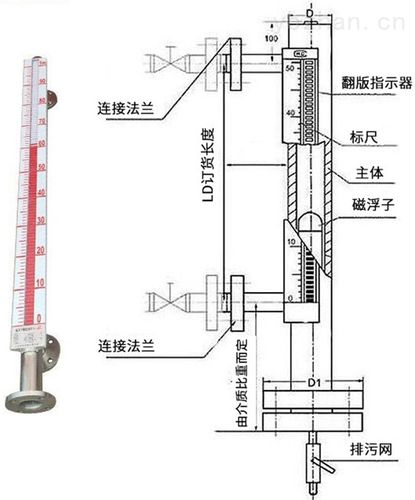
This shift in floats is leveraged on a micro-switch and micro-switch creates a switch signal. The structure of the magnetic float portometer (lip switch) is primarily designed and produced on the basis of the principles of buoyancy and static magnetic field. Floats with magnets (known as floats) are subject to buoyancy. The position of the magnetic float varies with the fluid level. Float magnets and sensors (guide switches) change the number of serially connected components in circuits (e. G. Fixed-value resisters) and thus the amount of electricity in the meter circuit system。
That is, changes in the location of magnetic floats cause changes in electricity. It detects electrical changes and reflects the water level of the container. Electronic and transporter modules consisting of sensors (lead switches) and precision electronic components can transmit and output electrical resistance signals, current values (4-20ma), switch signals and other telecommunications. It thus achieves a perfect combination of field observation and remote control. The application range and characteristic blast-proof float-level fluid tabler can directly export a resistance value signal or, together with the transformer module, can use an output current value (4-20ma)。

At the same time, it can be used with other converters to output voltage. The signal or switch signal (or, as required by the customer), converter is provided by the company. It achieves remote transmission, analysis and control of telecommunications. The blast-proof float switch is widely used in the petroleum, chemical, electrical, metallurgical, food, pharmaceutical and paper industries. It can achieve brake alerts and fluid level control for various containers。
The main principles of the principle are that the magneto-fluorometers (liquid level switches) can be applied almost exclusively to the measurement and control of liquid levels in the control of various industrial automation processes, as well as to petroleum processing, food processing, chemical industry, water treatment, pharmaceuticals, electricity, paper making, metallurgy, shipbuilding, boiler and boiler and liquid level measurement, control and monitoring in the same field. Magnetic voltometers are also referred to as magnetic voltometers, the structure of which is primarily designed and produced on the basis of the principles of buoyancy and magnetism. The position of magnets with floats (known as magnetic floats) in the detected medium is influenced by buoyancy. Changes in the liquid level change the position of the magnetic float and, as a result of the coupling of sperm strength between the magnetic float and the magnetic column (also known as the disk disk), the magnetic column has an angle (the surface of the magnetic shift to the column is different) (colored) reflecting the state of the liquid position in the container。
Main principles。