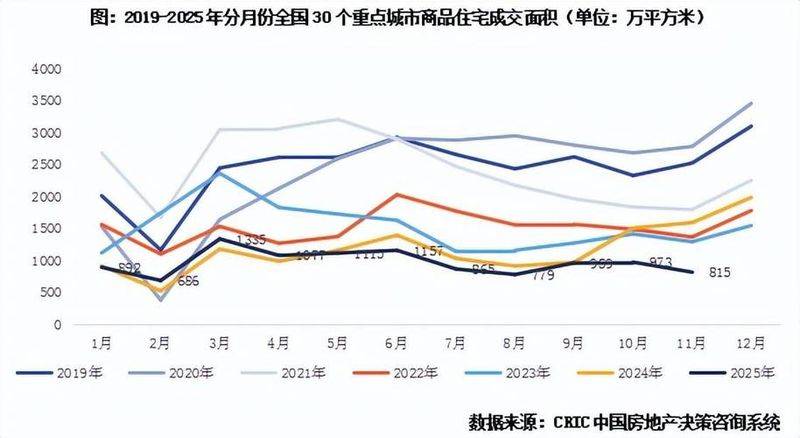
According to the institute, according to the 100-city price index of china's real estate index system, a survey of 100 new and second-hand residential sales markets and 50 urban rental markets in china, the average price of new housing in 100 cities in november was rmb 17,036 per square metre, an increase of 0. 37 per cent. In terms of the number of cities rising and falling, 31 cities rising, 64 cities falling and 5 cities even. In comparison, the average price of new dwellings in 100 cities increased by 2. 68 per cent over the same period. The average price of second-hand dwellings in 100 cities nationwide was $13143 per square metre, a decrease of 0. 94 per cent in the ring ratio, an increase of 0. 10 percentage points over the previous month. In terms of rising and falling cities, the price of secondary housing in 100 cities has fallen. By comparison, the average price of second-hand dwellings in 100 cities across the country fell by 7. 95 per cent over the same period. The average rent for housing in 50 cities in the country is 34. 36 yuan/m2/month, a decline of 0. 60 per cent in the ring ratio; in terms of the number of cities rising and falling, one city rose and 49 cities fell. In comparison, the average rent for housing in 50 cities in the country fell by 3. 57 per cent compared to the same period last year。

At the policy level, on 21 november, the ministry of housing and construction convened a national urban renewal promotion conference, which stated that “the ccp central office's office's views on the state council's action for sustainable urban renewal should be carefully followed up and should be adapted and innovatively explored, focusing on planning, financing, operation and governance”. It is expected that new urban renewal mechanisms will be further accelerated and that accompanying financial, fiscal, land and other support policies will be expected to accelerate the decline. At the local level, hangzhou, chengdu and the xinjiang district, among others, have promoted the mobilization of resources. Hangzhou has publicly sought advice on the regulations for the implementation of the interim realization of houses in hangzhou city, with a view to implementing the regulations for temporary realization of houses, optimizing the conditions for the purchase of housing by individuals outside the country; optimizing the policy of the provident fund loans in chongqing, fushan, etc., with a view to optimizing adjustments in terms of increasing the level of loans, optimizing the transfer of businesses, optimizing flexible job deposits, etc. At the end of the month, beijing issued a proposal for “fifty-five” planning, which proposes “continuing progress towards housing”. (b) accelerate the construction of new models for real estate development and improve the “market + security” housing supply system and the housing system for rental purchases”。
In addition, in november, the cities of chongqing and hubei issued nearly $35 billion in special-purpose bonds to repossess unused land. Several of them, including hubei and liaoning, issued special-purpose bonds successively for non-self-referral regions。
In terms of market performance, the overall supply of new housing remains low in november, with high-end improvement projects in the cities of shanghai, chengdu, hangzhou and ningbo, leading to an increase in the average price of new housing in some of the core cities, thus contributing to a structural increase in the price of new housing in 100 cities, but the overall market has continued to adjust. With respect to second-hand dwellings, the downward pressure on the price of second-hand houses at the end of the year has increased, owing to high listing and expected weakness. With regard to rental housing, in november, the housing rental sector entered the traditional sub-season,50 and the average rental rate of urban dwellings continued to decline。
Overall, the national urban renewal effort will clearly deploy high-quality initiatives to promote urban renewal, emphasizing the four dimensions of planning, financial security, operational efficiency, and governance upgrading. As the “fifty-fifty five” plan is put into place, city renewal or will gradually become a central engine for high-quality urban development, the accompanying support policies are expected to accelerate the impact. The short-term real estate policy is expected to continue to focus on the stabilization of the market, such as unreasonable restrictions on the clean-up of housing consumption, reduction of the cost of home purchase, and increased efforts to implement the renovation of urban villages, to facilitate the release of demand. In the medium to long term, the construction of a new model of development will be accelerated in line with the high-quality development goals set out in the “fifty-five” planning proposal, which will take the change initiatives to the ground. Market trends show that housing enterprises are entering the performance sprint at the end of the year, with a projected increase in quality new dishes in the core cities, and that new stock exchanges are expected to end, but overall market pressure remains. The second-hand house market is affected by, inter alia, higher listings, and prices are still in the game, with trades expected to remain stable at the end of the year。