What are the chess terms
As a long-standing intellectual game, chess not only has a rich method of warfare, from chess, board, walk, to many terms that are gradually stereotyped, but also has a rich cultural stock and taste. Here's what we've got for you. Let's study chess!
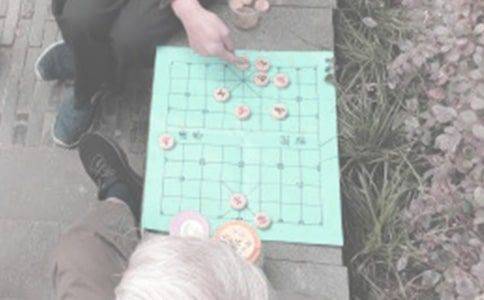
Board terminology
(a) the opening: the parties, in accordance with their strategic thinking, put the pieces into a stage of action, usually within 10 rounds, but the current research by the chess player into the opening has become deeper and deeper, with some of the open-ended changes reaching the first 15 rounds, with the later stages of the opening and the front stage of the middle;
(a) mid-term: the stage of exchange between the chess players behind the formation, between the beginning and the end;
(a) residual: it is an end phase characterized by a high level of troop consumption, a shift in the characteristics of the disk from a large number of subpowers in the middle to a small number of subpower interactions, a reduction in direct combat contact during the residual phase and the most critical movement of subpowers;
First hand: first hand at the start, first hand at the bureau。
Backhand: when the game starts black, the passive in the bureau。
It's a start。
Excellent: one side in the game moves out of the unexpected, thus achieving tactical success or initiative。
Right: the one or the number of people who had to go in the chess game was right or wrong。
Weaknesses: the lack of justice or inappropriate attacks and inadequate defence by one side often lead to unfavourable or failed situations。
Balance: the situation is balanced and equal in strength。
Entry: at the stage of a entanglement between the two sides, a tactical attack by one organization on the other and a direct victory for the attack may have been an entry process, which may have involved both killing and the crossing of the river by small soldiers, but must have been a process of victory。
Advantages: one side has more troops than the other, or has taken the initiative of the chess game and is clearly able to move。
Victory: one side is better off, the situation is settled, and the one that hopes for victory is better。
Chess terminology
(a) nine palaces: the "mixed" of the board in the area of handsome activity is usually converted to defensive when the other is approaching;
Midline: article 5 straight line in the chessboard and 5 (5) medium road;
(b) ribs: the 4th, 6th (4th, 6th) road around the middle line, which is the main defensive route;
Sideline: the first, ninth (1, 9) route of the board;
(a) riverline: the fifth line from the bottom up between the parties;
(a) lines (jinglin): the line from which both sides move down to the upper fourth line, where the initial position of the soldier is located;
(a) the top line of the palace: the third line from the bottom up, the highest position of the nine palace;
(a) second bottom road: a second line from the bottom up;
(a) bottom line: the lowest line on either side;
River patrols: the pieces of one side (generally vehicles, guns) are on their own river boundary。
Ride: the chess of one side is called river riding on the other。
Generals, generals, etc., attack the enemy commander (generals)。
Double generals: also known as double photos, one side moves a chess piece and attacks the other with two words. The same is true。
What should be done is to counter-attack, avoid and defend the general。
Death: the picture will not be able to claim death。
Caught: no chess for the chess party。
Kill: the walker tried to take the next general, killing the other, calling it “kill”。
Catch: after leaving, the next one eats one of the other without a root。
Beating: the means of assault, killing, capture, etc。
Against: walkers swapped with equivalent eaters, called "turn."。
No, i'm not a player。
For those who walk and feed, it is called a “contribution”。
Block: anyone who walks away from moving around the other side's power is called a “stop”。
Solving: anyone who walks directly to neutralizes the other is called “unkilled” and, if “unkilled” is given to the other, “unkilled” (the “unkilled” is the same)。
There is a root: if the captured child is protected by another child, he or she can eat the other, or “have a root” or “have no root”。