


I. Structure and rationale
Number one.
The center of the array is a square array area of 3 mm in length, engraving grid lines (commonly modified cow abalone). The grid is divided into nine large squares, the quadrant large square (1mm2) is further divided into 16 chinese squares and the central large squares into 25 chinese squares (each containing 16 small squares). The height between the counting room and the cape is fixed at 0. 1 mm, so that the volume of each large square is 0. 1 mm3 (i. E. 0. 1 ml)。
Counting principle 2.
Concentrations are calculated by measuring the number of cells in a given area in combination with diluting multiples. For example, if the quadrant large grids total several n cells, the formula is: cell concentration (e. G./ml) = n/4 x diluting multiple x 104 (note: 104 is a volume conversion factor of 0. 1 μl to 1 ml)
Operational steps and attention
Sample preparation 1.
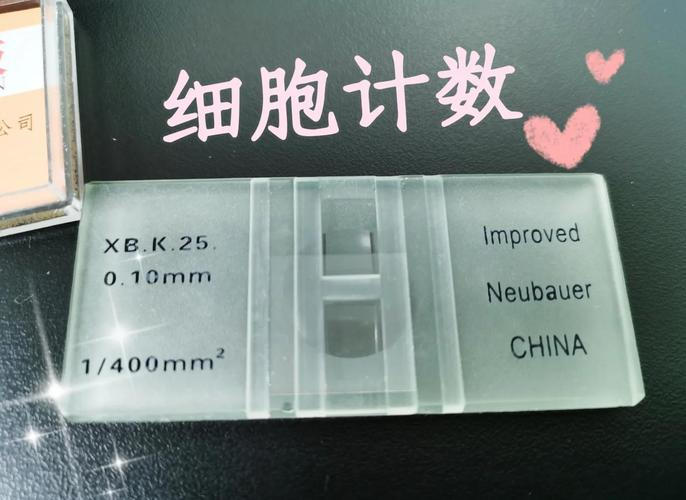
Cell suspensions need to be diluted to 5-50 cells per large grid (excessively overlapping concentrations, too low to increase error). Coloring increases cell recognition。
Filling pool and static.
The sample drops into the gap between the plate and the sheet, using the fluid transferer, and relies on the cavity to fill the counting room. One to two minutes of static deposition of cells and avoidance of drift impact counting。
Microscope count 3.
Using a low mirror (10x) positioning grid, high mirror (40x) observation. Statistically based on the principle of “no counting, no counting, no counting” of the pressure cells, reducing subjective errors。
Clean save 4.
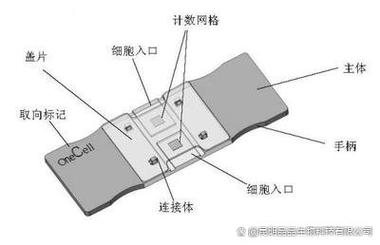
When used, it needs to be smoothed with alcohol cotton to avoid scratching. Long-term storage should be kept dry。
Application and limitations
Applying scene 1.
Advantages: low cost, simple operation, no need for complex equipment. Limitations:
Common issues
Select 1.
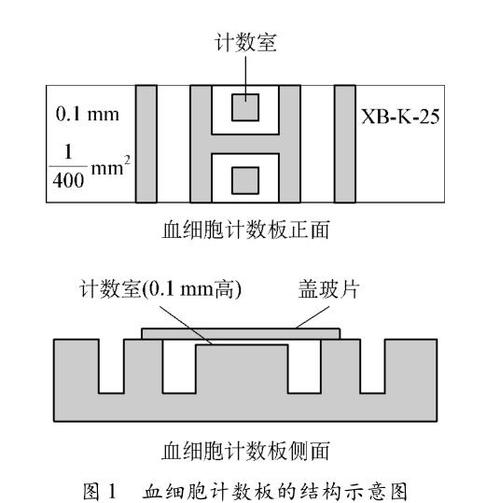
The blood count usually selects the four-angle large square and the central large square (red-cell four-angle, white-cell center); the microbial count selects a single large square。
Error control 2.
As a basic experimental tool, blood cell arrays need to be combined with standardized operations to obtain reliable data. For high-throughput or high-precision requirements, a combination of automation equipment (e. G., cell meter) may be used to support validation。



