Author, zhuan, kosheng
In the past two decades, the electricity provider's shopping entrance has remained virtually unchanged: the user has generated demand, opened the platform, searched for keywords, compared repeatedly in the list of commodities, and eventually completed the list. The process supports the flow distribution model of the electrician platform, but also exposes users to the long-term decision-making costs of overloading information。
This path is being rewritten as large models and ai assistants become popular. A growing number of users are beginning to describe the needs directly in the ai dialogue box, where they are screened and recommended. Bytes of bean buns, ali’s quiz, kyoto’s ai purchase and the amazon’s rufus are all trying to turn ai into a new consumer portal。
When shopping goes from “searching for goods” to “description of demand”, a new question emerges: will ai become a new electrician platform, or will it be just the next generation of electricians to direct purchases
01:00: ai is becoming a new shopping portal
More and more internet companies are turning ai into a new shopping portal。
Domestically, byte-jumping bean bags have begun testing ai shopping capabilities. When the user enters a " recommend a recommended shoet " in the dialogue box, the system not only provides text advice, but also directly displays a trade card from the city of dancing. Clicking on the card allows access to the commodity details page, and both the next and the next payment will be completed in the application without having to jump to the tremor mall. Public data show that the peak of active daily users of bean buns during the spring of 2026 reached 145 million, and once the shopping function is fully open, the byte will have a huge ai consumption portal。
It is based on a 100-degree search and a large-heart model, centred on ai-guided purchase + multi-platform jump + 100-degree preferences. Users can search for goods, prices, generate comparative tables in natural languages, and get recommendations for scenery, such as clothing, school equipment, and jump to kyoto, where they can do many things. The redfinger operator, launched in march 2026, supports cross-application automated operations that support the completion of the next order process. The words do not provide a closed ring for inside-site payments, with a major focus on information integration and decision-making support, while the 100-degree preferences achieve a list within the station and form a “search + lead + partial closed-ring” combination。
Teming yuanbao is based on a large hybrid model, leading ai-guided purchase + jump to third-party mode, and does not provide a closed ring for in-station payments. Since 2025, books have been kept on line, competitively priced, billed, annualized, etc., and have been connected to kyoto, micro-shops, prizes, worth of purchase, etc. During the spring festival of 2026, huenbao day broke by 50 million people, reinforcing natural language commodity referrals and scenario-based purchases, but jumping to the mouth changed from card to reference source and became more cumbersome. The core positioning of the beauties is to support decision-making rather than direct sales, and to bind deeply to micro-ecology, focusing on cross-platform consumption decisions。
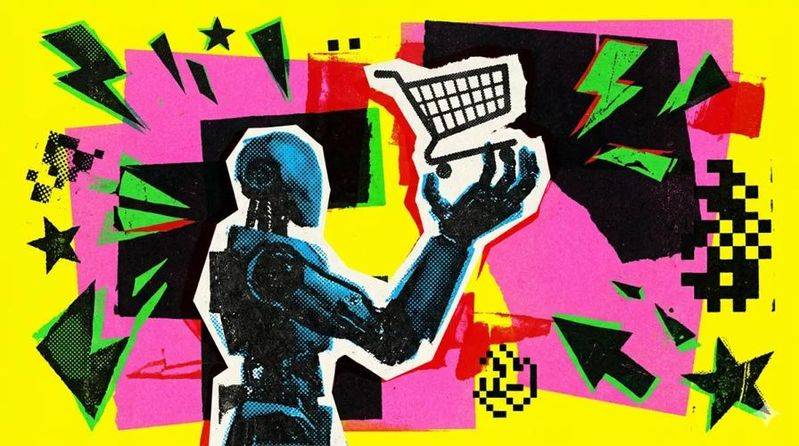
Ali created ai as a single entry point for the entire consumer ecology. In early 2026, the monthly active user of app has surpassed 100 million and has gradually been connected to treasure hunting, hungry, flying pigs and goethe. In the same ai dialogue interface, users can both search restaurants, plan routes and purchase goods and book hotels. It's more like the "ai superport" that ali is building than a chat tool。
The mission went online on 22 january 2026 as a “quiet” ai search assistant, with an inside search box at the top of the app. Based on a self-study of longcat's large model, it is possible to understand complex natural language needs such as “annual night dinner with a pet”. Based on local real-time data from the corps, it is recommended with precision, automatic vouchers, and smart prices. The result is a direct billing, covering the whole scene of take-out, catering, and the liquor brigade, and leading a one-stop intellectual decision-making exercise in local life。
Kyoto's strategy is more direct. The introduction of the independent application “kyoto ai purchase” at the end of 2025 has been significantly simplified to retain only the dialogue and recommended areas. User input requirements, such as “recommends around $4,000 mobile phones”, are given directly by ai, which can access the payment page by clicking. Complex commodity lists and screening conditions in traditional electricians have been compressed and the entire shopping process has been dialogue-driven。
Similar changes occur in overseas markets. In 2024, the amazon introduced rufus, an ai shopping assistant, with the entrance to the amazon app bottom navigation bar. Rufus understands complex natural language requirements, such as “recommending a waterproof watch of up to $1,000 to a boyfriend who likes outdoor sports”, and also compares product parameters, tracks price changes and alerts purchase when prices are down. By the end of 2025, there were more than 250 million cumulative users of rufus, and amazon data show that users using rufus are approximately 60 per cent more likely to be under orders than ordinary users。
Google tried to make ai a cross-platform shopping entrance. This was preceded by the launch of the general business agreement (ucp) by the united states of america (shipify, wal-mart and target). Under this model, users present their shopping needs in gemini or ai searches, which can automatically view multiple platform goods, compare prices, receive coupons and complete payments. In theory, users can complete the whole shopping process only once in a conversation。
These different paths point to the same trend: ai is becoming a new consumer entry point。
The industry critic pendew analyzed this: when users say to ai, "buy me a washing machine", ai usually gives a few recommendations directly and directs users to the respective platform to complete the transaction. In the process, the electrical platform still covers the supply of goods, storage logistics and after-sales services, but the starting point for consumer decision-making has shifted from the platform search box to the ai dialogue box. In other words, the competition around the ai shopping assistant is essentially not about the ability to sell, but about a more critical position: who can be the entry point for users to start shopping。
02: why is the electrical platform getting anxious
If ai's entry to the electrician is only part of the evolution of technology, the response of the electrician platform suggests that the matter has touched upon the core interests of the industry。
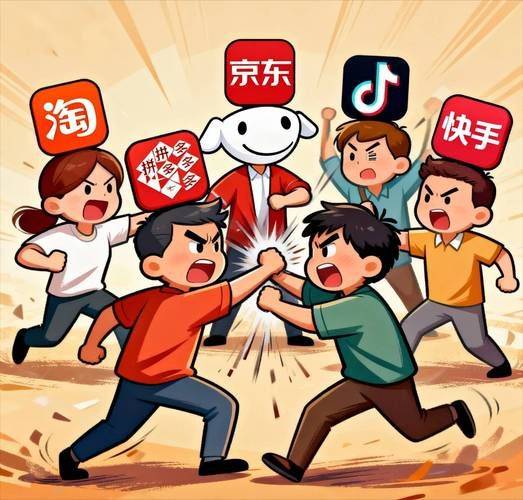
The real core assets of electrical platforms are never commodities, but entry points。
The brand strategic positioning expert, wu yu xing, believes that, as long as the user opens the platform app first when it comes to the demand for a purchase, the platform has the ownership of the entire consumption process - - what the users will see, which link they will click, and what they will buy will be determined by the platform's search and referral system. This is why electrical platforms can make money on a sustainable basis。
In the mainstream model, the platform does not depend on commodity price differentials for profit, but rather on liquidity. Businesses need to purchase advertising positions, participate in ranking competitions, and launch promotions to gain more exposure. The resulting revenue from advertising and marketing services has become an important source of revenue for major platforms。
The business model presupposes only one: users must first enter the platform. Once the entrance changes, the whole business logic is affected。
If the future user's shopping process becomes: demand, ai, recommended goods, list
Users then see at the decision-making stage no longer a list of the platform's commodities, but rather a small number of results after ai filters. The original search ranking, advertising bid and referral system of the platform will be weakened。
That is why the giants have started to set the ai portal themselves, rather than using ai as a platform support tool. In essence, they are trying to hold the consumption portal firmly in their hands and avoid third-party ai blocking the user's first stop. Deeper contradictions arise from differences in business logic。
Traditional platforms pursue more options. The more goods there are and the more exposure there is, the higher the advertising revenue available to the platform. As a result, the platform often displays a large number of commodity lists that allow users to compare over and over again among the many options。
The ai system, on the other hand, seeks less choice and better results. The goal of ai is not to present all commodities, but to select the most suitable recommendations from the bulk of the goods to the users。
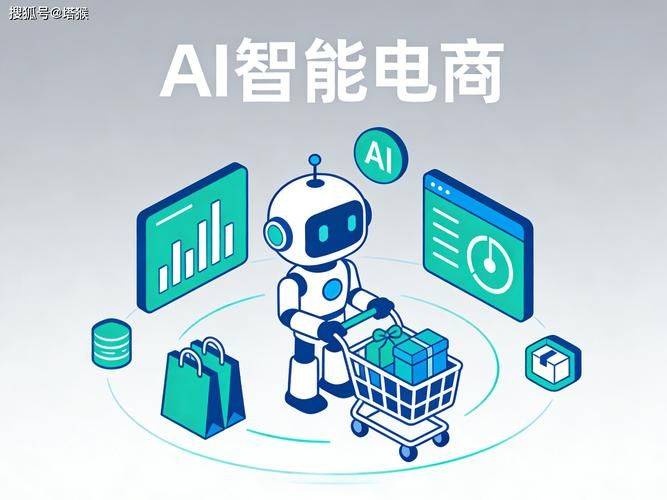
A simple example. If users search for “500-dollar running shoes” on an electric power platform, dozens or even hundreds of commodities tend to appear on the page; but if the same questions are referred to ai, the system may only recommend three to five products and explain the differences between them。
This approach is more efficient for users; however, for the platform, a large number of commodities will lose the opportunity to be demonstrated。
From a business model point of view, this is almost two completely different logics: electricians rely on flow distribution and ai pursues decision-making efficiency。
It is also in this contradiction that the competition patterns of ai electricians are becoming clearer: on the one hand, ai, which wants to become an importer of consumption, and on the other hand, the electrical platforms that try to hold the flow entrance。
03: why can't ai replace electrical platforms in the short term
While ai is becoming a new shopping portal, it is difficult to truly replace electric power platforms in the short term in realistic terms。
Electricians appear to be a “sale” industry, but the real core is not recommended commodities, but commodity systems, supply chain capabilities and compliance networks. These capabilities often take more than a decade to accumulate and are not quickly replaced by technical models。
The first limitation comes from commodity and inventory systems。