Tbe (methyl tert-butyl other) is an abbreviation of methyl tertbutyl ether, an organic ether with an oxygen content of 18. 2 per cent, and an excellent gasoline high octane additive and anti-explosive agent. Combining with the gasoline group has a good reconciling effect, with relatively low production costs, making it more economically efficient and widely applied. Mtbe can also be re-fissed to isobutane as a feedstock for rubber and other chemical products。
Mtbe is a colourless and transparent liquid that is soluble in gasoline and smells like ether. Methanol and isobutane are used as feedstock with a synthetic purity of approximately 97% ~99. 5% with acid catalysts。

1 product use
Mtbe is mainly used to blend lead-free gasoline. Because of its low evaporation potential heat, which is conducive to cold initiation, the use of gasoline additives is widespread worldwide. It can also be re-fissed to isobutylene as a feedstock for rubber and other chemical products. The best quality mtbe can be used as a medicine, as a medical intermediate. Commonly known as “medical-grade mtbe” or “medical-grade methylbutyl ether”。
Mtbe began to gain attention in the 1970s as a gasoline tune and component to increase the octane value of gasoline, replacing tetraethyl lead as an anti-explosive agent for lead-free gasoline. Mtbe and gasoline are able to soluble in any proportion without layering, and when combined with the gasoline group, there is a good blending effect, which increases the octane value of gasoline and is chemically stable. The addition of mtbe gasoline would also improve vehicle mobility and reduce carbon monoxide content in tail gas. It is also efficient and can inhibit the generation of ozone。
Since the 1980s, there has been a global ban on the use of lead in gasoline, and on 1 july 2000 we completely ceased the sale and use of leaded gasoline. This has led to changes in gasoline formulations worldwide. Oxygen, ether and alcohol are octane improvement agents for unleaded gasoline. The most extensive applications are represented by methyl tert-butyl ether (mtbe). As the quality of the oil continues to improve, and in order to compensate or increase the octane value of gasoline and to increase the oxygen content of gasoline for combustion purposes, the addition of mtbe to gasoline is widely used by our refinery, in addition to fuel ethanol。
2. Toxic contamination
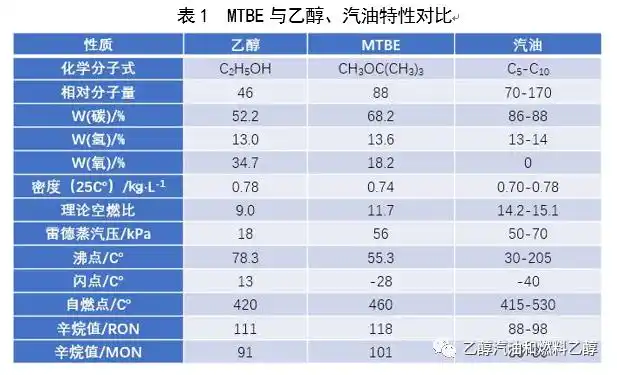
Mtbe has had significant results in increasing the octane value but is itself a potential contaminant. Because of its own oxygen and sulphur content, excessive additions cause excess oxygen and sulphur content in gasoline, while it is readily integrated with water and can seep into the soil. Mtbe also causes chronic and incomprehensible contamination of water sources, causing serious damage to human kidneys and liver. Its vapour can cause chemical pneumonia, mainly through respiratory absorption and through skin and digestive tracts, and animals can cause cancer in high concentrations of mtbe. Mtbe, even at very low concentrations, causes the stench of water quality, and the us epa has listed mtbe as a possible human carcinogen。
Mtbe water contamination has occurred in several states of the united states, mainly as a result of underground and underground petrol tank leaks, and mtbe is increasingly found in underground drinking water bodies in the united states, which, even at very low concentrations, can cause a bad quality of water, leading to the banning of mtbe as an additive to gasoline throughout the united states, mainly by replacing it with fuel ethanol. Following the designation of mtbe as a potential carcinogen in the united states, a number of developed countries in north america, europe and asia have introduced laws that prohibit or restrict the use of mtbe in gasoline. A study by a research institute in japan has shown that the mtbe content in gasoline is more than 7 per cent and that nitrogen oxides from automobile emissions increase. As a result, mtbe accessions to advanced lead-free gasoline in japan do not exceed 7 per cent。
3 downstream demand
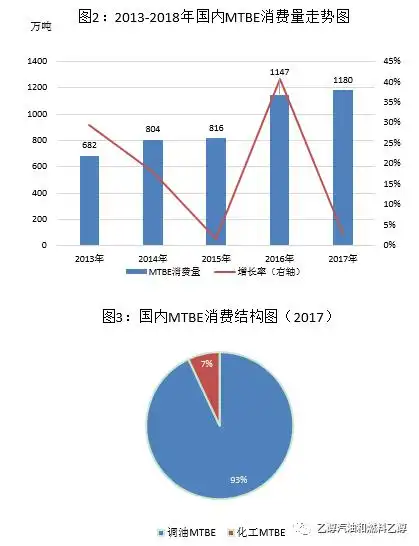
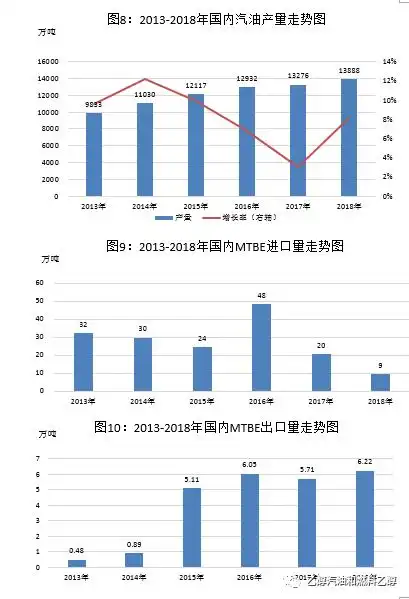
Domestic consumption of mtbe for the whole year of 2018 was about 12. 1 million tons, an increase of 3. 02 per cent over the same year. The main driving force behind the growth in mtbe consumption continues to be the increase in gasoline consumption and the driving force of the national gasoline upgrading policy。
As the national economy continues to develop and the population's standard of living grows, demand for petrol for cars increases, while demand for raw materials for px (diphenyl) and upstream re-engineering in the chemical industry increases, leading to an upward trend in demand for mtbe. The chemical uses of mtbe are mainly the production of high-purity isomers. Highly pure isobutane is used mainly in the manufacture of a variety of organic chemicals such as butyl rubber, methylacrylate (mma), polyobutylene, tertbutamide, tertbutamol, tertbutanol and antioxyoxin. Among these, the market capacity is large for the butyl rubber and mma products。
Production of products
Italy developed the world's first set of mtbe industrial devices in 1973. China began research on mtbe technology in the late 1970s and early 1980s. In 1983, the ziru petrochemicals rubber plant built china's first mtbe industrial test unit, and in 1986 ziro completed china's first mtbe industrial plant。
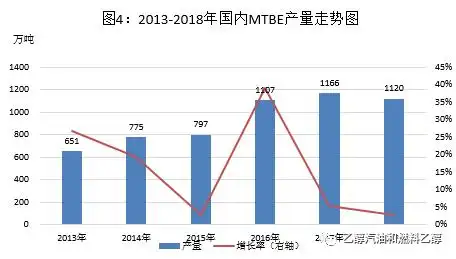
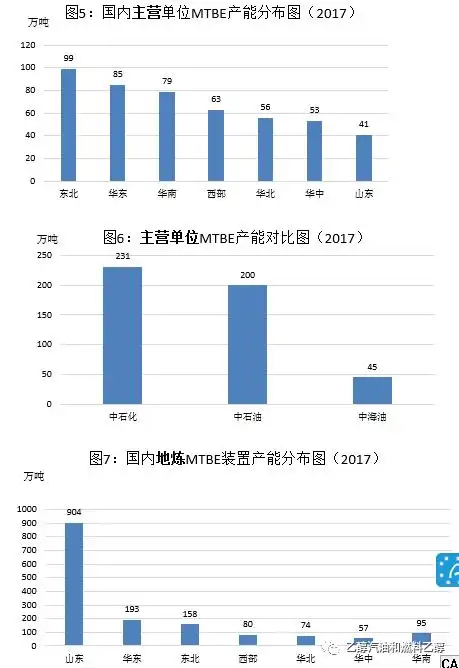
At present, there are more than 200 mtbe production enterprises, and the total capacity of mtbe installations in the country is 18 million tons per year, mainly in the shandong, north-east and east china regions, where capacity is located in the middle of the river. The increase in capacity and production has created a situation in which the current supply of and demand for the mtbe industry is now entering a significant phase of de-enabling, and the phase-out of the plant will accelerate significantly. With the successful operation of the 820,000 tons/year-old mtbe device, which is being continuously refined, the excess capacity of mtbe has increased, and intra-industry competition has become more intense. The fall in the mtbe movement since may has led to a deepening of the plant's losses, with some of the units having no choice but to stop working, and the rate of commencement of the mtbe installation in the country remaining at only around 50 per cent。
4. Competition for products
Mtbe has two main competing products: fuel ethanol and alkyl oil:
1. Fuel ethanol. Car ethanol gasoline is a variable fuel ethanol that is added to a percentage (10 per cent) of the volume ratio of specialized gasoline components that do not contain aerobic additives such as mtbe. The mtbe market will be significantly affected if ethanol gasoline is promoted nationwide. Data show that fuel ethanol plays a key role in transport decarbonization, and ethanol gasoline is more than 50 per cent less effective than pure gasoline. The “photo-chemical smoke” events in los angeles and elsewhere in the 1950s directly triggered the enactment of the united states clean air act, while the united states offered to promote ethanol gasoline. The clean air act, the first united states bill to promote ethanol gasoline, provides the legal basis for biofuel ethanol development. In 1979, the united states introduced the use of 10 per cent ethanol blended fuels. Currently, almost all of the 150,000 gas stations in the united states use ethanol。
2. Alkylides. In the composition of the high octane value, the mtbe octane value, although up to 115, is limited by oxygen (1. 7 per cent) and its addition is now close to the upper limit. As a result, alkyl oil will be added to the alkyl fraction of the high octane value. In accordance with the principle of optimization of oil adjustments and compositions, the proportion of alkyl oil added continues to rise as the standard pace of gasoline advances: from 2 per cent (country iii) to 3 per cent (country iv) to 6 per cent (country v). When gasoline was upgraded to the national vi standard, the aromatic hydrocarbon content was reduced from 40 to 35 per cent of the country's v; the alkyl content was reduced from 24 to 18 per cent, and the good properties of alkyl oil became the preferred fraction of the country's six gasoline. At present, the percentage of gasoline blending in the main camp is about 8 to 10 per cent for alkyl oil, while at local refineries it is about 10 to 15 per cent。