Fish breeders often make a mistake: filters, oxygen, and feed in a fish tank are fine, and only a light with a led light, and the fish are fed, either rotting, or lying down, and end up dying for no reason. Actually, the lights are not "unpreservedly decorated," but they're related to the life and death of fish and the water quality of fish tanks. You'll see why other people's fish live happily ever after。
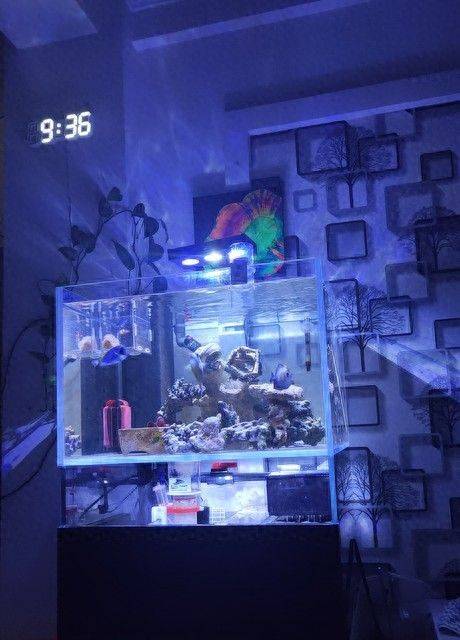
First, understand: what does fish death have to do with light? It's science
The small kings of the small district have killed five bowls of fish, filtrated three, and imported goods for feed are still useless. Then it turns out that he likes to keep the fish cask light on for 24 hours, saying, "look at the light hall." and? A layer of green algae grows in the water, and the tail of the fish starts to rot, and it turns in a few days。
It's no coincidence. Fish, like humans, need to be “interchanged day and night”: daytime activities, eating, rest at night, digestion. It's like people are tanned 24 hours a day, they can't sleep alone, and they have problems。
The light is too bright and too long, and fish are “tired”
Fish have no eyelids and cannot sleep behind closed eyes. If the light remained on, it would think that it had been “during the day”, that it would not have stopped to rest, that it would have run away, that it would have run out of strength, that it would have been longer, that it would have been less immune and that a small disease would have killed。
It's like people stay up all night, they can take it over and over and over again, and it's gonna fall. That's how my neighbor's peacock fish died, the lights were on for three days, the fish were all floating on the water, and the tail was too weak to fan。
The water is “bad” when the light is wrong
Green algae, brown algae in the fish tank, like strong light. The lights go on for too long, the algae grow mad, pile up the walls of the tank, entanglement the waterweed, and take oxygen from the fish. Worse still, the algae rot in water, which pollutes the quality of the water, and fish are in it like they're in dirty water, not sick。
The old fish breeder knows: “the water is clear for the fish to live”, and the key to water clean is the “lights are out”。
The three types of "light error" are the most likely to kill. Fish
1. All lights: uv lights, lights, fish can't hold them
Some people are cheap enough to put an ultraviolet disinfectant on a fish tank and think it's "preventable." in fact, uv rays hurt fish in the eyes and skin so much that in a few days the fish will be blind, flat and tortured alive。
There are also people who use their home lights, colour lights, and the light is strong and obvious. Fish are subject to long periods of direct exposure to light, stress (to stress to crash) and even break their heads and tails, slowly killing them。
Correct approach: select a special “fish tank lamp”, colour temperature around 6500 k (near natural light), light soft and unobserved. A few dozen dollars of led-cylinder lights. Don't count with the usual lights。
2. Lights are running at random: 24 hours or if you want to
When a fish is raised, it's two hours of light and three days of silence. As a result, the fish became “morning,” hiding while they were fed, and in the middle of the night they wandered through the tank, half dead in less than two months。
Fish don't have a clock, but they have a "living clock". Every day the light is short and short, it's confusion, eating, sleeping and getting worse。
Good practice: fixed lights for six to eight hours a day, like 8 a. M. And 4 p. M. To synchronize with humans. With a time-plug, a few dozen dollars, you don't have to switch with your hands, you're safe。
The light is not in the right position: the fish is “suffered” with a water-coated photo
Placing a fish tank lamp directly above the water surface, the light is directed to the water surface, forming a "high light zone" in the water. Fish either hide under the bottom of the tank, are afraid to come out of it, or they are too restless to eat and become ill。
It's like man standing in the sun, not hiding. The correct approach is to put the light on the side of the fish tank, or to block it with a lid, so that the light is evenly distributed in the water and not to form a “light spot”。
Three: different fish, different lights, different needs
Small tropical fish (peacockfish, red and green lamps): love “soft light”
These little fish are born timid and like darker environments. The led light is selected for 30-50 watts and is open for 5-6 hours per day, with no strong light。
I had a red and green lamp, which used 100 watts before, and all the fish were hiding under the grass and eating. It's a small power lamp that makes the fish swim out and live well。
Carves, goldfish: love “natural + timing”
Walls and goldfish grow well in an outdoor pond because of natural light. In the case of home-grown fish cisterns, not on the balcony (for fear of tan), you can approach the window, let the light in, then put in a fish cisterns light, and open for six to eight hours a day。
Note: the summer sun is strong, the curtains have to be drawn so that the sun doesn't shoot the fish tank, or the algae grow too fast。
Fish in the grass tank: the light is “gathering grass and fish”
Waterweed requires light to grow, but too strong light can drive the algae crazy. So the lamp in the cask, which is open for about six hours a day, chooses the “grass lamp” (which promotes co-operation of water and grass and inhibits the growth of algae) so that the fish live comfortably。
It's like, "let the crops grow and not the weeds grow crazy," and find a balance。
Lights are “fit together”, fish are less ill and live long
“say hello” before lights are turned on: prepare the fish
Every time a jar light is turned on, the room light is turned on, and the fish tank light is turned on in five minutes. Fish adapt slowly to changes in light and are not frightened by sudden strong light。
It's like when someone wakes up in the morning and pulls out the curtains so the sun comes in slowly, it's more comfortable than turning on the lights。
“one day per week”: “leave” for fish
One day a week is chosen without a fish tank light on the whole day, allowing the fish to rest completely. It's like sleeping late on a weekend and getting your strength back. It's the same thing with fish。
I've tried this way, before fish always fell in love with white spots, and after one day a week off the lights, the number of cases was significantly lower。
Regular wiping of lamps: don't let “dirty things” block the light
The fish tank lights are long, they're dusty, they're sprayed, they're darkened. Once a month, a dry cloth is used to wipe the lamp tube, so that the light is bright enough but not sharp enough for the fish to feel comfortable。
Final statement: fish farming without losing sight of “details”
Many people think that “fishing is changing water and feeding”, but it's not. Lights, water temperature, water flow, these seemingly insensitive details, are the key to the survival of fish。
How'd your fish cask light work? Is there any problem with the light? Let's talk about the comment area, let's get more people to know that the knowledge of fish farming is hidden in every little detail