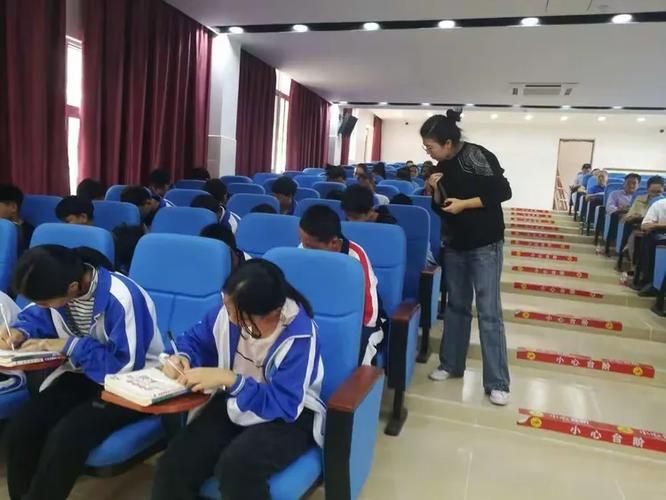
Every year, my 60 centimeters of water casks have a “disease”: green palace leaves are yellow, pyre pearls are rotting, even fish are hiding in the corner. Two years ago it was thought that it was “too hot to do anything”, and it was later discovered that the summer water casks were not “hard” but rather “smart” on light, fertilizer and grass selection. Effective methods are shared today, new hands do as they do, and weed survives the summer。
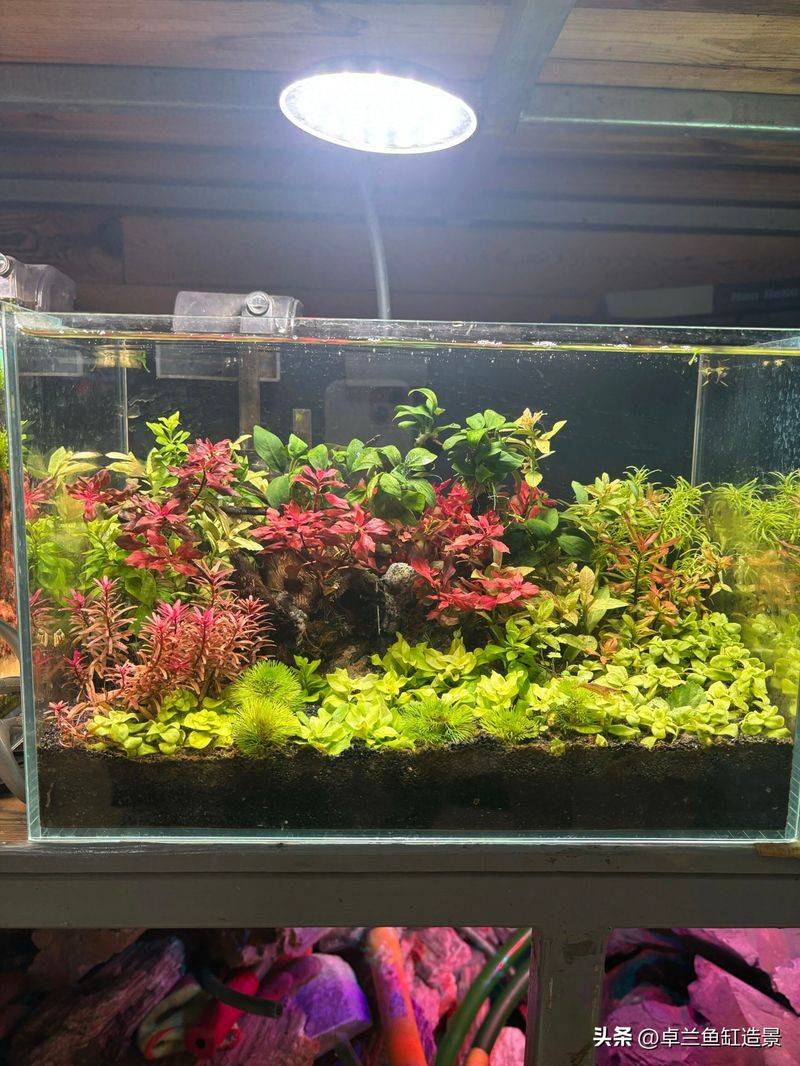
First, the light is not "hard" and it's key to avoid high temperatures
The sun poisons in the summer, the lights in the fish tank go up again, the weeds are easily “sunburned”, and the algae take advantage. I tried to turn on the light for six hours at noon, so the kelp on the jar wall was full for three days, and then adjusted the light time and strength, and the problem was solved。
These three luminescence techniques, hand-to-hand:
- the time of turning on the light is wrong: do not turn on the light between 12 noon and 4 p. M., when the water is the hottest, the weed is evaporated and dehydrated. Turned to 7 to 11 p. M., the water temperature was 3-4°c, and the water grass was obviously much better. I'm using a timer to set the time. I don't need to think about the switch lights。
- a decrease in the intensity of the light: the led light should not be turned on to 70 per cent of normal power. For example, it's 100% bright in normal times, 70% in summer, and the light is too strong not only for water and grass, but also for algae as long as weed. If we find the watergrass leaves turning yellow, it's too much light。
- insisting from the direct light: the fish tank must be placed by the window with the curtains (select 70 per cent of the luminous rate, not to use the full black) or cover the sunnet in the top of the tank. My fish tank was tanned westward, and the water warmed up to 32°c in the afternoon, and when the curtains were pulled, the temperature stabilized at 29°c, and the water grass never showed up again。
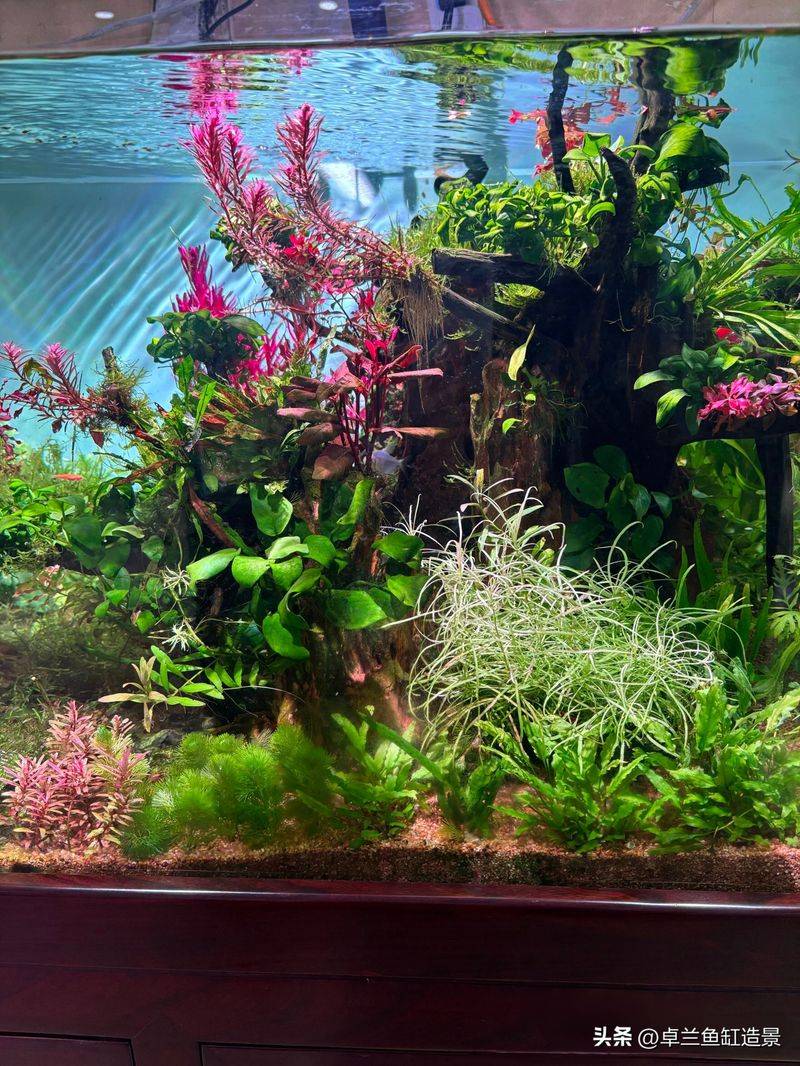
Ii. Don't be greedy. It's a burden to feed more in summer
In summer, weeds grow slowly and demand less for fertilizers than in spring and autumn, when they are fed at normal rates, they accumulate in the water, and they explode easily. I used to add 5ml of fertilizer to the old rules, and less than a week later a layer of fuzzy algae grew on the side of the herb, and the algae slowly retreated。
And in the summer fertilizing, remember the four words "reduced increase":
- half of liquid fertilization: 5 ml at a time and 2-3 ml at a time of summer, once a week. The preference is given to liquid fertilizers containing potassium high (the higher the content of potassium on the packaging, the better), and the absorption of potassium by watergrass increases the “heat resistance” and leaves are not easily yellow。
- don't break the carbon dioxide, but don't be too violent: the water is hot, the carbon dioxide in the water is easy to escape, the water grass is missing, leaves are gray. One third more than usual, for example, one bubble per second, and 1. 5 in summer. But don't hit too hard, otherwise the fish will lack oxygen, and when you find it, turn it down。
- leave the roots behind for a while: “long-acting weight” like a slow decomposition, not to be buried in the bottom sand in the summer, the temperature will release too quickly and become “rations” for algae. If watergrass (e. G., peppergrass) looks short of fat, you can use the syringe to take a little bit of fat to the root。
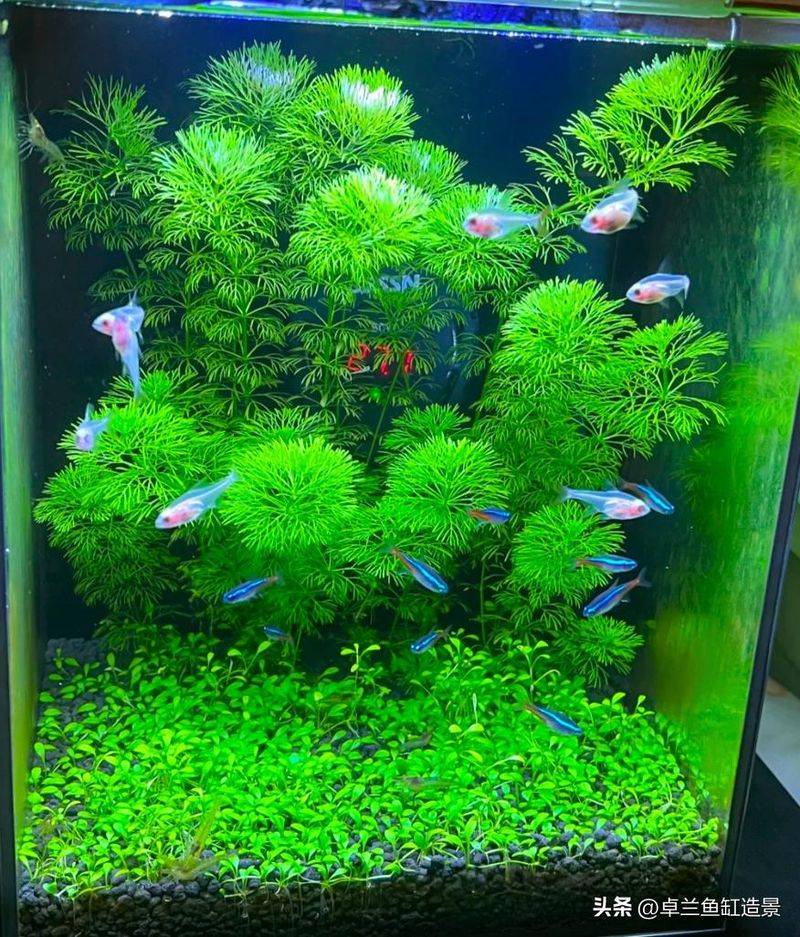
Iii. Choosing hot grass. Save half of summer
Not all waterweeds are afraid of heat, and some species are able to survive in water at 30°c, and freshmen turn on or flip out in the summer. I tried a few of them last summer. These three are the best:
Foreground grass: paddy pearls, little watering beams, long on the bottom of the tank, not afraid of heat
- paddy pearls: this is real, water's 33°c, light is not too strong, light is enough for four hours a day. Don't let it grow too dense in the summer, cut it with scissors every two weeks and leave it three centimeters high, or the leaves below will rot because they don't breathe。
- little waterland: the leaves are thin and long and fit in front of the fish tank. It's 30°c high, and even if it gets to 31°c occasionally, it just grows slowly and doesn't die. When you grow, don't squeeze too tight, leave a distance of five centimetres, make it easy to ventilate。
Middle backstreet: argentinian crown, salvatore, unstable
- argentinian crown lawn: the leaves are wide enough to grow up to 30 centimetres and are suitable for “background walls” behind fish tanks. In summer, as long as the temperature of water does not exceed 32°c, it is almost without concern that it should be laid near the root to lighten the fat (not too much, just a small grain), otherwise leaves tend to be yellow。
- selenium: it can live by being thrown into the water, which is called "the power of watergrass". When it's hot in the summer, it may not grow that fast, but it definitely won't rot. I threw a few of them in the tank last summer, and now they're green, and fish like to hide inside。
Floating grass: water sluice, leaf bellies, cooling and water purification
- aqueous: put a few on the surface, which can block a portion of the light and cool the water by 1-2°c. It also absorbs nitrogen in the water, helping to purify water. But don't put too much, just one third of the surface, and more will cover the light below, affecting other waterweeds。
- pie-pie: the leaves are like a little fan. They're good on the surface. Its roots absorb the dirty stuff in the water, make the water cleaner, and it separates something from the algae. Take out the dirt on the roots every week and don't make it too thick。
Water temperature control is “cloudy” and does not have to buy cold water machines
In the summer, weeds fear more than 30°c of water, at a time when it is not enough to use “light fertilizers” alone, but also to try to cool down. I didn't buy a cold water machine, and with a few low-cost methods, water temperature stabilized at 28-29°c, enough。
These two cooling methods are cheap and practical:
- frozen point “icing bottles” put in: fill the mineral water bottle with water to freeze into ice, wrap it with a towel (not to paste the wall of the tank so as to prevent the water from freezing), and put it next to the fish tank filter. An ice bottle can be piped for two hours, replaced by one, three to four times a day, and water temperature can drop by about 3°c。
- a little fan blower: find a computer fan, blow it to the water next to the fish tank, evaporate it. Be careful to add some water to the tank every day (screwd tap water), otherwise the water is scarce and its quality fluctuates. I use 12 centimetres of small fan, 500ml of water a day, and water temperature stabilizes at 29°c。
We'll change the water in summer, we'll trim it
In the summer, water quality changes rapidly, water change and weeding can easily cause problems if we are lazy. These two little details require attention:
- don't change water at once: one quarter per week in summer, one third as in spring and autumn. Water temperature fluctuations are too stimulating water and grass. It's the same temperature as the water in the cask with the water that's been dry for a day。
- keep the water grass too dense: over-heated water grass “takes oxygen”, high temperatures during the summer night, high oxygen consumption of the water herb and the loss of oxygen in fish. Cut every two weeks, cutting too tall and too dense water grass, for example, leaving the green palace 10 centimetres high to breathe down below. Cutting down the grass before throwing it into the trash can before it rots in the tank。
In fact, in the summer, the core is "don't dry to the heat," and when the light escapes the heat, the fertilizer is less fed, the water is more resistant to the hot grass, and the water grass can get through. I used these methods last year, and the water weeds in the jar, though not growing fast, did not die in large areas, and the fish were happy。
What's the problem with your swarms in the summer? Is it the grass, or is it the algae? You're welcome to talk in the comment section. Let's work this out。
(ai-assisted creation)