The birth of life is full of mystery, very magical. Mothers during pregnancy, from the very moment of conception, are always concerned with their physical changes. Especially during pregnancy, babies in the stomach grow up day after day as their mother's body changes。
Pregnancy is a magical and great biological process unique to women. The birth of a new life is accompanied by a difficult reproductive process for women. So, what are the physical changes in women during pregnancy? What kind of process is pregnancy
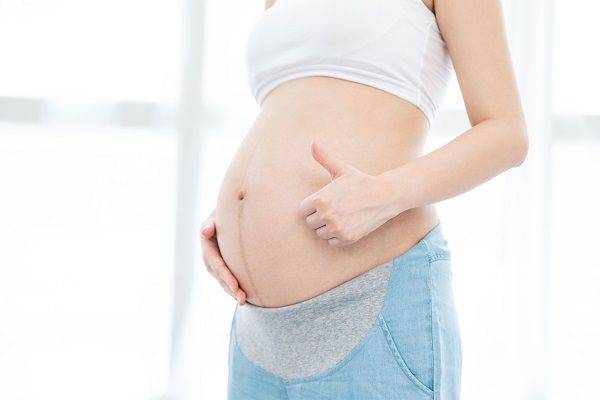
The process of pregnancy and physical change of women
The normal pregnancy is that the sperm of the male or female enters the female body, meets and binds it into a fertilized egg, then goes back to the uterus “settling home” and grows into a child until delivery. The total duration of pregnancy is approximately 280 days (about 40 weeks); during the three periods of early pregnancy, mid-pregnancy and late pregnancy, women's bodies change in a strange way。
If a woman who has sex has a regular period of menstruation and suddenly finds her menstruation to be off schedule, she is aware that she is pregnant. Because of the different physical conditions of the individual, there are some cases of breast swelling, dizziness, nausea, sleeping addiction, vomiting, etc., which are manifestations of early pregnancy. Since then, the woman's body has changed quietly。
The entire pregnancy process for women is complex and sophisticated, and is subject to the precision of the neuroendocrine system consisting of the hypothalamus-adream and ovaries. The system is medically referred to as the “hpou axis”, namely, the hypothalamus (h)-pear (p)-ovarian (o) axis, in addition to the uterus, which acts as an effect organ of the endocrine system, as an important role in the breeding of life。
The system is equivalent to a company. Among them, the hypothalamus is the top leader of the company, the pituitary is the middle leader, the ovary is the equivalent of the production line and the uterus is the consumer. The uterus, as an effect organ of the product produced by the ovarian, “consumption” of the product produced by the ovarian, is mainly manifested in cyclical changes in the uterine membrane。
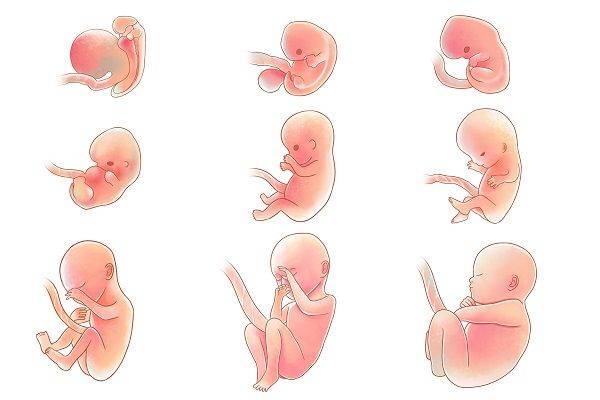
If the pregnancy is to succeed, first, the female ovaries can provide mature eggs, which are the basis for the pregnancy. At the same time, there is a need for men to provide sufficient and dynamic sperm and sexual life, especially during ovulation periods, in a pattern of mutual cooperation。
Throughout the period of pregnancy, the mother's systems undergo physical changes and functional adjustments as the foetus grows, in order to meet the needs of the foetus's growth and delivery, as well as preparation for post-partum breastfeeding。
In the early stages of pregnancy, women are prone to pregnancy responses, most often through nausea, vomiting, anorexia, and some women are more likely to react when they are seriously sick and unable to eat and may suffer from water, electrolytic disorders。
With the increase in the month of pregnancy, the tizziness has gradually increased, the breast has increased, the abdomen are being tanned, and the lower abdominal is likely to have pregnancy tattoos. The most obvious change is the abdomen, where the fetus is formed during pregnancy and in the later stages, when the abdomen are becoming larger and larger。
Ii. The course of the fetus ' family in the womb
So, how did the baby grow in the belly
First of all, how do you grow up and ovulate
In a normal menstruation cycle, where estrogen levels are low in menstrual women, the ceo of the hypothalamus directly acts on the protege, issuing instructions for the protracting of cystals that contribute to the growth of the ovulone, usually rising for a few days. Short-term rises in ovulation stimulants tend to bring up and mature only the last in the ovaries. The bulge eventually matures and ovulates further under the influence of yellow-created proton。
After the ovulation, the gestation hormones transform the uterine membrane of the uterus into genus, preparing the embryo for the bed and the continuation of the pregnancy。
Now, how do sperm eggs meet and form fertilized eggs
In order for a man to meet a woman's excreted eggs after sex, he needs to be assisted by a “crystal bridge” built by a fallopic tube and uterus。
The eggs are picked up at the end of the tube and transported to the abdomen of the tube, waiting to meet the sperm. After ejaculation, a large number of sperm enters the female vagina, and some of the “breeding forces” are able to swim into the cervix, cross the uterus, and eventually reach the abdomen of the tuber. At this point, they meet the eggs that are waiting to be fertilized and form them。
The fertilized eggs formed in the abdomen of the tubal canteen continue to split from one cell to four, eight, 16 during the transport of the tubal ... From cleavage embryos to sauna embryos to cystal embryos. The embryo reached the uterus during the 5-6 days of ovulation. At this point, if the uterus is fully prepared and synchronized with the development of the cylindrical embryo, the two “dialogues well” and the embryos will be laid。
The embryo will continue to develop from the clinical stage of pregnancy after it has been laid to the stage of clinical pregnancy (the pregnancy capsule can be seen through b), and in the next nine months, the foetus will give birth for a full month。
So, this amazing pregnancy has been successfully completed。
Iii. The key word for pregnancy: synchronization
In the light of the above, a wonderful process of pregnancy depends on the interaction of organs. Of particular importance is the need for co-operation between the pyrethroids, the ovary and the uterus, and the key to “synchronization” between the endocrines and functions of the various organs。
The key to normal pregnancy, which requires the precision regulation and cooperation of the hypothalamus-pear-ovarian-uterus in the female reproductive endocrine system, is the “synchrony” between the four, the most central of which is the synchronization of the embryo with the inner membrane, which, in general, is whether the “seed” and the “soil” develop in tandem. For example, there are women of advanced age or with poor ovarian function who are ovulating quickly after their menstruation or menstruation, at a time when the development stage of the uterine membrane does not satisfy the conditions for embryonic bed-laying and, as a result, the development of the ovulation and the development of the inner membrane is “not synchronized”, which would make it difficult to get pregnant. The problem of synchronization is a central challenge during pregnancy, and its study has been a hot spot and a difficult one in this area。
Pregnancy is a great and wonderful process, during which women experience multiple physical changes. Pregnant mothers, by acquiring knowledge about pregnancy, are able to respond and adapt reasonably, and believe that there must be a happy pregnancy experience and a healthy baby。