Hello, i'm autumn maple. I bring you up to date every day, with more content, and every day with dry stuff

Friends driving a new energy car probably heard the phrase: “cars can run, batteries are disabled”。
Many people buy electric cars that are attracted to re-carriage, pigmentation, intelligence, but after a few years, what's most disturbing is not a re-shrunk water, but the maintenance of batteries after a problem — either told by 4s to “just change whole packages” and to spend tens of thousands, if not hundreds of thousands, of dollars; or the detection report is vague, and it is only local cores that are broken, but it costs the whole package。
This “no-fix, no-go-price maintenance” disorder allows many drivers to call “affordable cars and cannot repair batteries”。
But as of 1 april 2026, all this will be completely changed. The interim measures for the recycling and integrated use of used power batteries in new energy vehicles, issued jointly by the ministry of industry and communications, the national commission for development and reform, and the ministry of ecology and environment, were formally implemented as the first binding sectoral regulation in the domestic power battery sector, the core of which was “the ability to repair and strictly prohibit the replacement of complete packages” and the direct reduction of battery maintenance costs so that the owner of the vehicle would no longer be a “meal pain” for the battery problem。
Why is battery maintenance so expensive? All three pains hit the owner
Before the new rules, the maintenance of new energy car batteries had been the “heart disease” of the owner, with three main core pain points:
1. Force whole packages to be replaced and partial failure to spend the whole package
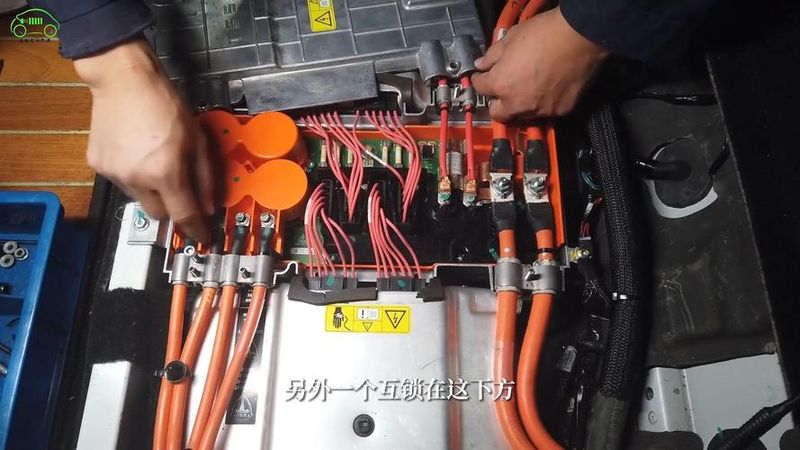
Power cells consist of hundreds of thousands of cores, and most of the malfunctions in daily use are single cores, modulations, such as the ageing of a particular core, short circuits, or poor line contact, which requires the replacement of the fault section。
However, many 4s stores and maintenance facilities directly require the replacement of the battery pack on the grounds of “unopen technology, inaccurate testing and insecurity”。
For example: a compact electric vehicle of around 150,000, with battery pack replacement costs of approximately 20,000-30,000; medium-sized electric vehicles of more than 200,000, with replacement batteries of 5-80,000; and high-end vehicles of more than 100,000. In fact, partial repairs may require hundreds to thousands of dollars, and this “replacement” operation has cost the owner several times more。
Technology monopoly, no choice for the owner rights
Core battery technology, testing standards and maintenance data are in the hands of car companies and battery manufacturers, and third-party maintenance agencies have no technical information or specialized equipment to carry out repairs at all。
The owner was forced to go to the 4s store without price, no choice and only to accept the price offered by the other party, even if it felt unreasonable。
3. Tests are not transparent and health determinations are based solely on business accounts
Many of the car owners encountered retrenchment and went to the 4s store for testing, and only “battery health xx per cent” was reported, with no specific hard core data, fault position, and no explanation for the decline。
If the health level is less than 80 per cent, it is recommended that the package be replaced, but the owner has no knowledge of normal decay or failure, nor can he question the results of the test and is in a completely passive position。
It is these things that keep many people from looking at new energy cars, and that place the owners of already purchased cars in a situation where they can't be repaired or replaced。
Ii. New regulations of april 2026: five core changes, directly benefiting the owner
This new rule is not a “play-in-the-box”, but a complete policy regulation of battery maintenance and recycling, each of which is linked to the owner's wallet, with five major changes in its core:
Forced “capable of repair” and mandatory replacement of packages
The new regulations clearly state that maintenance agencies must conduct comprehensive testing of power cells, distinguish the type of failure, maintain robust maintenance, and refrain from forcing the replacement of packages。
The entire package could only be replaced if the battery bag was damaged as a whole, unrepairable or if the cost of maintenance exceeded the replacement cost。
This means that, in the event of subsequent battery failure, the maintenance agency can no longer use the pretext of “safe” “technology” as a direct excuse for changing the whole package, which must first be tested, repaired and removed from the root causes of the “replacement” windfall。
Technology openness, breaking the 4s monopoly
The new regulations require that car companies and battery manufacturers make battery technology information, testing standards, maintenance processes available to compliance third-party maintenance agencies, along with specialized detection equipment and accessories。
This means that, in the future, the owner will no longer have to stare at 4s, and compliance third-party institutions will repair batteries, and the market will compete and prices will naturally fall。
According to industry estimates, about 75 per cent of local battery failure occurs after technology has been opened, and maintenance costs are only 10-30 per cent of the total package replacement, such as $800-3,600 for minor electric vehicles and $1600-9,000 for compact electric vehicles, representing a direct saving of more than half of the previous tens of thousands。
3. Testing standardized and health transparent
The new regulations are accompanied by a uniform battery health test (gb/t 47136-2026), which requires a detailed test report from the maintenance agency, including the voltage, capacity, health, failure location, cause of decay, etc. For each core, with clear and traceable data。
Through the national power battery information platform, drivers can search for their batteries' “digital identification cards”, from production, loading, maintenance to recycling, with clear life-cycle information and no longer afraid of being fooled by businesses。
4. Old batteries may be deducted from maintenance costs and saved an additional amount
The new regulation requires companies to set up recycling service sites at the municipal level, and the replacement of used power cores and modules by owner maintenance cannot be discarded at will and can be recovered at regular sites。
When recovered, the cost of maintenance is directly offset on the basis of the battery's capacity and health discount, which is generally between 10 and 20 per cent。
For example, the maintenance of batteries cost $5,000, the old battery credit 500-1,000, and only $4,000-4,500, equivalent to another saving。
5. Dismantling of vehicles by single and eliminating battery loss
The new regulations make it clear that new energy vehicles must be “one car at the end of their life” and that batteries cannot be removed in advance, without which no deregistration will be carried out by the dmv。
This provision is primarily intended to prevent the diversion of used batteries into illegal channels, while also safeguarding the rights and interests of the owner of the vehicle - when the vehicle is scrapped, the recovery value of the battery is owned by the owner and will not be withheld by the business。
Iii. How much will the owner save after the new rules? Reference to true cases
In order to make the benefits of the new regulations more visible to all, a comparison of maintenance costs has been made by combining different models:
1. Microbikes (30,000-50,000)
- old pattern: battery bag replacement cost $8000-12000
- new rule: $800-3,600 for partial maintenance, $6400-8400 for savings
2. Compact domestic vehicles (10-15 000)
- old pattern: batteries replacement cost of $16,000-$30,000
- new regulations: local maintenance: $1600-9000, saving $14400-21000
3. Medium suv/sedan (0-300,000)
- old pattern: battery bag replacement cost of $50,000-$80,000
- after the new regulations: $5,000 - $24,000 for partial maintenance, $45,000 - $56,000 for savings
It can be said that, with the introduction of the new regulations, most of the car owners will be able to save tens of thousands to tens of thousands of dollars from battery failure and truly “affordable and secure”。
Iv. The owner of the car must look at the new regulations
While the new regulations offer many advantages, the owner, while repairing the batteries, should be careful not to step on the pit as follows:
1. Selection of compliance maintenance agencies
When the new regulations are implemented, there will be a large number of third-party institutions entering the battery maintenance market, and the owner will have to choose a qualified and documented institution and not go to a roadside shop to avoid the use of poor-quality accessories, which will affect battery safety。
The list of compliance and maintenance agencies can be consulted through the network of officials of the ministry of state for industrial and technological affairs and the official app of the company。
2. Request for detailed testing reports
Prior to maintenance, it is essential that the agency issue a detailed test report identifying the location of the failure, the maintenance programme, the breakdown of costs, and the signature confirmation before maintenance is performed to avoid disputes at a later stage。
3. Prioritization of official quality assurance during the quality assurance period
In accordance with national regulations, the third power system (cells, electrics, electrical controls) of new energy vehicles has a quality warranty period of no less than 8 years or 120,000 kilometres, and non-anthropogenic failure during the quality warranty period allows for free maintenance or replacement。
Following the new regulation, maintenance during the quality assurance period will also be more regular, and the owner will no longer have to fear being denied the quality assurance on the basis of “normal decay”。
4. Old batteries remember recycling credits
The replacement of used batteries for maintenance must be handed over to the formal recycling site and not discarded or sold to vendors at will, not only to offset maintenance costs, but also to avoid environmental pollution and meet new requirements。
V. Implications of the new regulations: not only saving money, but also promoting healthy industry
This new regulation is not just about saving money for the owner, but, more importantly, promoting the healthy development of the new energy automobile industry。
On the one hand, the technology monopoly has been broken and the battery maintenance market has become more transparent and standardized, forcing car companies and maintenance institutions to improve the quality of services and reduce prices
On the other hand, the recycling of used batteries, the reduction of environmental pollution and the promotion of the downgrading and reuse of power cells are consistent with the concept of green development。
For consumers, the lower cost of battery maintenance would also further dispel the concerns about car buying and increase the willingness to choose new energy vehicles and promote a virtuous industry cycle。
With the introduction of the new regulations in april 2026, the cost of battery maintenance has been significantly reduced. Do you think this will change your perception of new energy vehicles? Have you ever seen a battery "just change and not fix" around you? Welcome to the comment section. Let's talk about your car