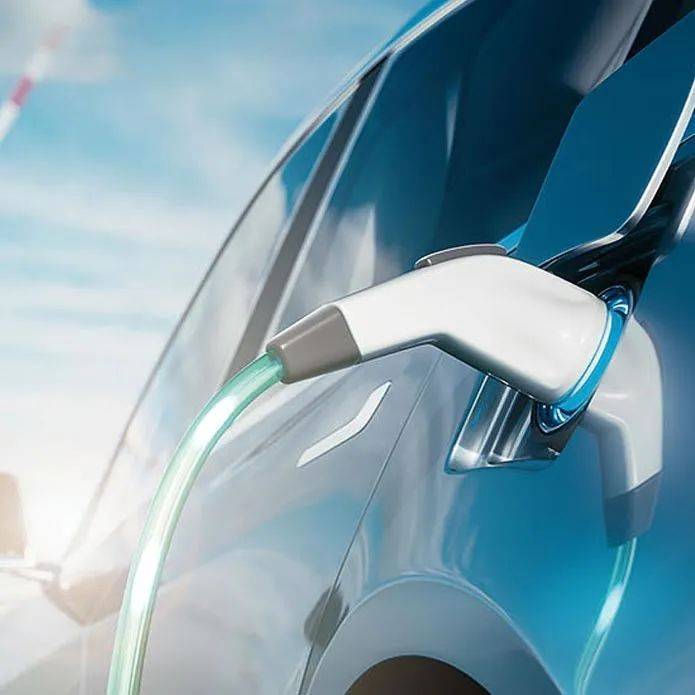
Recently, the main guard of the new energy truck in beijing has been a little trouble because of the problem of after-sales。
In 2019, a new baby was added to the family due to the delay in moving the fuel vehicle purchase target, and it was soon that the guard was able to qualify for it. On the advice of his wife's classmates, he purchased a wilma ex5 discovery, which, although it was not allowed to charge the stakes in the district, was generally good to experience using the car。
Until last year, it suddenly became felt that there were many 4s stores in wilma “none of them” and that the two nearest 4s stores in his home were now nearly 10 km away from the north korean road and the wong 4 bridge, respectively, which made him feel somewhat uncomfortable. This year, in particular, negative news about the wilma continued to appear on the internet, which made the guardian a little nervous. He called the sales commissioner and comforted him by saying that, although the door shop at the time of the purchase of the car was closed, other stores were still available to deal with any problems encountered by the guard。
Despite this, it is difficult to eliminate the anxiety in the heart: “the 4s store is still there, but there is no guarantee that it will always be there. In case the 4s shop is closed, my car will have to be sold without a place to repair, and it will be of no value. The maintenance shop outside is not free to go because the electric car is full of high voltage power and many car repair shops are afraid to do so, so it will be a trouble.”
In addition to fears that future repairs may not be forthcoming, after-sales services at 4s have not been very satisfactory over the years and, in his view, after-sale service staff are “unprofessional”. Because, in driving, he clearly felt that the brake system was insensitive, “slow, but fast, it always felt unstoppable, and there was a push forward, and i looked for 4s several times over the years, and they always said it was okay after a check”
The fear of the guards exposed the short board of services after the sale of the new energy car. In fact, in the last two years, the problem with the sale of new energy vehicles has become a “hard-hit area” for consumer complaints, with the sound of “high accessories”, “higher repair costs than cars” and “new energy vehicles starting to cut the second wave of pickles”。
New energy vehicles have been sold, but maintenance has become hot spots. According to industry sources, according to the current three packages of “100,000 kilometres over three years” of the mainstream new energy brand, the automobile market would generate millions of de-recovered vehicles in less than three years. Post-sale maintenance will be the biggest challenge for new energy vehicles, their owners and their providers. What has to be confronted is that there are still problems in the market after the sale of new energy vehicles。
Question one:
Uneven industrial development
According to wang ho, chief executive officer and founder of the copola automobile advisory service (qingdao) ltd., which focuses on the market after the sale of new energy vehicles, the problem with the sale of new energy vehicles is rooted in the constant adjustment of the main lines of development of the automobile industry, which has led to the collapse of the industry and the lack of sustainability of the development of the participants。
For traditional automobiles, the high investment and long-term returns of new energy vehicles have led to insufficient attention and slow transformation; for new car-builders, the focus has been on digitization, financial operations, overall operational capacity and core competitiveness。
On the whole, the transformation of the traditional manufacturing sector into a high-tech industry, the “moor law”, which led to the emergence of an “unadaptation disorder” in industry as a whole, has led to greater volatility in the integration of old and new systems, with north-south disparities, inland-coastal disparities, and urban-rural disparities not developing in parallel, but without a positive mechanism for improving the overall common problems of industry in new developments。
Question two:
After-sale repair is not given enough attention
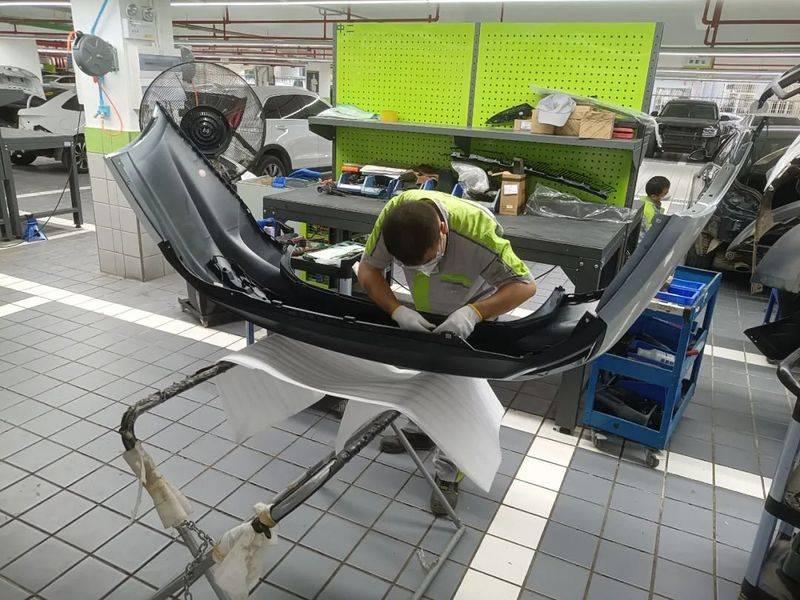
The secretary-general of the new energy automobile branch of the chinese association of automobile circulation noted that the replacement of engine systems and related parts by the three power systems, as a result of the different configurations of new energy vehicles and fuel trucks, had resulted in a significant reduction in the failure rate and in the turnover of spare parts. An important link in the profitability of fuel trucks is the supply of spare parts in after-sale services, which are now significantly reduced by the replacement of spare parts, and the resulting substantial reduction in the profits that can be derived from after-sale services, thus reducing the importance that companies attach to after-sale services。
Question three:
Inadequate system of post-sale policy standards
According to wang ho, three packages of services are based on conventional fuel vehicles, with insufficient consideration of the characteristics of new energy sources, intelligent networked vehicles, definitions of gross distribution, controversy over the protection of user rights and interests, and no restrictions on the supremacy of car companies; after-sale service standards, rules and regulations are not clear enough, and black holes exist in user use。
The spare parts supply side of the new energy car, with no means of intervention in the monopoly of spare parts, has led to high costs of car making, maintenance and lack of clarity as to how homogenous parts are developed and used; and the recycling and re-manufacturing side, with no operational rules for the operation of the recycling network and for the use of ladders. At the second-hand level, there is a lack of guidance on the detection, identification, evaluation, post-sales security, etc. Of new energy used vehicles。
According to zhang hong, the key is the lack of testing standards for batteries, as batteries are not only the most critical power system in the car but also the most priced core component in the body parts. Thus, in after-sales services, the assessment of battery loss, number of recharges and battery residuals is particularly important. This requires uniform, objective and fair standards, which are currently lacking in the market。
Question four:
Inadequate stock of maintenance staff
According to cheung hong, first of all, training facilities and institutions in the after-sales market are not keeping pace with demand and lack training materials because of the rapid development of new energy vehicles. Second, the marketing mechanism has been changed from an agent and authorization system to a direct-account system, with direct-camping sites often larger than delivery centres and after-sale service centres, and sales and post-sales operations separately. As a result, salespersons continue to feed, while after-sale service providers are in a state of incoherence, and it is difficult to form a system of services before and after sale。
According to wang ho, there is currently a large gap in new skills in areas such as detection, maintenance, insurance and recycling, but market availability is limited and combat levels are uneven and market-based services are constrained. This is due to the large differences between the size of vocational colleges and the number of real needs, the greater differences in the quality of talent and the demand on the market, and the fact that socialized training is not well suited to contribute fundamentally to the development of a system for training after the sale of healthy new energy vehicles。
Question five:
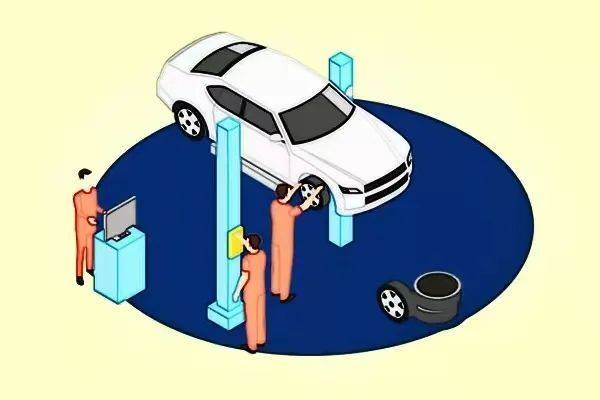
Lack of evaluation mechanisms for after-sale maintenance services
According to wang ho, the core drivers of investment agencies, industry organizations and so on, have focused much of their attention on the macro-levels of technology, research and development, production, manufacturing and consumption, and insufficient attention has been paid to specific applications such as the construction of supporting systems and the safeguarding of user services, resulting in inadequate and inconsistent standards of after-sales services. The wide variety of brand services, the lack of well-developed guidance in the industry and the absence of monitoring and evaluation mechanisms have led to market disruptions and poor distribution。
In the current environment, after-sales services have not received much attention and it is not easy to establish a third-party evaluation mechanism. Who would operate first, and what qualifications would those operators need? Second, how does it operate, where does it come from, charging consumers? These are all issues that must be considered in order to establish an evaluation system。
Question six:
Low level of intelligent maintenance
Wang ho described the current low level of intellectualization of new energy vehicle maintenance, the overall low number of enterprises with specialized new energy vehicle detection and maintenance skills and the heavy dependence on mainframe plants and three power plants, as well as the low number of new energy vehicle intelligent detection, diagnostic techniques and equipment and inadequate functionality。
Cheung hong noted that intelligent r & d teams and after-sales teams are often disconnected, and that more time and energy is devoted to developing how to achieve their desired intellectualization, while neglecting or underestimating intelligent after-sales services. As a result, the current state of intelligent after-sales service is often that clients abandon problematic smart packages and are forced to acquire new ones. In the long run, however, clients have abandoned not only the smart packages that are problematic, but brands that are not repaired。
Question seven:
After-sale service resources are highly monopolized
Wang ho pointed out that one of the embarrassments in the current market after the sale of new energy vehicles is the lack of openness of technology and data related to after-sale services, the high monopoly of spare parts and technical support in the hands of a small number of enterprises, and the high threshold of diagnostic technology for the detection of new energy vehicles and high patent barriers, which have led to the exclusion of most after-sale markets from the core business of new energy vehicles。
In addition, various specialized auto technology research institutes and institutions of higher learning, as well as private research and development enterprises, are currently working to develop diagnostic technology for new energy vehicle detection, although the level of technology has not yet reached the market level. Battery detection techniques, for example, allow 16 data to be tested in laboratories in 60 minutes, but in the market, one hour of testing tends to drive the client out of patience. The test period must therefore be reduced to three to five minutes before the client is willing to undergo the test。
The 10 million-dollar threshold for retention means that new energy cars are no longer small, yet, in the course of journalists' interviews, many of the users interviewed stated that they were afraid to buy new energy vehicles, including the fear that “batteries are useless” and that “too many cameras, too many broken cars, can't afford to be repaired” and that “new energy vehicles are less aware of oil tankers, and the water is sold and repaired than they want to be. It appears that the faster the sales of new energy vehicles go, the worse the reputation may fall, if the problem is not resolved。