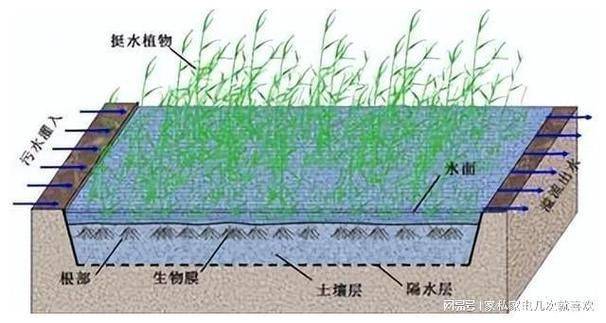
Plants in artificial wetlands play an important role in controlling pollution of water quality and degradation of harmful substances. These plants contribute to the ecological functioning of wetlands through a variety of mechanisms, including adsorption, absorption and utilization of nutrients in sewage, especially in the removal of nitrogen from phosphorus. It provides an overview of the biological properties of wetland plants and the manner in which they are grown, which are commonly used in artificial wetlands, for study. 1- the reeds (phragmites australis) have been grown in large, multi-year plants, also known as reeds, with well-developed underground roots, strong roots, strong growth, and growing plants. Reeds grow with more stringent requirements for light and are part of a highly photogenic plant variety. Reeds have a high capacity for cooling and flogged underground for winter. Reeds are one of the main plants in the current artificial wetland, with resistance to saline (durable salinity of 6000 mg/l), and the removal of pollutants. Cultivation is done with a bush with a whip. The plantings are followed by shallow water conservation until the foundation is fresh and the back-seat deep water is properly managed. 2 zizania aquatica (zizania aquatica)) 菰禾 undergraduate, 菰 underyear-old shallow-water grasspad with a shampoo. Up straight, up 1-2m. Leaf membrane, approximately 1. 5 cm long, top point; foliage flat wide, 50-90 cm long, 15-30 mm wide. The cone is 30-50 cm long, and most of the branches are made up, up, and the fruit starts. A cylindrical round, approximately 12 mm long, small embryo, 1/8 fruit. It is a well-developed, water-intensive, water-abundant, deep, soft, soil-rich, organically fertile, adhesive, adhesive or border soil。