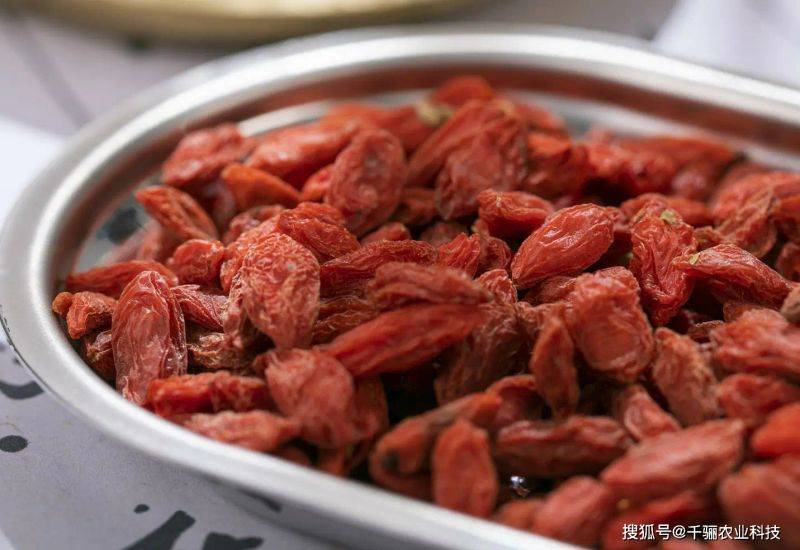
Lyciumbarbaruml., a multi-year leaf-bearing shrub belonging to the eggplant, is a typical representative of our traditional medicinal congener. This drought-tolerant plant is known for its bright red fruit, which is rich in a wide range of biologically active ingredients, such as sugar, beetline and carrots, and has the effect of nourishing the liver and kidneys and improving their brightness. In recent years, as the awareness of healthy breeding has increased, market demand has continued to grow, not only as traditional medicine, but also more widely applied in areas such as health-care foods, beverages, cosmetics, etc., showing significant economic value. Achieving high-yield and high-quality cultivation requires, first and foremost, an in-depth understanding and satisfaction of its specific environmental requirements, which are the foundation and key to successful cultivation。

Ii. Climatic conditions for planting
Temperature precision control required
The platinum is more adaptable to temperature but has specific temperature needs at different stages of growth. The most appropriate growth temperature for the spring and autumn festival is 15-25°c, which allows for new growth and flowering. Of particular note is the exceptional cold tolerance demonstrated during the winter, which allows adult plants to withstand temperatures of -25°c, allowing them to travel safely over the winter in much of the northern part of the country. However, the onset of the spring period requires special attention to guard against the hazards of the spring winter, which may be irreversibly damaged by sudden colds。
Scientific balance in water management
The annual demand for precipitation is more appropriate in the 400-800 mm range, but its drought-resistant properties allow growth in areas with low precipitation. The key is to establish scientific irrigation and drainage systems. The growing season ensures that soil moisture is moderate and avoids over-drying or over-wetting. Particularly during periods of fruit expansion, proper water supply is essential to increase production. Drainage facilities must be improved before the rainy season, as the root system is extremely sensitive to water accumulation, which can lead to its decay for 48 hours。
Full satisfaction of light needs
As a radiant plant, luminum has higher requirements for light. Throughout the year, the number of daily hours shall be guaranteed to be more than 2,500 hours, and in particular, direct light of not less than six hours per day during the growing season. Adequate light not only affects the efficiency of light cooperation but is more directly related to the accumulation of fruit quality and active ingredients. In the case of insufficient light, plants are prone to long growth, with reduced flowering results, poor colouring of the fruit and a marked decrease in the active ingredient content。
Iii. Soil conditions for planting
Reasonable choice of soil type
The requirements for soil types are relatively liberal, but the best option is to decompress the fertile sandy border. The sandy border is well ventilated and drained, facilitating root system development and extension. Bonded soils need to be improved by mixing, adding organic fertilizers, etc. To improve their physical structure. For soil acid alkalinity, argon is suitable for growth in a neutral or microalkaline environment, with a maximum ph range of 7. 5-8. 5. When planted in acid soils, lime is required。
Continuous cultivation of soil fertility
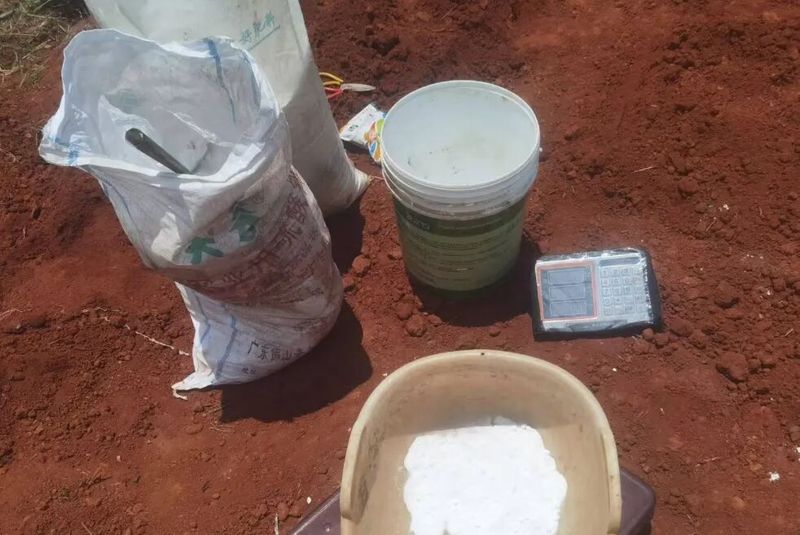
The ideal oscillation soil organic content should be above 1. 5 per cent. In addition to sufficient quantities of elements such as nitrogen, phosphorus and potassium, attention needs to be paid to the balanced supply of moderate and trace elements such as calcium, magnesium and zinc. Soil tests should be conducted prior to planting and based on the results of the science-based weighting. Fertilized organic fertilizer of 3,000-4,000 kg per acre is usually applied, with 50 kg of calcium phosphate used as base fertilizer. It is noteworthy that thallium is sensitive to chlorine ion and that high chlorine-containing fertilizers should be avoided。
Fine management of water regulation
Soil moisture retention is an important factor in the growth of the argon. Ideally, the soil should maintain both proper moisture and good air penetration. Water conservation in the soil can be significantly improved by adding organic matter and using membrane cover. In arid areas, water-saving irrigation, such as drip irrigation or seepage, can be used; in rain-fed areas, planting and draining canals are required to ensure that the field does not accumulate water。
Iv. Tests of transfer
Strict screening of quality seedlings
The selection of good varieties adapted to local circumstances is the first step towards successful cultivation. At present, the main plant varieties are ning, no. 1, no. 7, etc., which are characterized by high productivity, high productivity and disease resistance. Seeds need to be sterilized before seed planting, and can be immersed for 24 hours with 50°c water or 30 minutes with 0. 3% potassium permanganate solution. In the case of prophylactics, a one-year viable branch, with a length of 15-20 cm, should be chosen to ensure that each plug has 3-4 full buds。
Accurate time and space arrangements for planting
Spring planting is the best option, usually between late march and early april, when the soil is unfrozen and the temperature rises back, contributing to the recovery and growth of the roots. Plantation density, depending on the characteristics of the species and soil fertility, is typically configured at a line distance of 2 to 3 metres and a range of 1 to 1. 5 metres. This density ensures both ventilation and ease of field operations. When planting, care should be taken to stretch the roots, so that the depths of the treetops are suitable for the ground to be flatened, and the root water should be poured immediately after planting。
Comprehensive field management measures
Irrigation management needs to be adapted flexibly to the growing season. Large water requirements during embryonic and fruit booms should be ensured, and water should be properly controlled during flowering and fruit ripening. Fertilizers are applied in accordance with the principles of "basic feet, pursuit of fatty", which are followed three to four times a year, focusing on three critical periods before the bud, after flowering and during the booming period. Pest and disease management should be primarily preventive, with regular field inspections to detect and address problems in a timely manner。
Scientific applications of biological agents
Biopharmaceutical use: compound oligarine。
Combination oligarine is by definition a complex of several types. The chinese term "oligosacchariide" refers to compounds that contain a combination of 2-10 (also known as 3-10) sugar slurry keys, often combined with protein or lipid co-prices and in the form of sugar or sugar。
Combination oligarine, which is derived from plants (mether herbs) and biochemical technologies and is developed exclusively. It can activate specific metabolic pathways for microorganisms and achieve protein synthesis correction。
This technology allows for the integration of soil micro-ecological rehabilitation, the physical metabolic correction of medicinal products, the efficient conversion of drug-planting straws and ecological conservation, the provision of fundamental pathways for the decomposition of herbal herbs with self-toxic effects, endemic diseases, the spread of the nuccultary cycle of bacterial diseases, agricultural disability and contamination of heavy metals, and the coordinated regulation of technical barriers to the “high-yielding cultivation, stable material maintenance and ecological sustainability” of the production sites。
Advantages of compound oligarine:
1. Increased seed sprouts in crops and more than 80 per cent of seed sprouts
2. The effects on the root system, which are well-developed and nutritional microbolic
3. Improving the efficiency of light cooperation in crops
4. Improving the resilience of chinese herbal crops and reducing the incidence of diseases
5. Increase crop breeding sites and increase the number of solid grains
6. Improving the resilience of chinese herbal crops
7. Pre-cooking to pre-empt the content of herbal active substances
8. Improve crop quality and increase production by more than 20 per cent。
V. Effects of elective effects of purpose
The virtuous cycle of soil ecology
Science-based planting has a positive impact on soil health. Its developed roots improve soil structure and increase soil organic content. Soil fertility can be continuously increased through such measures as slurry restoration and green fertilizer. It is important to note that, in order to avoid co-inclusion, cultivation should normally be reversed after five to six years。
Co-development of regional ecology
The impact of oscillation on the surrounding ecological environment is mainly in the areas of soil and water conservation and wind sand protection. In the north-west, the zolin belt can be effective in reducing wind and sand hazards and improving local small climates. At the same time, long masonry periods and abundant honey can provide a good habitat for local insects and birds and contribute to biodiversity conservation。
Paths to sustainable development
Achieving sustainable growth in radial cultivation requires the promotion of ecological cultivation models. This includes the adoption of water-saving irrigation technologies, the promotion of organic fertilizer use and the establishment of integrated pest and disease control systems. In addition, emphasis will be placed on branding to improve product value added through green certification, organic certification and harmonization of economic and ecological benefits。
Summary
The success of pyrotechnic cultivation depends on precision control of environmental factors such as climate, soil and so on. Appropriate temperature conditions, adequate light and sound soil structure are the basis for high yield quality. As consumption upgrades and health awareness increases, the industry faces new development opportunities. In the future, greater emphasis should be placed on improved varieties, standardized production and technological innovation, and on promoting the high-quality development of the petro-industry sector. Farmers are advised to choose suitable varieties according to local conditions and to apply scientific planting techniques, while paying attention to market dynamics and achieving sound operations。