♪ filling the "block" of yunnan blueberries ♪
In china's blueberry supply map, yunnan is undoubtedly the “core variable” of the recent remodelling of the price cycle。
Prior to the rise of yunnan, china's blueberry areas were mostly concentrated in the north and south-west guizhou. However, the natural maturity of the blueberries in these traditional areas is concentrated in summer. The summer is also the centralization of fruits such as cherries, watermelons, almonds, etc., which means that blueberries in the north compete not only with their peers' internal rolls, but also with other fruits whose prices do not offer much advantage。
Yunnan is completely different。
The light and heat conditions here allow local blueberries to be sold from november to may of the following year. Some growers are able to even advance their listing to october, by way of early warning. This time cycle coincides with the greening phase of the domestic fruit market, which is home to few fresh fruits in winter and most in demand。
What enabled yunnan to seize this time gap is the choice of new varieties and changes in planting patterns。
Yunnan currently has a large-scale expansion of the southern high-string blueberries, a variety of hybrids imported from overseas. The yunnan fragrance blueberries familiar to the consumer market today fall into this category。
In addition, matrix cultivation models are commonly used in greenhouse sheds in yunnan. Instead of relying on local soils, blueberry seedlings are grown individually in basins filled with special soil, which completely separates yunnan blueberries from the fate of traditional agriculture, “food by heaven”, and turns to agricultural industrialization。
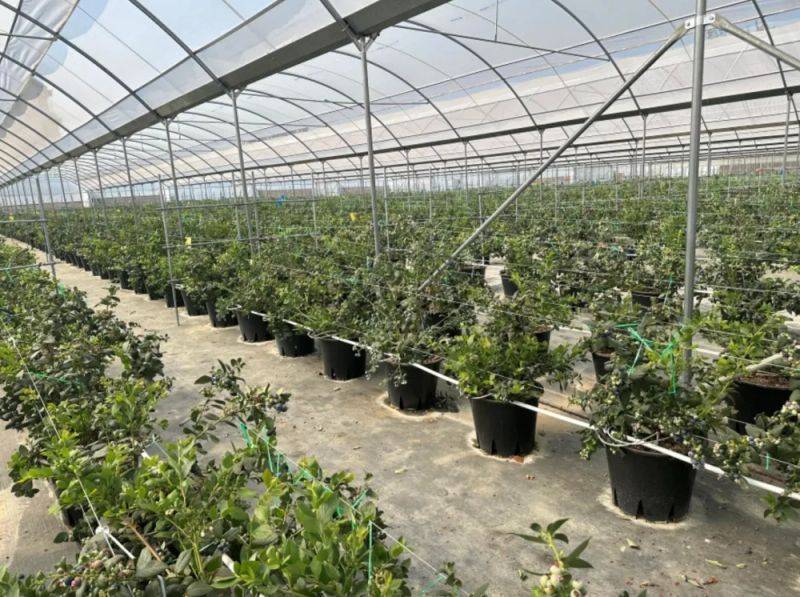
Blueberry cutter. Source: yunnan agricultural institute
The pre-maturity and industrialization of the blueberries in the south, combined with a low-latitude high climate in yunnan, which is not cold during winter, has allowed the scale and production of yunnan blueberries to flourish over the past few years and to complete the production capacity。
It keeps breaking
Nationally produced blueberry breeding study
Yunnan's unique climatic conditions are the cradle of local development of the fine fruit industry。
However, the cost of base planting is higher than the cost of open cultivation. At present, a series of production costs, such as plant-planting materials, seedlings and so forth, cost approximately $40 per basket of blueberries. Orchards can grow basins of about 500 to 600 per acre. According to this calculation, the cost of production per acre amounts to 20,000 to 24,000, which is only a portion of the cost of production that is not calculated for land rental and labour expenditure。
Yunnan abandons its natural soil and instead promotes this high-cost planting pattern, with choices based on blueberry biology。
First of all, blueberries have no hair。
The vast majority of fruit trees rely on the main roots and side-strengthed root hairs to absorb moisture and nutrients efficiently, but blueberries have only weak mustache roots. This physical deficiency makes it extremely critical of the soil environment. The heavy, compact soil that must be rooted cannot penetrate, while the red earth, which is widely distributed in yunnan, is very much more adhesive and less ventilated. The roots of the soil are highly suffocated if they are not directly grown with improved soil. Under traditional cultivation patterns, yunnan does not have so many suitable land to grow blueberries。
Second, blueberries are extremely acidic. It can only grow healthy in highly acidic environments. Once the soil environment is slightly neutral or micro-alkaline, the plant is yellow or even dead。
That's why yunnan chose the matrix cultivation model. - the transfer of blueberry trees into closed containers, which are equipped with a percentage of the substances, such as coconut and peat, supplemented by an intelligent integrated water fertilizer drip irrigation system, for precise planting management. This artificial environment has greatly increased the probability that blueberries will survive in yunnan and is a central reason for their rapid increase and concentration in yunnan。
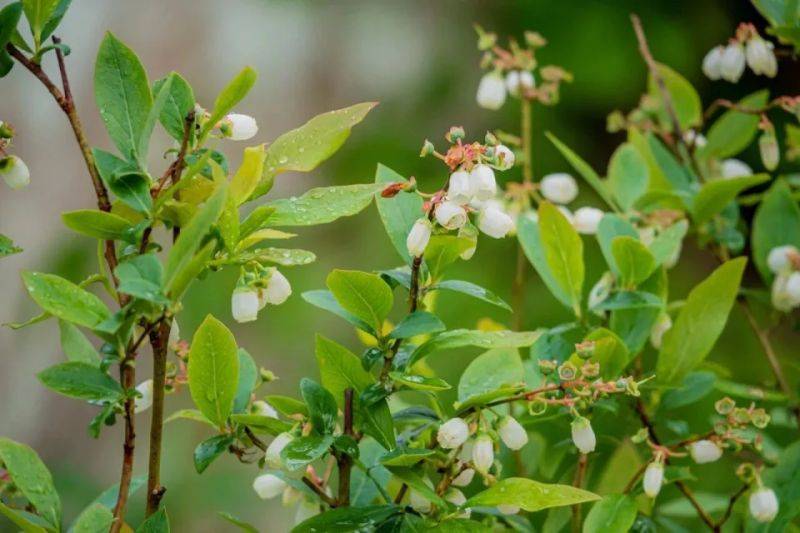
Blueberry. Images of copyright in the library, reproduction of use that may trigger copyright disputes
In addition to the harsh requirements of the underground roots, there is another special physiological mechanism for blueberries — “cooling”. The blueberries were born in north america to avoid the thawing of wild blueberries in the cold of winter. The fruit tree must accumulate within an effective temperature zone of 7°c or less for a period of time (traditional “northern highs” blueberries usually take between 800 and 1,200 hours), before the next spring will wake up on time。
The central and largest production of yunnan blueberries today is red river state, where the most scalable areas are concentrated in the construction of water. There are relatively flat highland dams, which are highly conducive to the concentration and scaleing of the blueberry shed. But the winter here is not cold enough and not long enough, which requires a very low cooling volume of southern crumbs of blueberries。
However, the vast majority of the good southern tall blueberry species require authorization from overseas breeding companies. The market's well-appreciated fragrance blueberries, using the “ridley 1602”, have patented ownership of the species by the australian company mountain blue orchards, which has a more popular variety code name l25. It also leaves a vulnerable link in yunnan's blueberry industry — the source of the species being held hostage。
In the absence of top commercial varieties with fully autonomous intellectual property rights, the latest and best patent varieties overseas enter the chinese market with very high patent licensing costs. This has not only significantly reduced the margin of profits for indigenous growers, but has also led to greater abuse and quality risks for more small producers。
Moreover, the direct introduction of seedlings from abroad does not mean that they are fully compatible with china's complex and variable landscape. With the expansion of yunnan blueberry cultivation, there was a crisis in imported varieties。
For example, the large-scale seeding of an offshore blueberry seedling coded “1545” by a leading domestic enterprise, after actual delivery, found that its single production was grossly inconsistent with the overseas propaganda indicators, eventually resulting in hundreds of thousands of problematic seedlings being uprooted and destroyed, causing direct economic losses of hundreds of millions of dollars。
Compared to domestic studies on the breeding of northern high-crowded blueberries, the complete species of southern high-crowded blueberries are lagging behind in breeding research, but new developments have begun over the years。
In 2019, the blue america joint scientific institute nanjing plant institute and the agricultural institute of zhejiang province, in collaboration with a number of institutions, produced blue mei 1, which became the “national good species” through the identification of the country's main forest species. It has also become the only southern blueberry species in the country with full autonomous intellectual property rights. It takes only 150 hours for cooling and has more resistant features like heat and heat。
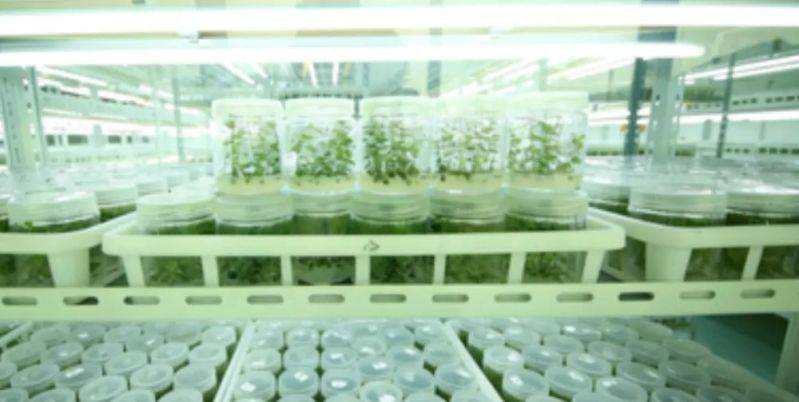
Group training centres producing 6 million blueberries per year. Source: zhejiang online
In 2024, the “blueberry innovation centre for the south of china”, a consortium of scientific research institutions, officially placed a card in mille, yunnan red river state, to focus on autonomous intellectual property research on blueberry varieties。
The success of blue mei 1 and the establishment of the “blueberry innovation centre for the south of china” have provided china's southern-producing region with a way out of overdependence on foreign varieties. In the game against foreign monopoly, china has finally built its own indigenous genetic defence line on the southern highland blueberry class。
It's all the same
A national supply map of blueberries
As the southern regions struggled to break through high-temperature, high-humid plant bottlenecks, the country's traditional niches also further clarified their respective industries。
It is the common strength of these new and old-born areas that has completed the puzzle of chinese blueberries supplied throughout the year。
Guizhou has long been the “national first” of the area and production of chinese blueberries. Owing to a relatively cold and humid climate, guizhou blueberry flavour is generally acidic and has limited competitiveness in fresh fruit markets. However, its vast capacity has driven it along the supply chain to a different path — becoming a home for the chinese blueberry deep processing industry, which produces core raw materials for processing products such as fruit drying and juice。
In the face of a long and harsh winter, the north-east and the north-east regions, such as shan-dong, have focused on research applications for research and development of very cold-resistant autonomous varieties and facilities for early technological development。
The main plant in the north continues to be the northern high-strength species, which, based on natural climate and greenhouse facilities technology, has now significantly prolonged the local blueberries season in liaoning and shandong. Added to this is the extensive area under cultivation and the low cost, annual summer and autumn are the centralization periods of blueberries in the northern-producing region, with high yields and prices, which make up the bulk of chinese blueberries ' consumption of fresh food in the summer。
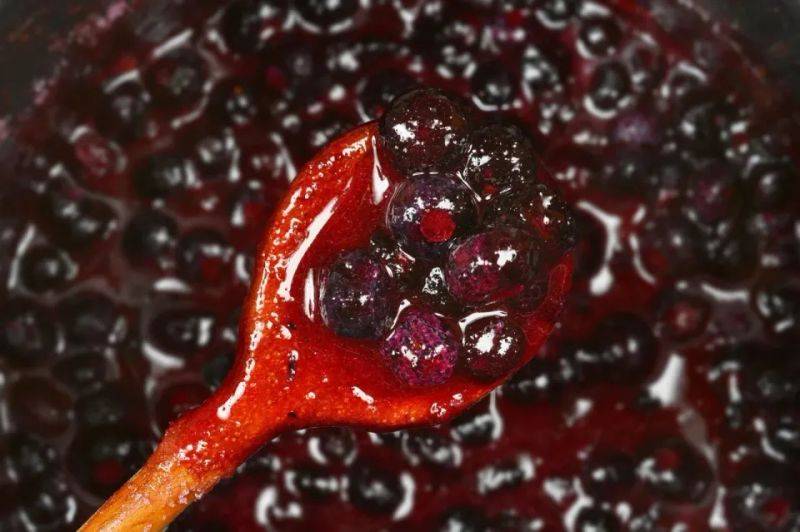
Blueberry jam. Images of copyright in the library, reproduction of use that may trigger copyright disputes
With the rapid growth of emerging production areas such as sichuan, anhui, jiangsu and zhejiang, china's land has formed a “season relay race” that spans latitudes, shifts around time, a supply axis that is entirely supported by national blueberries:
The first place on the market in winter was yunnan, which was supplied from november to may; after spring, liadong, shandong's greenhouse blueberries, and the fresh fruits of sichuan and guizhou matured from march to june; and immediately followed by the east by zhejiang, anhui and jiangsu, which continued from may to july。
After summer, blueberries in the north and late blueberries in the northwest took over the plate, which lasted from june to september and supplied the country with blueberries. This is also the year in which blueberry prices are lowest。
The domestic blueberries industry is far from over, even though the national blueberries supply calendar has almost been linked。
Xinjiang officially joined the national blueberry map this year, and the province of tamayu recently spent $660 million on 300 high-standard solar-heating rooms, which are expected to be fully delivered in 2026, with about 1,500 tons of capacity。
The entry of xinjiang is essentially intended to maximize the advantages of xinjiang conditions based on modern industrial cultivation patterns. The traditional open-land blueberries could not cross the winter in xinjiang, but the temperature problem was resolved in high-standard solar greenhouses. Under the protection of greenhouses, the irrigated high mountain snow water is expected to grow with a high degree of sweeter and better quality blueberries。
According to current reports, the blueberry season in xinjiang will last from the end of december to the second half of april. If successfully marketed, this year's xinjiang territory will break the winter-long yunnan blueberry exclusive supply。
So, the chinese blueberries have crossed from geography to climate zone-- – yunnan relies on counter-seasonal advantages and focuses on high-profit, fresh fruit products; guizhou’s power advantage develops deep processing supply chains; the traditional north shan east and north-east masters have steady summer and autumn mass markets; and the great north-west new zealand has emerged as an emerging supplier of winter high-quality blueberries。
Behind the parallel development of the production sites is the fact that chinese agriculture is relying on a more industrialized model, a more differentiated variety of species, to break the natural growth cycle limits of blueberries。
It was these efforts that allowed this small, deep blue berries to end up in mainland china with a year-round industrial closure and become an affordable fruit commodity。
Planning production
Author of the master of communication, beijing university
I'm a member of the chinese institute of agriculture
I've been planning this