In this most basic form of construction, there are also one-sided houses and one-sided houses, one-sided houses and one-sided houses, one-season hills, one-season hills, three-drop watery houses, one-season mountains, one-roll mountains, two-storey buildings, and one-storey buildings in all their forms。
Common classification of ancient buildings
They are: palaces, temples, doors, palaces, palaces, ports, kiosks, towers, attics, temples, temples, platinums, visions, bulls, houses, houses, etc。
Construct
Hard mountain buildings
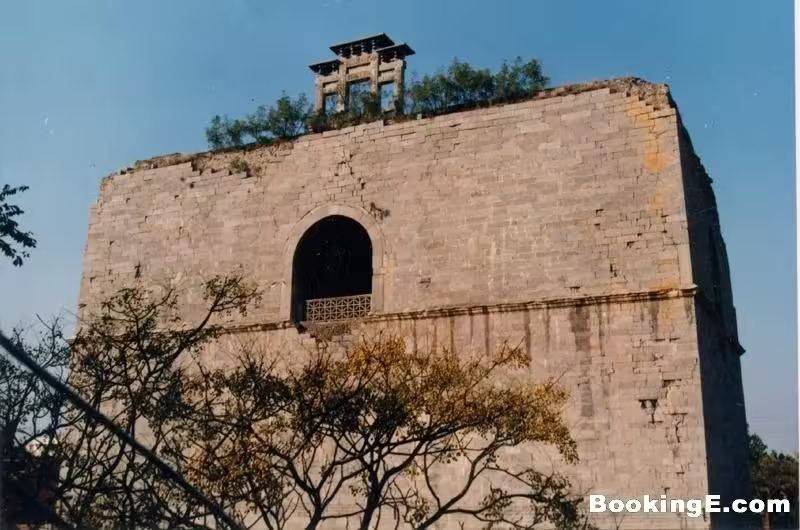
There were only two successive slopes, and the wall on both sides of the right and the left intersected with the house, and all the beams were sealed inside the wall, called hard-mounted structures. Hard mountain buildings are the most common form of ancient buildings, and there is a large number of such buildings in homes, gardens and temples。
Hard mountain buildings are the most common in small size, and the clear engineering practices examples provide examples of seven small sizes, six small sizes and five small sizes of small sizes, which are also common in hard mountain buildings. Seven front- and back-door buildings are the largest and most prominent small-scale residential buildings, which are often used as master houses and sometimes as halls. The six-prong front porch is used as a compartment, annex or backroom with a porch. The five-chamber-free buildings are mostly used for the unchamber-less, the back-room, the back-room, etc。
There are also large examples of hard-mountain buildings, such as palaces, auxiliary houses in monasteries, or subdivisions. Large-scale hard-mounted buildings have two practices: caps and caps. There are fewer examples of pit-dough mountains, where only one or two-litre foliage is applied. There are more examples of unchallenged hard mountains, which differ from small hard mountains in terms of building scales (e. G. Small buildings with large surfaces, heights and depths greater than usual), house-side practices (e. G., more cyanide on the face of the house, more chrysanthemum or more tyrannium), and architectural decorations (e. G., more oil paints in the beryllium, which are not simple in the form of small building decorations)。
Mountain buildings
There are two successive slopes, and the two hills are covered by structures outside the wall or the roof of the hill, known as the alpine (also known as the chosen mountain). The logs, which are slightly absent from the mountain structures, are not wrapped inside the walls, but are removed from the walls, and the parts that are taken out are referred to as “shows”, which is the main difference between them and the hard mountains。
In the form of buildings and in the form of roofs, the buildings can be divided into hills with large ridges and rolls. The ridges of the house are colliding with each other on a positive ridge, dividing it into two slopes. The most common are the five high mountains, the seven high mountains, and the five medium pillars and the seven mid-pillars (the latter two are used as doors). The ridges of the rolls were covered with ridges, with no straight ridges, and the back and back slopes of the houses formed ridges. The most common are the four rolls, six rolls, eight rolls, etc. There is also one that combines the two kinds of mountains and connects them, known as a one-size-fits-all, which is often used in the form of a flowering door。
The temple building
There are four main slopes on the front and back sides of the house, which intersect into a straight ridge, and the back and back of the house, which are also known as the four arab ridges and five ridges。
The temple building is the highest model in ancient chinese buildings. In a highly hierarchical feudal society, this form of construction is often used in royal buildings such as palaces and temples and is the most common form of major construction on the medium axis. Such as the gate of the palace, the house of the nativity, the house of the dryness, the gate of the temple of the temple of the temple, the house of the peace and the subsequent temples, the temple of the mount of the sun, the gate of the succeed of the house of the peace, and the temple of the maastricht, are all palaces. In the feudal society, the building of the temple has in fact become an addition to the royal building, and other capitals, houses of worship, businesses, houses of worship, etc. Are not allowed in the form of such a building. This particular political status of the temple is determined by its vastness, size, decorative beauty and high cultural and artistic value。
Illustrated buildings
Among the most basic and most common forms of architecture in a variety of ancient forms, the mesagna are buildings。