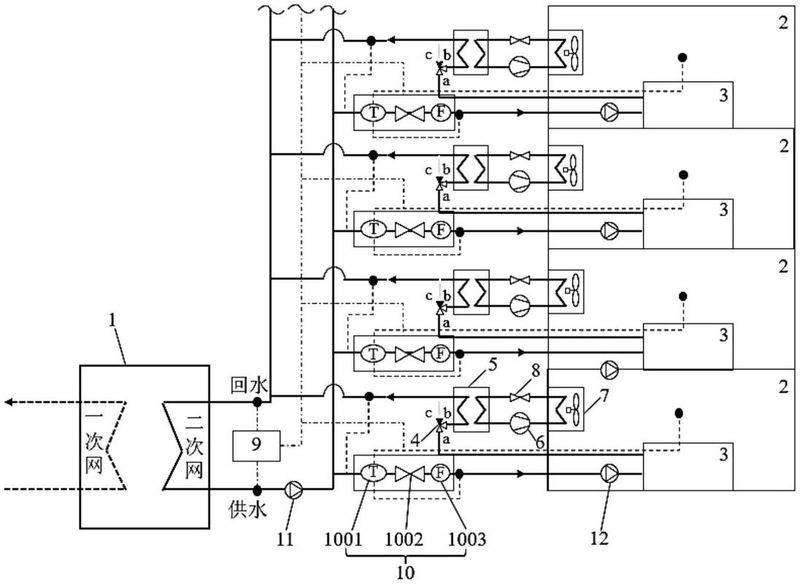
The purpose of the ch programme is to equip students with the basic principles, components and operating mechanisms of ch, to understand the important role of ch in modern urban life, and to develop the capacity of students to use scientific knowledge to solve practical problems. The specific objectives are as follows: knowledge goals: (1) mastery of the underlying principles and components of centralized heating; (2) understanding of the operating mechanisms of centralized heating systems; and (3) understanding of the important role of centralized heating in modern urban life. Skills objectives: (1) to be able to use the knowledge acquired to analyse heating problems in real life; (2) to be able to use graphics, data, etc. To make brief analyses of centralized heating systems. The goals of emotional attitudes are: (1) to develop students ' awareness of energy conservation and environmental protection; (2) to develop students'sense of responsibility for life and service to society. The teaching content of this section includes, inter alia, the basic principles, components, operating mechanisms and their application in modern urban life. Specific elements include: the rationale for central heating: the basic principles of central heating are understood by teaching basic concepts such as thermal transport and thermal maintenance. Elements of a centralized heating system: introduction of the main components such as boilers, heat exchangers, heating pipes, radiators, and description of the functions and functions of the components. Mechanisms for the operation of centralized heating systems: methods of operation such as pyrolysis of water cycles, steam cycles, and methods of regulating and controlling centralized heating systems. Application of centralized heating in modern urban life: analysis of centralized heating applications in urban dwellings, public buildings, industrial production, etc., and its advantages in energy conservation and environmental protection. 3. In order to increase the interest and initiative of students in learning, the course will use the following teaching methods: teaching the basics, components and operational mechanisms of central heating, so that students can acquire relevant knowledge. Case analysis: by analysing cases of heating in real life, students are made aware of the applications and advantages of central heating in reality. Discussion methods: students discuss the advantages and disadvantages of concentrating on heating, energy conservation and environmental protection, and build their capacity to think and express themselves. Experimental methods: organization of visits by students to central heating facilities, first-hand experience of heating effects and enhancement of students ' visual perception of knowledge. In order to support the implementation of teaching content and teaching methods and to enrich the learning experience of students, teaching resources will be prepared as follows: teaching materials: materials that meet the curriculum standards are selected and students are provided with systematic and scientific learning materials. Reference books: provide reference books in relevant fields to help students expand their knowledge perspectives. Multimedia material: production of multimedia materials such as course materials, animations, visual presentation of the operational principles and practical applications of centralized heating systems. Experimental equipment: organization of visits by students to central heating facilities and first-hand experience of heating effects. V. In order to assess students ' learning outcomes in a comprehensive and objective manner, this class uses the following methods of assessment: regular performance: observation of students ' level of participation in the classroom, questions, etc., and understanding of students ' learning attitude and practical application. (c) work: the degree of knowledge acquired by students is assessed by the introduction of the relevant subject and case analysis, which requires them to do so within a specified time frame. Examinations: an examination of the general knowledge of the subject is arranged for a small or intermediate end of the class. Panel discussion: assess student performance in panel discussions, including depth of reflection, teamwork, etc. The results of the assessment will be fed back to the students in writing so that they can understand their learning status and adapt their learning methods in a timely manner. At the same time, teachers may adjust their teaching strategies to improve the quality of teaching. The teaching schedule for this section shall be as follows: (b) teaching time: ensure that every teaching period is adequate, taking into account student time and avoiding fatigue in learning. Places of instruction: selection of classrooms or laboratories suitable for teaching, ensuring a comfortable and well-equipped teaching environment. Teaching aids: depending on the actual situation and needs of the students, supplementary teaching tools such as multimedia teaching, field trips, etc. May be used as appropriate. Pedagogical arrangements should be reasonable and compact to ensure that the teaching tasks are carried out within a limited period of time, while meeting the learning needs of students. Vii. Differentiated teaching programmes in the course of the course of instruction include teaching activities: the design of different difficult teaching activities, such as simple case studies, complex issues, etc., in response to the level of interest and competence of different students. Teaching resources: multi-level learning resources, such as teaching materials, reference books, multimedia materials, etc., are available to meet the learning needs of different students. Counselling and answer: individualized counselling and response to students ' questions and problems. Modalities of assessment: different assessment methods, such as oral reports, written work, etc., are used depending on the student's learning style and level of competence. The aim of differentiated teaching is to meet the learning needs of different students and to improve the effectiveness of teaching. 8. In the course of curriculum implementation, teachers will conduct periodic pedagogical reflection and evaluation, adapting the content and methods of instruction in a timely manner, taking into account students ' learning and feedback. In particular, teaching methods: adapting the use of teaching, discussion, experimentation, etc. To the student's learning effectiveness. Teaching content: appropriately adjust the depth and breadth of the content of the teaching to the degree of mastery. (c) progress in teaching: the curriculum and classroom arrangements are adjusted to the pupils ' learning status. Teaching resources: adapting the availability and use of teaching resources to the needs of students. Rethinking and adjusting teaching helps to improve the effectiveness of teaching and to ensure that students have a limited time to acquire the knowledge they have learned. To enhance the attractiveness and interactive nature of this class and to stimulate the learning enthusiasm of students, pedagogical innovations will be tried as follows: it applications: using modern it tools such as multimedia modules, web resources, etc. (a) retrenchment of the classroom: through pre-school assignments, students are allowed to discuss and practice in the classroom, and the interaction of the classroom is enhanced. Virtual reality (vr): with vr technology, students are provided with experience with heating systems to enhance learning effectiveness. Innovative experiments: designing interesting experiments that give students hands-on knowledge of central heating. Teaching innovations help improve the quality of teaching and the interest of students in learning. X. This interdisciplinary integration course will take into account the interconnectedness and integration of different disciplines and promote the cross-cutting application of interdisciplinary knowledge and the integrated development of discipline: physical integration: teaching the principles and techniques of central heating in combination with thermal, hydrodynamic and other physical knowledge. Chemical integration: describe the chemical reactions involved in the heating system, such as heating of water, protection against corrosion, etc. Engineering integration: engineering knowledge on the design, construction and operation management of heating systems. Environmental science integration: analysis of environmental impacts of centralized heating, such as energy consumption, carbon emissions, etc. Interdisciplinary integration helps to develop a comprehensive quality and problem-solving capacity. 11. The social practice and applications section will design teaching activities related to social practices and applications, and develop students ' innovative and practical abilities: project-based learning: involving students in the design and optimization of centralized heating systems and improving operational capabilities. Field visits: students visit heating enterprises or related facilities to learn about the actual operation of heating systems. Innovation competitions: students are encouraged to participate in innovation competitions related to centralized heating and to exercise their innovative and practical abilities. Social services: to guide students to provide community-based counselling on central heating and to foster social responsibility. Social practices and applications help to build the capacity of students to apply the knowledge they have learned to practical issues. Xii. In order to continuously improve the quality of curriculum design and teaching, the feedback mechanism for students will be as follows: questionnaires will be sent out on a regular basis to gather students ' comments and suggestions on the content of the curriculum, teaching methods, etc. Classroom feedback: students are encouraged to ask questions and express their views in the classroom and to keep abreast of their learning status. After-school communication: teachers communicate after-school with students to learn their feedback and confusion about the curriculum. Teaching logs: teachers record the gains and losses in the teaching process, analyse students ' learning and continuously adapt teaching strategies. Feedback mechanisms help improve the quality of the curriculum and the learning experience of students。