Switching power is a wide-ranging power source that is commonly used in high power electronic equipment such as colour televisions, computers and photocopiers. Compared to the front chain of steady voltage sources。
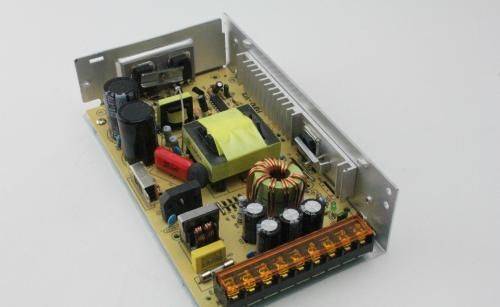
Switch the power panel
The main features of the switch power are: 1 is efficient and has a low cost. Switches are generally more than 80 per cent efficient and serially adjusted power is only about 50 per cent efficient. 2 steady pressure range wide. Switches have a steady pressure range of 130 to 260 v, with a high performance switch power range of 90 to 280 v, while serially adjusted power has a stable pressure range of 190 to 240 v. 3 small quality, small size. Switching power does not use large and heavy power transformers, only small switches, and, because of their efficiency and small losses, the switch does not use large dispersors. While there are many advantages, the power supply is complex, difficult to repair and highly disruptive。
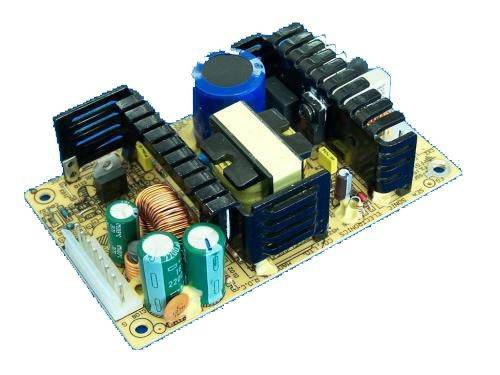
Power plate
Basic working principles for power switches
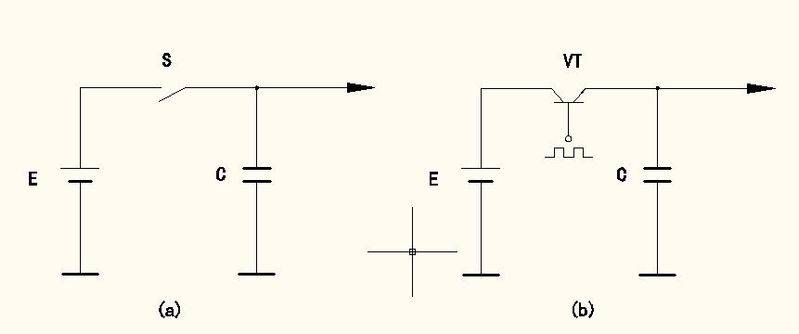
Switching power circuits are complex, but their underlying working principles are not difficult to understand, and the basic working principles of switching power are shown in the figure。
Basic working principles for power switches
In the circuits shown in figure (a), when switch s is joined, power e is charged by s-to-c and obtains a positive-to-negative voltage on c; when switch s is disconnected, c discharges to a later circuit (undrawn). If the switch s closes for a long period, the power e-to-c charge time increases the voltage at both ends of c; on the contrary, the power e-to-c charge time is short, the charge time at c is low and the voltage at both ends of c decreases. Thus, changing the duration of the switch closes can change the output voltage。
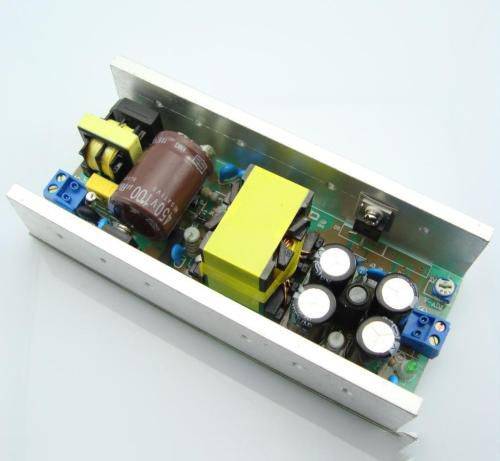
Long power panel
In the actual switch power, switch s is commonly replaced by a triode, and a control signal (pulse signal) is added to the tripolar cell to control the conductivity and cut-off of the tube, as shown in figure (b). When the control signal is reached at the base level of the tripolar vt, vt-based polar voltage rises and is channelled, vt-collective poles, transmitters are very much the same as short circuits, power source e is charged to c via vt-collective poles, transmitters are charged to c; when the control signal comes to low-level, vt-based polar voltage is cut and c discharges to a later circuit. If the control signal of a tripolar cell lasts for a long time, the low level lasts for a short time, the power source e-c is charged for a long time, the discharge time c is short, and the pressure at both ends of c rises。
Thus, the control of triode conduits, the duration of the cut-off period, can change the output voltage, which is used to power the switch。