The empire is a pixel-style rotational war strategy traveler inspired by heroic games and combined with the civilization of the age of the empire. The game is based on a fast-paced, self-styled game, in which players can choose among a variety of civilizations, including france, huasha and ancient rome, to develop their territory, to develop heroes and to build armies in a single-chamber, archived game. Winning rivals through intellectual exploration and self-playing, enjoying the tactical pleasures of the q version of pixels。
The empire's newest strategy
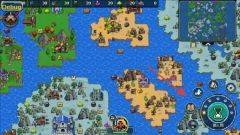
1. World explorer: in buildings such as the pixel wind map, point castle, advance the main line, unlock the feeder mission。
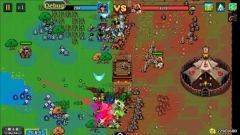
2. Combat deployment: entering battles, deploying troops of all kinds (e. G. Infantry, knights) to fight in battle。
Round games: take advantage of terrain, force restraint, move, attack, defeat enemy commanders per round of command。
Game characteristics
1. Pluralization and ethnic characteristics: many ethnic groups, such as france, huasha and ancient rome, have been designed according to historical civilization, each with its own unique identity and its military nature. • the chinese culture has performed well in agricultural development, with an increase of 20 per cent in the efficiency of initial resource collection。
2. Self-playing strategy: using a rotational approach to self-playing, heroes and troops fight automatically. There is a need to match the formations according to ethnic characteristics — for example, the knights of france can be combined with the pastoral treatment chain to form an aggressive and well-prepared system。
3. Archival and round-based exploration of single-gauge games: a single-gauge game can always save progress and drive the game process in turn. While the first five rounds focused mainly on resource collection and building upgrading, the sixth to tenth rounds shifted to map exploration and unlocking legacy gains。
Playlight
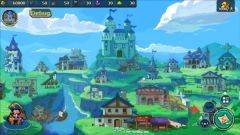
1 pixel aesthetics and q editions: the retrofitted pixel style is used to show the wonders of civilization, with landmark buildings such as the french triumph and the wall of huaxia presented as q versions, and the units of soldiers presented as q versions, such as the swordsman wearing the gaulle helmet and the gunman wearing the bright light。
Hero cultivation and skills trees: each civilization has three unique heroes, such as the “tracing dragons” of the wahsha civilization, who use “herbs to steal the enemy's resources”, while the “sacred virgin” of the french civilization can activate “sacred asylum” and provide a mitigating effect for the team。
3. Dynamic events and confrontations with civilization: these are randomly triggered by dynamic events such as the “harassment of the barbarians”, the present-day instrument of god, the alliance of civilizations” — which, in the event of the invasion of the barbarians, require the formation of a defence force on an interim basis; and the present-day instrument of god provides an opportunity to compete for such legendary weapons as “excalibur”。
Game method
Civilization and resource management: access to basic resources through the construction of “farms”, “mines” and “harvesting grounds”, the upgrading of “municipal halls” can unlock higher-level buildings (e. G., the “military air space” in wahasha can speed up force training). It should be noted that the allocation of resources should be balanced。
2. The match between self-movement and attachment: prior to the battle, the formation was adapted to the characteristics of the enemy — the anti-curroman legion required a front row of “heavy heavy” armour, which was accompanied by a “rocker” for remote suppression。
3. Map exploration and tactical conquest: sending heroes to lead teams to explore maps, winning neutral monsters to gain empirical value and equipment, and discovering that “civil relics” can unlock temporary gains (e. G. An increase of 15 per cent in the rate of movement of all troops)。