The build-up of the brand management system and the advancement of the brand strategy are not dependent on the tireless efforts of brand managers. Brand managers are responsible for the development and implementation of brand strategies in most enterprises。
Thus, the importance of “brand manager” is self-evident, so how does an enterprise train its own brand manager
— 01 —
Core competencies of brand managers
In order to gain a better understanding of the core competencies of brand managers, the authors extract job descriptions of brand managers in different industries:
Case 1: brand manager of a consumer company
Position responsibilities:
Participation in the development of brand development strategies, organization of brand management systems and establishment and maintenance of brand positioning of products
2. Ensuring that brand identification is suitable for application and continuous upgrading of brand competitiveness and proposals for rationalization from a market brand perspective
3. Assisting the ministry of markets in branding
4 develop annual brand roll-out plans and input cost budgets and profit and loss estimates
Targeted consumption group surveys and brand tracking surveys to enhance brand image。
Eligibility:
1. Full-time recruitment for undergraduate studies and above
2. Good english language communication skills
The experience of leading brand management over three years
Acquainted with public relations media branding operations, with excellent brand strategic skills and integrated communication skills。
Case 2: director of the brand of a diversity group
Position responsibilities:
1. Undertake strategic brand planning and brand system development in line with corporate development strategic planning, be responsible for corporate brand promotion and management, and build and develop corporate brand culture and product culture
2. Optimization of the image of the shop in line with brand strategy
3. Develop and implement brand and market promotion plans and develop brand marketing programmes
4. Create and maintain good relations with the public, including the media, consumers, and create a good brand image
5. Strengthen oversight and management of brand image in line with strategic brand planning and ensure uniform dissemination of brand image
6. Responsible for the screening of targeted media in full cooperation with the media and the operation of brands from media functions
7. Completion of the day-to-day management of companies and organizational facilitation of brand centres。
Eligibility:
1. Undergraduate studies in advertising, marketing, information dissemination and public relations;
2. Better brand understanding, brand dissemination, integration, and the priority of rich brand or market dissemination public relations resources;
3. To identify with the culture and core values of the enterprise and have a personal development plan for long-term cooperation with the company. Strong writing and communication skills, strong implementation and teamwork;
4. Strong communication, coordination and flexibility; good speech and written expression。
Case 3: general manager, brand management department, an industrial consortium
Position responsibilities:
1. Leading brand management systems and institution-building around the concept of “customer-centred” in line with corporate group development strategies
2. Responsible for client-oriented branding, overall management and integration of functions within the department and cross-sectoral collaboration
3. Overall control or responsibility for priority client value practices, guidance or responsibility for annual “client value” thematic selection, team formation, landing programme and site work plan design and process management
Comprehensive branding planning, including, but not limited to, the development of annual marketing plans for brands, and the planning of specific marketing programmes
Overall ownership of all brand-related research, including, but not limited to, industry trends, policy and regulatory research, client qualitative quantitative research, and brand asset monitoring
6. Full control over the implementation of branding programmes, including but not limited to the landing of marketing schemes
7. Full branding of authorized operations, including but not limited to other tasks such as delegation of business approval, delegation of business management, delegation of business fees and execution, and maintenance of trademarks of all types within the group。
Eligibility:
1. University undergraduate and above, relevant professions such as business management, marketing, economics, and professional middle and above
(a) experience in manufacturing for more than 2 or 10 years and in brand management for more than 5 years
3. Excellence in leadership, ownership and influence
4. Excellence in communication coordination, with team capacity-building and persuasion
5. Excellence in professional skills in marketing, brand management, business management, financial management and manufacturing industry knowledge
6. Legal knowledge
7. Excellence in strategic analytical capacity
8. Excellence in innovation。
Looking at the job descriptions above, in combination with the practices of different enterprises, it is not difficult to find that the core competencies of brand managers, in addition to generic competencies, are as follows:
Full professional literacy
Business-oriented, client-centred work philosophy
Strategic vision to develop strategic brand planning and build a brand system based on corporate strategic development planning
These key features directly determine the outcome of brand manager kpi and the space for career advancement。
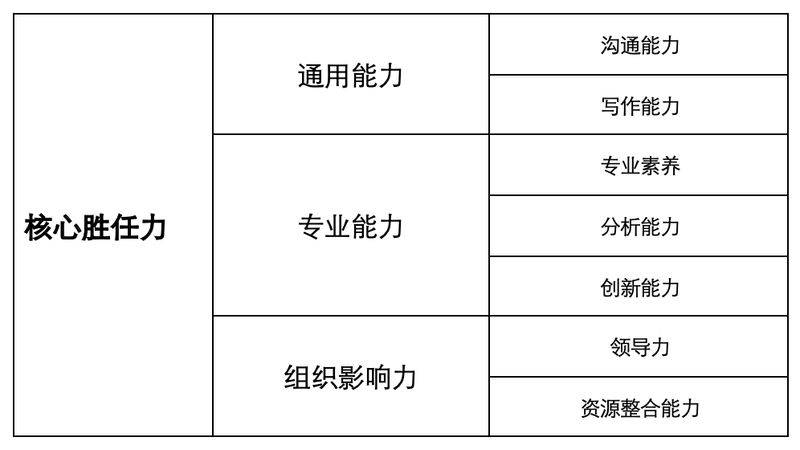
Overall, the core competencies of brand managers can be summarized in three areas: generic competencies, professional competencies, organizational impact, as follows:
1 generic capacity
Common competencies of brand managers refer mainly to communication and writing skills. It is well known that brand managers need an optimistic, proactive, well-expressed communication capacity, as well as excellent writing and writing skills。
The brand manager's “clients” include consumers, internal departments, external collaborative resources, etc., and excellent communication and writing skills are effective safeguards for coordinating resources。
2 professional competence
The professional competencies of brand managers are mainly professional, analytical and innovative. The availability of highly qualified professionals is bound to lead to effective delivery。
Professional qualifications
Expertise in brand management is undoubtedly one of the basic qualities of brand managers. While the focus varies slightly from one industry to another, the expertise of typical brand managers includes five sectors, namely, market insight, strategic brand planning, product strategies and product management, marketing strategies and plans, and brand dissemination and promotion。
Analytical capacity - including strategic analysis capacity, business analysis capacity
Analytical competencies are essential to the survival of brand managers and reflect professional strengths. By constantly asking why, in a fragmented and complex state, a clear picture of business is presented through a comprehensive analysis, and through the appearances, the main factors influencing business and its interrelationships are identified。
Strategic analytical capacity requires brand managers to be able to address business issues through in-depth analysis (business, enemy, me, hospitality) of the strategic aspects of branding。
Business analysis capacity requires brand managers to master business, products, business knowledge and trends。
Innovative capacity
Innovative capacity is the development of new capabilities, especially in the communication and diffusion links, as essential elements of brand management are completed. Innovation capabilities are not “new”, especially to avoid the “new and new” dilution of brand assets。
3 organizational impact
Organizational influence directly determines the level of promotion of brand managers and is an important means of achieving self-worth and expanding career development. The main manifestation is leadership and resource integration。
Leadership
Leadership is an important feature of an excellent brand manager. The scope of leadership is broad and is particularly important for brand managers, including the strategic vision, internal team management, training and guidance, and upward management, not to be exhaustive here。
Strategic vision is an important feature of distinguishing between a common brand manager and a good brand manager。
Resource integration capacity
As brand managers, in addition to the professional skills of brand management, it is essential to acquire basic knowledge in the areas of product development, operation, marketing, finance, manpower, supply chains, i. E., brand managers should accumulate “deepness” in the field of expertise and “broadness” outside the area of expertise. In this way, cross-sectoral management can be achieved, enterprise resources can be more effectively integrated and an overall branding strategy implemented。
02
Three key points for developing good brand managers
The sources of good brand talent can be diversified, with professional and academic qualifications not a key factor, and the key to improving professional literacy lies in the quality of learning and self-development, with in-service and rotational training in the form of in-service training。
In-service training is based on practical operations, and team leaders should provide better-informed guidance and training in their work, as much as possible engage brand personnel and assume specific responsibilities (from ease to difficulty) as quickly as possible. Building a culture of “learning and sharing” among the teams. • leveraging the strengths of the team, allowing for thematic sharing among talented individuals and conducting appropriate thematic training courses to help summarize and enhance the team's overall competencies。
The division of labour among brand team members and the division of professions will limit career development, and hence the need for planned rotational training for excellent brands. Training systematically arranges different branding projects according to their stage of growth and gives them the opportunity to exercise. These brand projects should be organized along the following lines:
More than 1-2 years of training in market insight, dissemination of outreach and simple project management;
Three to four years of training in product strategy, marketing strategy and complex project management。
Particular emphasis needs to be placed on avoiding the development of brand managers into “specialized technical personnel”. In practice, some enterprises tend to over-segregate brand management work so that individuals in each of the sub-areas become specialized rather than involved in other areas. In addition to project rotation within the brand, enterprises in a position to do so may consider cross-sectoral rotation of brand managers (especially in the sales department), also for the purpose of exercising the global perspective of brand managers。
2 business-oriented, client-centred work philosophy
With increased industrial competition and the rapid growth of enterprises, there is a real need for complex talent that is in line with the values of the enterprise, with which business colleges and business universities emerge in excellent enterprises. Businesses colleges and business universities have changed from routine training in the ministry of human resources to upgrading from in-house training of talent, working with outside business colleges or training institutes, modelling business ecology, mastering client data, targeting industry targets, developing forward-looking strategies, and developing hands-on exercises that match business development strategies。