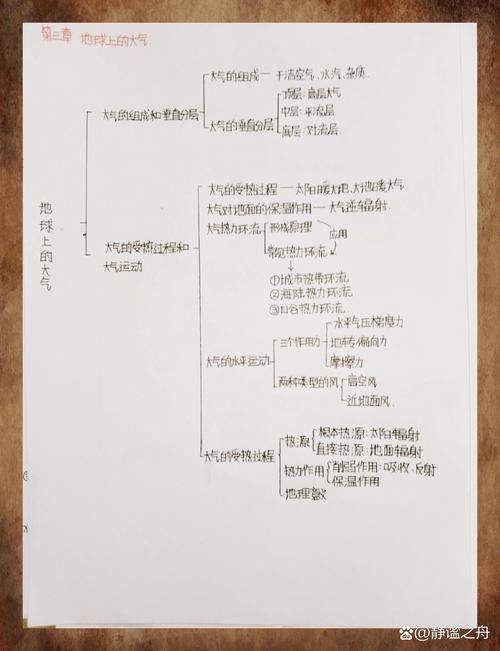
The first knowledge point for the first general review, the first knowledge point for the first general study, the analysis of priority content, the composition of the atmosphere and the role of the main components of nitrogen, oxygen, carbon dioxide, water vapour, ozone and solid impurities, is a summary of the first knowledge point for the first general review: a stable proportion of dry air (mainly nitrogen), unstable water vapours, solid impurities - oxygen of the basic constituents of organisms - material carbon dioxide essential to life activity - feedstock for photocosynthesis; temperature-preserving ozone - the umbrella for life on earth, absorbing ultraviolet water vapour and solid impurities - cloudy rainfall; impurities: tarcing nodules2, the vertical layers of the atmosphere and layers of the atmosphere that affect human activity; atmospheric stratification with high changes in air flow conditions and other characteristics of human relationship to the troposphere 3/4 atmospheric mass; water vapours and dusts; stratospheric altitual phenomena at different latitudes up to high currents at high altitude; presence of an ionosphere in the upper atmosphere (radiocommunication; solar activity disrupting short-wave communication 3; atmospheric incendiary processes (1) fundamental energy sources: solar radiation (the wave range of various types and the nature of solar radiation - short-wave radiation) (2) atmospheric heat-induced processes (thermal heat effects of the atmosphere) - the heat of the solar sun, the warming atmosphere: (a) the main reasons for the impact of the reduction in size, as illustrated by the three forms and respective phenomena (examples) are: the warming effect of the atmosphere on the ground at the sun's height angles (distorted at different latitudes): understanding of ground radiation (infrared long-wave radiation); the process of atmospheric radiation (infrared long-wave radiation) warming: strong atmospheric absorption of long-wave radiation on the ground; the significance of atmospheric reversible radiation returning heat back to the ground (figures and examples showing, for example, the onset of frost; a comparison of temperature differentials); the significance of the warming effect: lower temperatures; ensuring suitable temperatures on the earth; (a) the underlying causes of the maintenance of global heat balance4, atmospheric vertical and horizontal movements (1) the underlying causes of atmospheric movements: a knowledge point of the need for a general review of cool heat (between latitudes; between land and sea) in order to sum up the weather conditions in the centre direction of the two air pressure central air currents: other factors affecting the direction of vertical air currents in the direction of the two air-pressure centres: other factors affecting the temperature of the solar radiation - the most basic cause of climate differences - determine the temperature or temperature of the surface of the temperature - e. G. The temperature of the ocean and the temperature of the continent - the temperature of the ocean; the temperature of the ocean; the temperature of the ocean; the temperature of the ocean; the extent of the humidity; and the climate of the east coast of the continent due to the nature of the heat circulation of the atmosphere (gas and the top causes of the wind: the nature of both the temperature and the temperature - the temperature of the ocean; (b) recent direct surface atmospheric heat sources and other climatic factors: human activity, ocean currents (cooling and damping of cold currents); climate characteristics (e. G. Temperature precipitation maps; description) climate factors: temperature, precipitation with a temperature zone above 15 degrees per month, average tropical climate with a minimum temperature of 0-15 degrees per month, subtropical climate with an average temperature below 0 per month, and temperate climate (other than temperate marine climate) with a water-stereotyped climate - the tropical climate is divided into four types: tropical rainforest climates: year-round rainfall; tropical desert climates: year-round drought; tropical monsoon climates: dry and rain-fed tropical savannah climates: there are two types of dry-drain subtropical climates: subtropical monsoon climates: subtropical mediterranean climates in the same period of rain heat; and dry temperate climates in the winter, summer and summer. Temperate monsoon climate: temperature climate in the temperate zone during the same period of rain: climate change in the humid zone throughout the year: monsoon climate causes: three monsoon climates (subsistence and western wind) and wind belts control climates: the mediterranean climate (subsistence and western wind); tropical savannah climates (climate and equatorial low-pressure) monolithic and wind belt control climates: tropical rainforest climate (equatorial low pressure); climate change on the eastern coast of the temperate zone marine climates (west wind): climate change in the west bank in three monsoon climates: climate in the mediterranean, climate in the temperate zone, climate change in the ocean: climate change in the mediterranean; climate change in the temperate climate (specific performance), new energy; efforts to strengthen international cooperation; damage to the ozone layer, the causes of damage, acid rain, and the causes of pollution from hazards; damage to greenhouse gas-burning ore fuel deforestation, particularly damage to the tropical forests (causes?) caused by direct threats to the low coastal areas causing changes in the precipitation and wet water and humidity conditions undermining global cooperation to reduce emissions of ozone-depleting substances in the ecological environment and agro-forestry and fisheries; active development of new refrigeration systems for acid rain combustion of fossil fuels (mainly coal combustion); acidification of acid gases such as sulphur dioxide and nitrogen oxides from car tail gas, affecting fish growth and even death; acidization of soils, endangering forests and crop growth; the most fundamental way to endanger human health by corrosive buildings and antiquities: reducing anthropogenic sulphur oxide and nitrogen oxide emissions - - research on the integrated development and use of sulphur resources in coal (e. G. Clean coal technology); clean combustion technologies; waste gas reuse) burning low-sulphine coal or other clean energy high-level general studies of the geographic necessity of a knowledge point summing up chapter 1 of planet earth 1. The earth in the cosmos (1) a multilayered astrosystem of the earth in the universe: the total galaxy -- the galaxy -- the solar system -- the moon (2) the eight planetary planetary planets in the solar system: mercury, venus, earth, mars, jupiter, saturn, uranus, neptune (3) the basic conditions of life on earth on living planets: their own conditions: the right temperature, the right atmosphere, adequate external conditions of moisture: stable solar light, a safe cosmic environment 2. The effects of the sun on the earth (1) the energy solar radiation of the earth in the form of an electromagnetic wave: the energy of the sun into space。
(2) the solar activity affects the type of activity of the earth's sun: black -- light sphere, flares and shire -- colour layer, solar wind -- solar coronary solar activity affects the earth: flaunting magnetic storms affect short wave communications, solar wind and aurora 3. (1) the general characteristics of the earth's movement are rotated: from west to east, star day (23:56:4 seconds), equal 15°/hour (except for the two poles) from the equator to the diode: from the west to the east, the star year (665 days, 6. 09 minutes and 10 seconds) is fast (early january) and long (early july) is slow, averaging 1°/day。
(2) the mobile direct-sun point of the sun moves between the southern and northern regression lines, with a cycle of one regression year。
(3) the cycle of day and night alternations and time differentials shall be one sunday。
The longitude varies by one hour at 15 degrees。
(4) the deviation of objects moving along the surface level is to the right in the northern hemisphere, to the left in the southern hemisphere and not to the equator。
(5) the medium-latitude region is marked by a change in the length of the day and the mid-day solar altitude at which the solar directs the hemispheric, where the day and the equator are split evenly throughout the year, and by a decrease in the world's day and night from the direct solar point to the north and south in the spring and autumn, and by an increase in the solar altitude closer to the direct point (6) by four seasons and four seasons by five。
Summer is a season of longer days in a year, with larger solar heights, and winter is the reverse。
The spring and autumn seasons are transitional。
4. Earth's inner circle structure (1) earth's inner circle crust - (moho interface averages about 17km) - earth mantle - (gudenburg interface 2900km) - geonuclear vertical wave (p wave) capable of spreading in solids, liquids, faster trans-waves (s wave): only in solids, slower rock circles: the crust and upper mantles (above the soft layer)。
Floatosphere: in the upper mantle, it is generally considered likely to be one of the main sources of magma。
(2) the atmosphere in the outer atmosphere, the hydrosphere, and the atmosphere in chapter ii of the biosphere on earth 1. The cold and thermal imbalance causes atmospheric motion (1) the heat of the atmosphere warms the earth and the atmosphere。
The ground is the main and direct source of heat in the near-ground atmosphere。
(a) dilution of solar radiation: absorption, reflection, dispersion b) temperature effects on the ground: the atmospheric reverse radiation (2) thermal circulation, resulting from the uneven heat of the surface, is one of the simplest forms of atmospheric movement。
(3) the higher the wind force (a) is influenced by a single-level pressure gradient: the vertical pressure of the wind (b) by a horizontal pressure gradient (c) in parallel with the condensed pressure (c) in three forces: the north-south of the wind and the south of the axis, with a high pressure point to the low pressure direction 2. The pressure band and the wind belt (1) the pressure band and the wind belt (a) is formed: the heat factor, such as the equatorial low pressure band and the polar high pressure band, such as the subpolar low pressure band and the subtropical high zone, which affects the high surface of the ocean (a) and the six wind bands, which are symmetrically symmetrical of the equator, the high- and low-pressure band is formed by the high-sea pressure of the north hemisphere and the high-sea pressure of the pacific ocean, which is formed by a series of high-alternal presses, with a relatively low transituental pressure of the north hemisphere。
January: the asia-europe continent formed high-pressure asia, the north pacific formed low-pressure aleutian and the subpolar low-pressure belt was cut。
The gas belts in the southern hemisphere are largely banded, as the ocean area in the southern hemisphere dominates b) monsoon circulation factors: sea, land and sea distribution and the seasons of air and wind belt positions move east asian monsoons: the summer south-east winds are hot and rain, and the winter north-west winds are cold and dry。
Cause: the south asian monsoon, with variations in the nature of thermal power of the sea and the sea: hot and rainy south-west summer and warm and dry winter north-east。
Reasons: differences in the nature of thermal properties of the sea and the seasonal movement of the air-pressure belt (3) the effect of the air-pressure belt and the wind belt on the climate a) climatic factors (solar radiation, atmospheric circulation, land-and-sea distribution, topography, ocean currents, etc.) typically result in different climate tropical rainforests in areas under the control of different air-pressure belts: high temperatures and heavy rainfall throughout the year, under the control of the equatorial low-pressure belt, with rising air currents prevailing in the equator and its temperate marine climate on the north-south side: year-round temperature and humidity。
West wind prevailed throughout the year。
The west bank of the mainland is located at 40°-60° latitude。
Mediterranean climate: hot and dry summer, warm and heavy winter。
The summer was controlled by high subtropical pressure and the air flow sunk; the winter was controlled by the western wind belt。
The mainland west bank, at 30°-40° latitude, is supplemented by: (c) the concept of a gas complex under high-pressure, confidence-wind and polar wind belts, dry; under low-pressure and prevailing west wind belts, wet 3. Common weather systems (1) sharp and weather a) air mass: refers to a large mass of air of a relatively uniform physical nature within a certain horizontal direction。
(b) cold and warm-fronted cooling: the cooling group moves actively towards the heating group, before a single air mass is controlled through transit, the weather is clear, the weather is cloudy, snow and snow, wind, cooling, higher air pressure after transit, lower temperature and clear weather。
Precipitation usually comes at the front。
For example, winter spring winds, cold tides, sand and dust storms are warm: heat groups move proactively towards the cooling band, pre-transit monogas control, low temperature and clearness, continuous precipitation during transit, rising temperatures after transit, lower air pressure and better weather。
Precipitation usually occurs at the front。
For example, spring, summer, south precipitation (2) low pressure (air cyclone), high pressure (anti-air cyclone) cyclones: low air pressure (centre low, surrounding high), periphery irradiation to the centre (north-southward), vertical movement rises, heavy rain weather reverse cyclones: high air pressure (high centre high, peri-south low), centre irradiation to the surrounding area (north-south backward), vertical motion sinking, clearer, dry weather 4. Global climate change (1) causes global warming in a changing climate: the increase in co2 is explained by the increase in the temperature of co2: 1 large-scale burning of fossil fuel2-deforestation (2) possible effects of global climate change: a rise in sea level, inundation of land2 to change precipitation and damp conditions everywhere, leading to changes in the economic structure of countries (3) measures to address climate change (1) increase the technological and energy efficiency of energy use, and use new energy2 to strengthen international cooperation on chapter iii, water on earth 1. Natural cycles (1) interconnected water bodies exist in gas, solid and liquid form。
Gaseous water with the widest distribution。
Liquid water, distribution of quantity is second。
Solid water exists only at high latitudes or under special conditions。
(ii) the process and meaning of the water cycle (a) the water cycle means the process by which the water of nature moves through each chain in the hydrosphere, the atmosphere, the rockosphere and the biosphere。
They are divided into inter-land, intra-land and intra-sea cycles。
B) main components: evaporation, plant evaporation, precipitation, vapour transport, surface run-off, underground run-off, seepagec) significance: maintenance of global water balance, updating of land freshwater resources, regulation of global heat balance, shaping of surface form 2. Large-scale oceanic movement (1) distribution of ocean currents in the world's ocean surface (a) current, also known as currents, means a more stable flow of ocean surface sea water in a relatively large direction over the years。
B) distribution of currents by factor: wind currents, compensatory currents, density currents by nature: cold currents, warm currents (c) currents: 1 medium- and low-latitude ocean currents in the northern hemisphere in the direction of clockwise and the southern hemisphere in the direction of counterclockwise。