In everyday life, iron-sucking is a very common object, and many people used it as a child. But why have we only heard of iron-sucking and never heard of aluminium-sucking and copper-sucking? How does the magnet make it
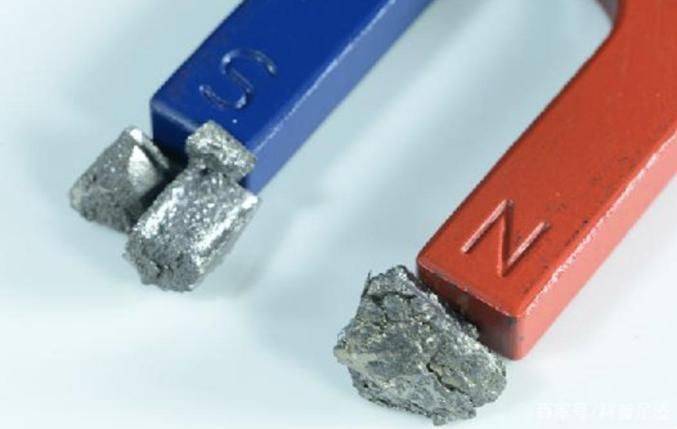
In fact, the iron-sucking stone that people speak of is not in itself a stone or pure iron. In ancient times, the natural magnets used in the manufacture of compasses were mostly made of iron oxide trioxide and many other impurities. In fact, iron-sorting can attract metals such as nickel cobalt in addition to iron, but these two metals are too rare in everyday life, and for a long time they are known only to be able to smoke iron, so they are directly named iron-sortmented and continue to this day。
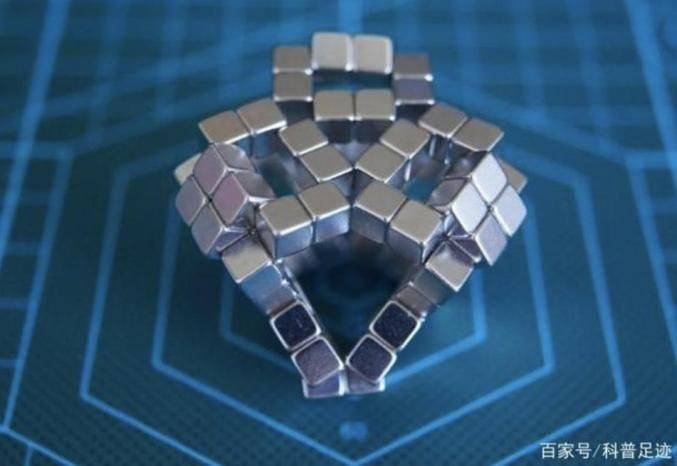
It was not clear to people at the time why magnets produced magnets, or even perceived them as a god, and as science developed, especially with the discovery of the laws of electromagnetic sensing, the mystery of magnets was discovered。
According to amber's law, a magnetic field occurs in the vicinity of the current, and its strength changes with the current, which increases as the large magnetic field. In high school, there is a scientific experiment to produce a magnetic field using an electric screw pipe, and during the experiment the direction of the magnetic field will follow the right-hand spiral theorem, which changes with the direction of the current. At the macro level, currents produce magnetic fields, and natural iron-sucking stones without electricity and currents, how can they produce magnetic forces
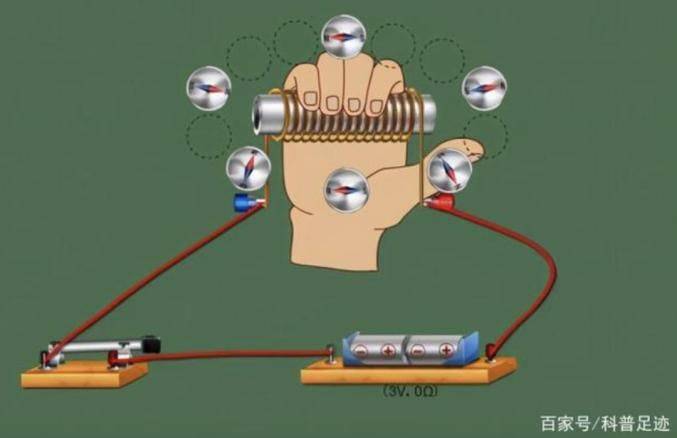
Before we know what's going on inside the magnet, let's first figure out why there's going to be electricity in the family wire. Because of the power differentials at both ends of the transmission line, the power differentials create the corresponding power in the field, and the electrical particles in the wires that function in the field are directed to move and generate currents. So the essence of the current is the direct movement of charge or carrying particles, that is, the generation of currents as long as there is a direct movement of electric particles。
The composition of any substance in nature is based on molecules and smaller atoms, which in turn are made up of atomic cores and extranuclear electrons, in which protons in the atomic core carry positive electricity and extranuclear electrons carry negative electricity. Although there is no macro-level power, electrons continue to orbit around the atomic nuclei at high speed, and electronics themselves continue to rotate in the process around them, a relationship that is a bit like the earth's mass around the sun and is also constantly spinning around。
Electronics, as electric particles, produce very small magnetic fields in the course of high-speed motion, and countless such small magnetic fields co-examining each other would make the matter magnetic at the macro level. If that's the case, it's as if everything is a natural magnet, but it's not. Why is that
A clear explanation of this problem requires an understanding of the dynamics of extranuclear electronics and the microstructure of materials。
First, electronics exist in pairs of atoms that make up the vast majority of substances, and in the process of movement they must follow the principle of the incompatibility of bubbles. In general terms, it is a pair of electrons with the same energy level in the same orbit, and the rotation between them is always the opposite. As we said earlier, the direction of the magnetic field changes as the direction of the current changes, so that the direction of the electronic magnetic field of the movement is the opposite and is directly offset. So only if the outermost layer of the elemental atoms is single-to-electronic, and the resulting magnetic field is not offset, will it be possible to be magnetic at the macro level。
Why do you say that, because magneticity is also associated with the atoms of the substance. If the ranking is irregular and the substance is in a state of disarray, then there is a risk of offset between the magnetic fields generated by a single atom, which must be organized in such a way that the atoms within the magnetic material are shown in such a way that the magnetic fields formed by a single atom overlap and eventually show external magnetism。
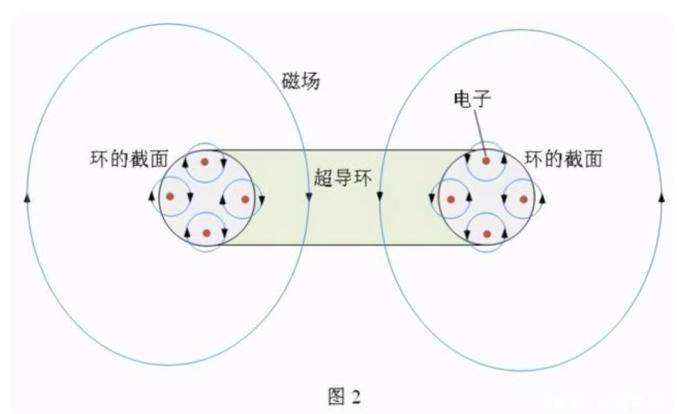
In general, for a substance to be magnetic, two conditions must be met: the presence of a single electron in the outermost layer of the atom, and the alignment of the atoms of the constituent substance. However, in nature, only a small amount of metals, such as iron and cobalt nickel, meet both requirements。
The study found that the iron atoms have 26 nuclear extragenital electrons, of which the outermost layer has one single-to-electronic electron, as does the outermost layer of the atoms of cobalt and nickel elements. However, because there are no rules for the micro-magnetic areas inside these substances, the magnetic rags from which they are generated are offset by the magnetic fields, these metals do not normally show magnetism like magnets. However, the magnetic field direction of these magnetic fields is aligned, i. E., magnetically, and the material that is magneticly magnetized becomes magnetic。
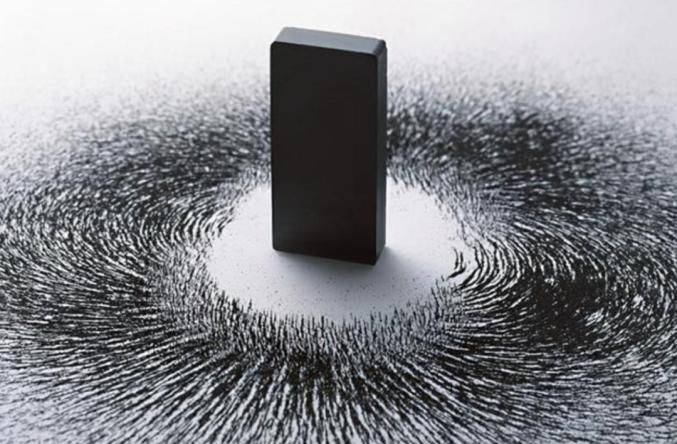
We can prove by an experiment that a piece of magnet attracts a coin, that the coin will be magneticized, that other ordinary coins will be attracted near it, that the coins that are magnetized will be externally magnetic。
Copper elements have 29 extra-nuclear electrons, and all electron orbits appear in pairs, so copper is difficult to magnetize even when it is added to the magnetic field. This nature of copper is called anti-magnetic and has extensive applications in many high-tech fields。
Aluminium elements are very special: they have 13 electrons outside the atomic nuclei and, at the most, stand-alone electrons. The atoms of aluminium elements can be rearranged in the direction of magnetic lines in the case of magnetic fields, showing a degree of weakness, but not to the point of attraction。
After that, let's get a quick look at the kind of magnets and how they can get rid of them。
There are two types of magnet, one having a permanent magnet and the other having a non-permanent magnet. It can be seen by name that the magnetic properties of the permanent magnet can be maintained for a longer period of time and that the non-permanent magnets will be demagneted over time. Natural magnets are permanent magnets, and only part of artificial magnets are permanent magnets。
In everyday life, magnets may inadvertently become demagnetic. The essence of the phenomenon is a change in the position of the magnetic field, which is well-structured within the magnet under external action, and the direction of the magnetic field that is generated by magnetic waves is no longer uniform, and the outside is no longer magnetic, which can easily be caused by high temperatures or violent collisions。
To prevent magnetic mines, warships also decontaminated their hulls prior to sinking. Since it is not possible to demagnete a warship with normal heat or impact, it is common for a warship to demagnete by means of a device capable of producing the opposite direction of the magnetic field produced by the ship。
In general, magnets and magnetism are used very widely in everyday life. The conditions under which a substance can produce magneticity are very stringent, which is why only three of these metals are attracted to the magnet。