I've asked myself more than once why do i like to stand in my way? At this point in time, manual blocking is a relatively backward and anti-human technology, which, in terms of comfort, convenience and performance, is no longer sufficient to meet the needs of today's people and even fuel consumption control is difficult to match with today's automatic transformers. So why do i like to play manual barriers
If i wanted to go, i would prefer to have a low-profile reason, because there are not many people playing today, who are able to do it manually and play with flowers to get x points. In other words, when people think it's going to be faster, i'm going to be able to make up for it. When i was in the car, i used the engine to make a joint brake and to keep going around, and most people didn't, and not only would i know how to handle it, but others would think, "yo, boy, why are you so cool?" that's right, that's the reason i like to be manual and the source of happiness; if all of these skills happen, i'd rather open a comfortable, fast-changing automatic gearbox。
In the spirit of selfless dedication, i have decided to share in this article the various manual counter-combination operations that i have learned. I hope you will be able to go to 4s and buy a hand-shield car, so that the boom in the second-hand market for hand-cars can take place。
Manually correct the concept
Before learning to play manual, i think it is necessary to spread to you two very important ideas that determine whether or not you can have fun and whether you have a good mind for the whole exercise。
The first idea that needs to be universal is the clutch. The clutch is white is the part that connects the engine to the gearbox, the principle of which is to transmit power by combining it with the friction of the disc; that is, it was designed for friction at the beginning。
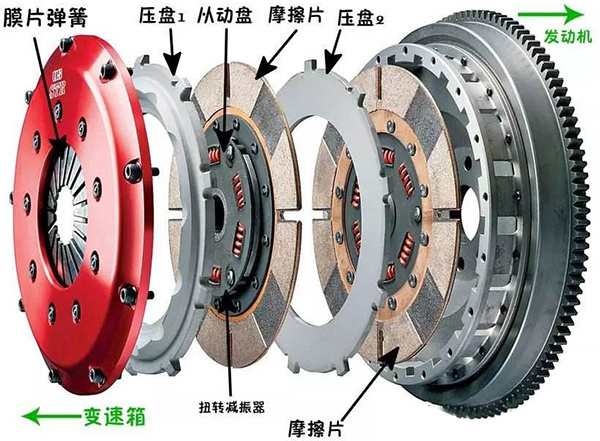
So, the attitude towards the clutch is as simple as that with the brake system, it is as useful as it is, and it does not need to wear a heartache, even if it does not hurt. If it is hard to understand, you can interpret the separation of bullets as a brake, the normal combination of a clutch as a normal brake, and the prolonged semi-fragmentation as a brake; in this case, it is clear how the clutch should be used。
Once the attitude towards the clutch is universal, then the understanding of the speed switch. The greatest advantage of a manual block is to be able to control speed and speed as you like; but many people think that a manual block is just a dry job that allows you to move at 15 km/h per hour. In the case of my father and my wife, in their perception, it is healthy to keep the engine below 2,000, the 3000 is already the limit and the turn is going to explode. It's not just them. I've met too many people in real life who misread the speed。
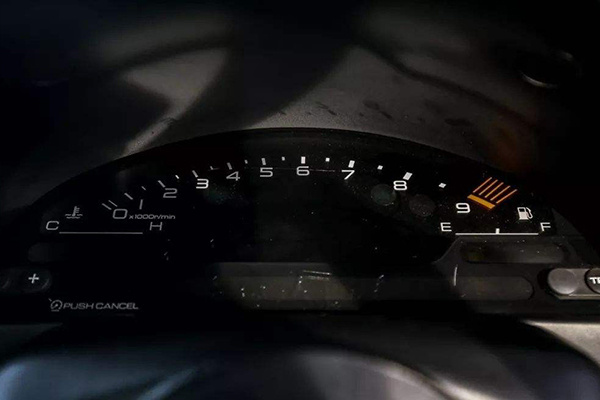
With regard to the rotation, it is only necessary to understand that the speed below the red line is used at random, and you use it in the safe zone designed by the manufacturer, and you can't go beyond the red line. In fact, the speed is power for engines, the higher the speed in the same slot, the greater the power; you complain about the power of your car, which is probably just not unlocking the power of the high-turn zone。
So the logic of speed is very simple, the speed of speed is higher, and the power of horse is greater, but the noise in the car increases; when the logic is understood, the mind to drive is simple: if you want power, you lift it, you keep it low。
Manual block
Yes, my first point of knowledge is to stop it manually. The first point of knowledge has been set because the first thing i fear is to start my car, and every time a red and green light is the enemy, not to mention the need to stop the fire, let alone to stop it; so if you want to get in the way, you have to fix the problem first。
First, when exposed to a manual block model, learn to map the vehicle's binding journey. An effective journey is between the semi-coupling point at which power is transferred and the complete integration, and only by mastering the zone will it be possible to know when its own clutch is loose and continues to be fully integrated。
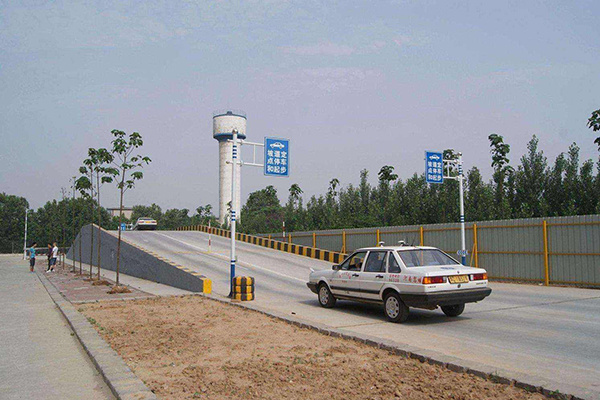
The practice method is simple: to find an open and secure flat ground, full of hand brakes, slowly release the joint test, and complete integration points when it is felt that the vehicle is starting to be powered, i. E., at half-integral points, continuing the laxity until the vehicle dies out。
The beginning of the manual block is, in fact, very simple and loose, and it will continue to be loose until a slight pause at the integration point. It sounds simple, but it's very difficult to do it, either slowly and slowly, to be honked by the back of the car, or too quickly to shut down the engine, or to be unconnected leads to frustration, or, in any case, to be uneasy。
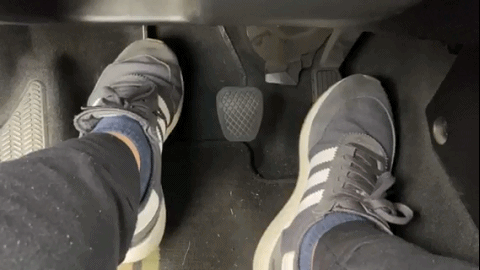
So what do we do when we get to a start like taxi drivers? Give the oil! All the know-how is in two words, so if you give the car a smooth and powerful start. Forget the method of driving the school, give oil while laxing, and keep the speed of the switch between 1,300 and 1500, so that when the convergence is found to have reached the integration point, it can be quickly removed from the pedal, so that you can start as smoothly and forcefully as a taxi driver。
In turn, if you want to eject, you're going to hang at turn speed (generally around 3,000) and then release the separation as quickly as possible, so you can feel the pleasure of a tire slipping out of the car; while the eject is going to be a little bit more eccentric than normal, it's much better than keeping it in semi-coy。
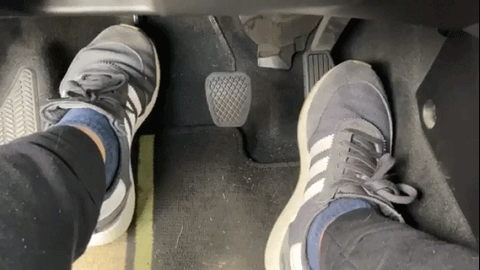
A further extension, the normal starting method for a half-slide start should be a handbrake, which would continue to be loose after the cleavage to the convergence point; however, this approach would start slowly, and then the x-ray level would be low, contrary to the intent of the manual block. So the step is right foot on the brakes, and the right foot on the right foot when it's off the pine to the binding point, the right foot on the brakes and the gas, and the next approach is peaceful, with more practice, and mom doesn't have to worry about half the slope。
Manual overboard
The thing about speeding is a black hole in a world where no one at school teaches how to do it; the old drivers who come out just tell you to step on the gas and it just proves that the power is not enough; and it's hard to find a course on the internet, because it's a thing that is recognized as not having to discuss。
Remember when we said speed is power? If you want to overturn the speed, you have to push it up, but if you insist on a high-intensity block, you have to watch it rise like a snail in despair. What do you want to do with the manual? Down
In the case of manual blockage, it is important to be clear that brainless drops are not possible, either because of a mismatch of speed, which results in unnecessary wear and tear of the clutch and the synchronized device, and because the body also has a very poor experience. That's why the drop is the right way to drop it. That's to learn to refuel, and, of course, it's not stupid. There's a principle behind it, which is to retrofit。
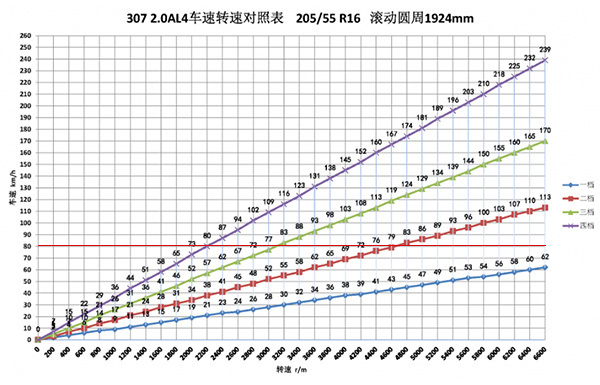
The above table is an example of a 2. 0-l car speed comparison. Assuming that we're at 80km/h per hour, turn 2,200; how much oil should we add at this time? All you have to do is look at the line in the table = 80km/h, and you can see a three-block speed of 3100, a two-block speed of 4700, and a one-stop speed... I'm sorry, i'm down to one. So the logic is clear, and it is only necessary to reduce the rate of turn to the speed that should be expected at the same speed, i. E. To complete the switch by adding a foot of 80 km/h at four speeds to 3100; if the horse's strength is not enough, it will be possible to move another foot of oil to 4700 to the second break。
After the theory, again, it's easy to take a step to de-scalate the oil. When you're ready to drop, you get your left foot down on the pedal, and you get your right foot out of the pedal while you're ready to change it. The operation appears to be a little more extensive, but only one more move than the normal switch is actually made, and it will only take practice。
In the course of the exercise, there were two measures of whether the match was accurate, namely, whether the disconnection could be quickly released and whether there were any setbacks in the back of the blender, if a set of down oils could quickly release the clutch and the body was not。
Manual block and toes
You can learn to play with your toes. A toe is a toe-toe toe-toe-toe-toe-toe-toe-toe-toe-toe-toe-toe-toe-to-to-to-toe-toe-toe-toe-to-toe-to-to-to-to-toe-toe-to-to-toe-to-to-to-to-toe-to-to-to-to-toe-toe-to-to-to-to-toe-to-to-to-to-toe-to-toe-to-to-toe-to-to-to-to-to-to-toe-to-to-to-to-to-toe-to-to-to-to-toe-to-to-toe-to-to-to-toe-to-to-to-to-to-to-to-to-to-toe-to-to-toe-to-to-to-toe-to-to-to-to-to-to-toe-。
Look, i just told you that the toe-toe was to complete the brakes before the bend, and i've just explained to you how to finish the toe-to-to-to-to-to-to. Theoretically, yes, but there are some little tricks that i can tell you about。
The first is to determine the logic of being a toe-toe, the logic of which is that when we prepare to enter the bend, the vehicle needs to slow down, so we step on the brake pedal; when the speed drops and the speed-to-go watch falls accordingly, it needs to be down to the right slot to keep the turn-out high; at the drop-in point, we just have to do what we just learned to do; so, one set of toe-to-to-toe moves is done。
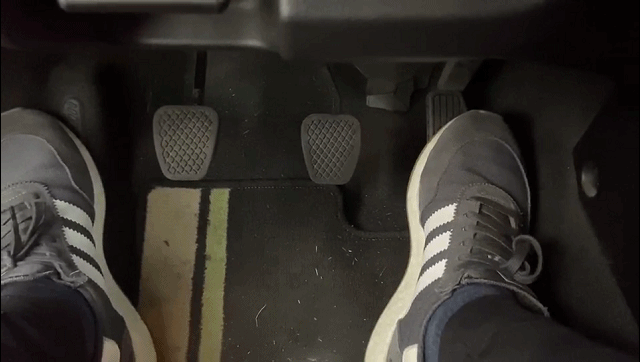
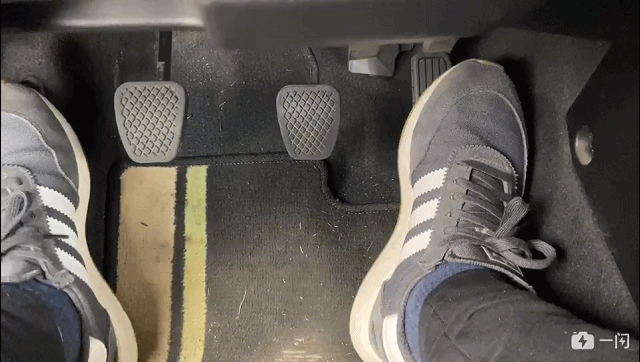
For those of us who have learned to drop oil, there is only one difficulty in the whole set of actions — how to step on three pedals with two feet。
In general, we share two ways of enabling the right foot to step on both the brakes and the oil pedals, which are equally efficient, and as to which foot method to use, it is only necessary to look at the pedal layout。
First of all, the “toe-toe” approach, which, by definition, means that the back of the heel was not involved in the braking process, was simply to use the foot thumb part to step on the brake pedal and then to twist the soles to the outside to achieve the goal of the small toe pedal. Generally, “toe-toe” taps are suitable for pedal layouts that are closer to the door and brake pedals。
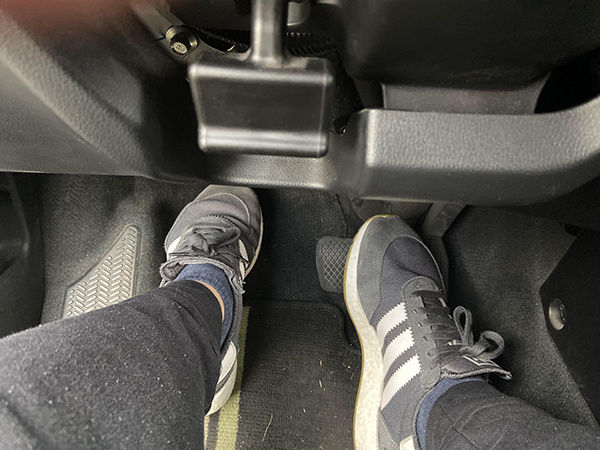
And the second, the "toy" type. The “toy” step would be more exaggerated, and the right-foot thumb would also continue to step on the brake pedal, lift the heel and lean towards the pedal of the oil, step down when the heel was enough to get the pedal of the pedal, and complete the patch. In general, the “toy” approach is more suitable for a pedal layout where the gas door and brake pedal are more distant。
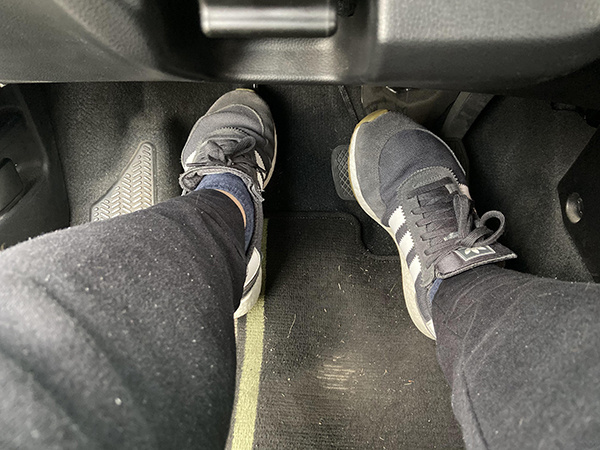
Seeing this, you all know the logic and logic of the toe movement. Here i'll give you a little bit more about exercises。
It is important to note that toy-toe action is very selective, and toy-toe experience requires a more linear or less sensitive car, because the vast majority of cars have reached 80 per cent brake strength when they step on a 20 per cent brake pedal, before you make a toe-toe brake; moreover, because the brakes are now generally hand-in-hand, the previous section will be very light, and the brakes will be uneven when they are used for toe-to-to-to-toe, resulting in a lack of balance in the brake strength。
So, in order to play with a toe, it's recommended that a car that is less electronic or less motorized, pulls the gas door + no brakes are the best, so it will be as easy as the morning road。
Summary
It says here that we've already got a seven-seven-eight-eight-point-and-a-man. The only thing that's left is a no-one-stop, two-legged-in-a-leg. One thing is that it doesn't make sense today, because these are the skills that have been developed in an unsynchronous environment in the “across-the-board” vehicle, and now it's difficult for you to find a gearbox without a synchronized ring; in other words, all the keys are activated, and you have to take the cap off and start with the key, so you can do it, but you don't have to。
Finally, there's one more thing to complain about in 2020, and today even big trucks are amts。