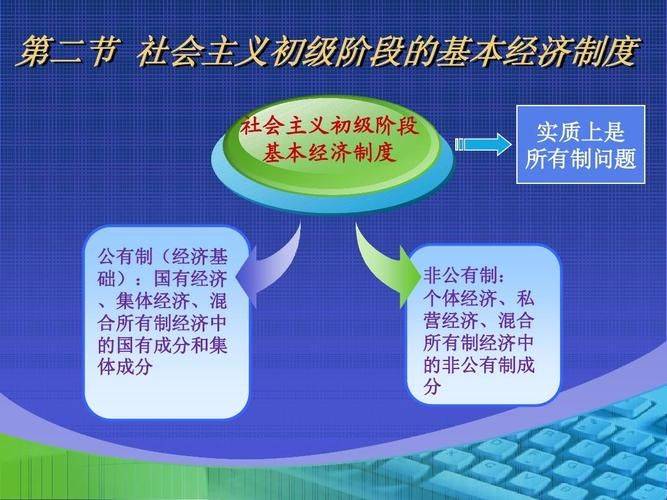
The basic economic system of society directly determines the social nature of our country and is a guarantee of the success of the socialist cause. General secretary hu jintao, in his important speech “seventy-one”, stated that the communist party of china had “opened the path of chinese identity socialism, created the chinese identity socialist theory system and established the chinese identity socialist system”. The opening and theoretical innovation of china's socialism path are reflected in practice mainly through the chinese socialism system, which includes the basic economic system of socialism. The consolidation and development of the public-owned economy, together with the encouragement and support of the healthy development of the non-public-owned economy, together form part of the basic economic system in the early stages of socialism。
The rapid growth of the non-publicly owned economy since the reform and opening up of the economy and the active exploration and progressive development of the publicly owned economy have led to great achievements in the construction of our socialist economy. However, some argue that economic development since the beginning of the reform and opening up should be attributed solely to the former and that “public ownership as a subject” has now become irrelevant and even harmful. There were also arguments that the two systems of economic ownership in the basic economic system at the initial stage were opposed and that the improvement of the basic economic system was understood as the so-called “national retreat”; even the key to reform was the transformation of public ownership into private ownership. These points of view are confusing and fundamentally depart from the provisions of our constitution and party policy and need to be clarified in theory。
Public ownership is the foundation of china's unique socialist economic system
The establishment and consolidation of the public-owned economy is an important material basis for the independence and prosperity of the new china. It also lays down the fundamental premises and institutional foundations for all development progress in contemporary china. Comrade hu jintao, in his important speech “seventy-one”, stated that the second major event that our party had accomplished and advanced was “the completion of the socialist revolution by the people and the establishment of the basic socialist system. Our creative transformation from neo-democratic to socialist brought into socialist society the major eastern powers, which constitute one quarter of the world's population, and brought about the most extensive and profound social change in china's history.” the foundation of the fundamental socialist system lies in the basic socialist economic system. Without that foundation, there can be no historic change in chinese society。
The establishment of the socialist system was marked by the establishment of a strong public and, in particular, state-owned economy, on the basis of which an independent and more complete industrial and national economic system was established. Looking back, the old china was based on private ownership and did not bring the dawn of a civilized society rich in power. The light, rather, has made china a sandstorm, falling into the subservients of western capitalist civilized societies that believe in the so-called “privateism is the law of eternity”. As of 1949, more than 80 per cent of china's total industrial and agricultural output came from agriculture and handicrafts, with only 17 per cent of recent industrial output, and the chinese industrial market was dominated by western capitalist countries. Since the establishment of the new china, the backwardness of chinese society has changed in just a few decades, as our national economy has mastered the country's economic life, acquired the most important productive resources and assumed the main task of industrialization。
The dominant position of the public-owned economy is not only provided for in our constitution, but is also a realistic requirement for the good and fast development of the national economy. Compared to developed countries, our population is large, our per capita resources are scarce and our overall productivity is low. If private ownership were the mainstay, it would not only be impossible to focus on accelerating development, but would also gradually lead to polarization between rich and poor, depriving society as a whole of the cohesion and dynamism of development. The party's 16th report of november 2002 set out “the need for unswerving consolidation and development of the public-owned economy” and proposed “mergering” and “incorporation and empowerment” reform goals. In october of the following year, the central committee of the communist republic of china (cpc) decision on certain issues concerning the improvement of the system of a socialist market economy further stated: “to further promote greater investment of state capital in key sectors and key areas of national security and the lifeline of the national economy and to strengthen the control of the state economy”. This is also the case: from 2002 to 2009, the total amount of taxes paid by the central state-owned enterprises alone rose from $29. 148 billion to $11. 448 billion, an average annual growth rate of 21. 80 per cent. During the same period, total tax revenues accounted for 15. 42 per cent, 16. 41 per cent, 17. 64 per cent, 18. 62 per cent, 17. 60 per cent, 17. 13 per cent, 17. 00 per cent and 16. 75 per cent of the state's fiscal revenues for the year, respectively, providing important guarantees for fiscal spending and improving livelihoods. Some of the ideas that speak of “state-owned economy as irrelevant to people's lives”, “state-owned economy as obsolete”, and “public ownership failure” cannot stand the test of history or the contrast of reality。
Ii. Increased awareness of the dominant and important role of the publicly owned economy
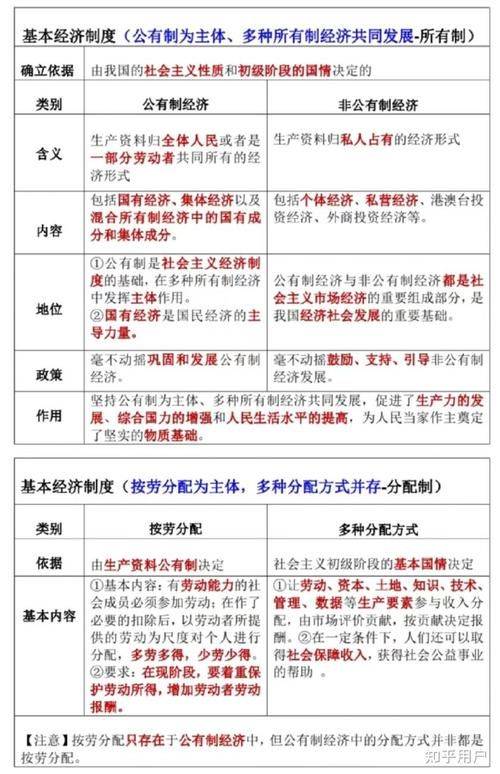
It should be made clear that the principle of public ownership and the common development of the multi-ownership economy are aimed at maximizing the incentives for economic development in all its aspects, which reflects the objective requirements for the development of our productivity. However, different ownership systems, by their nature, have different status and roles. While the role of the private sector in promoting economic growth, resolving employment and making a part of the population rich is undeniable, the role of the public-owned economy is also indisputable if the national economy is to be fully developed in science, to participate in high-end international competition and to promote common wealth。
First, public ownership, dominated by the state economy, is the main driving force behind our economic and social development. Over the past 60 years of its existence, the state-owned economy has grown at an average rate above 10 per cent. The state-owned economy has consistently received a higher rate of interest tax than other ownership systems and has been contributing more than 80 per cent of the state's revenue over the longer term of the reform, and still accounts for more than 50 per cent. In january-november 2010, the country's industry above its size achieved a total profit of $388. 28 billion, of which state-owned and state-owned holding enterprises achieved $119. 2 billion, a 59. 1 per cent growth rate that was higher than that of foreign and private enterprises. Currently, more than 80 per cent of the country's economy's most important production resources, key technologies and important consumer goods, such as oil, electricity, steel, coal and large-scale specialized machinery, are provided by state-owned enterprises. Fertilizers, pesticides and large agricultural machinery are also provided mainly by state-owned and state-owned holdings。
Second, the public ownership system, which is dominated by the state economy, is the main property rights base for the state to efficiently regulate the economy. Efficient state regulation is difficult to achieve for a capitalist society based on private ownership. In the case of the developed united states, while the united states government was unable to satisfy its desire for financial capital, such as wall street, despite the huge savings that it had invested in the financial and economic crisis, large numbers of poor and unemployed people remained, the debt crisis and large amounts of financial “toxic assets” could not be eliminated, and effective demand, such as consumption and investment, had never been activated, rooted in the fact that private monopolies would oppose and influence timely and effective state regulation. In order to overcome the impact and negative effects of the financial and economic crisis in the west, our country has quickly used the power of the state-owned economy to vigorously implement national investment plans, efficiently deliver large amounts of public goods, significantly improve the country's livelihood and ensure the stable functioning of the macro and micro economies。
Third, public ownership, led by the state-owned economy, is an important economic condition for the country's autonomous economic development and participation in high-end international competition. Between 2005 and 2010 alone, the total assets of central enterprises increased from $10. 5 trillion to $24. 3 trillion, an average annual increase of 18. 2 per cent, which greatly enhanced the country's overall economic strength. Not only did our 30 central firms out of the world's top 500 companies published in the 2010 united states fortune magazine not “the higher the weight the worse for economic transformation”, as some have said, it has become the most competitive rival of western firms. The state-owned economy, which is also the leading force in promoting science, technology and innovation, has been the main force behind the country's major scientific research projects and the country's innovative state, through the national prize for scientific and technological progress and the first prize for most of the country's technological innovations。
Fourth, public ownership, dominated by the state-owned economy, is an important safeguard for scientific development. The public-owned economy focuses not only on economic but also on social and ecological benefits, with greater emphasis on the overall and long-term interests of the state. The state-owned economy has strong institutional and scientific advantages in terms of accelerating economic restructuring, transforming the way in which internal and external economic development takes place, safeguarding the rights and interests of people-centred workers, creating an ecological environment, conserving energy resources, safeguarding the general interests of society, safeguarding the country's economic security and strengthening military and industrial production, and has played an essential role in the country's economic and social development。
Comrade jiang zemin has pointed out that without a state-owned, publicly owned economy, there is no socialist economic basis, nor is there an economic foundation and strong material means for the communist party to govern and for the entire upper layers of socialism. Thus, if the dominant position of the publicly owned economy changes, the nature and role of state power and of the entire upper hierarchy will change。
Iii. Rationalizing competitive relationships between different ownership economies
The basic economic system, which insists on “public ownership as the subject, multi-ownership development”, should be viewed rationally and equally in the competitive relationship between the public economy and other economic components。
One is the weighting relationship of different ownership economies. In a market economy system, where there is competition, there is a relationship between the two as a proportion of the national economy, which tends to grow over time. For example, in the early and medium-term phases of our reform and development, the public-owned economy was overburdened and disadvantaged in terms of its costs and prices, leading to a massive collapse of the collective economy, which at one time suffered large losses and was restructured or annexed. At that time, the share of the non-public economy continued to rise. In the aftermath of the western financial and economic crisis, the non-publicized economy has been hit even more by its outward-looking character, while the state-owned economy has been given greater advantage and role in the fight against crisis regulation. We cannot arbitrarily assume that “national entry” is at the expense of “recession” because of changes in market conditions and changes in the competitive conditions of enterprises, let alone demand “national retreat” for reasons of “state-owned economic monopolies”, “inefficiency”, in order to make way for “people”. At this time, we must also attach great importance to the development of collective and cooperative ownership in order to persevere in the development of all types of ownership。
The second is the relationship between different ownership systems and china's economic growth. In the early stages of socialism, the growth of both the public and non-public economy should be supported and encouraged as long as it meets the “three favourable” criteria. “one of the most important lessons learned from the construction of the chinese economy is that the larger the share of public ownership, the smaller the total GDP, the higher the share of public ownership, the inevitable decline in GDP”. This argument runs counter to the common sense of economics and reality, as GDP aggregates are not directly related to ownership, but rather to the pace of growth and decline in the various ownership economies. As long as the various ownership economies are growing, total GDP will increase. If the growth of the public sector is rapid and significant, but as long as the private sector economy does not decline, the total GDP should grow faster, and “the inevitable decline in GDP” is unlikely。
Third is the relationship between ownership and competitive market outcomes. Objectively, since the reform and opening up of the country, the scope of state-owned enterprises has been constantly changing, with the current state-owned economy being distributed among important sectors, serving the general needs of our economic and social development, with profits belonging to the population as a whole and to the state rather than to the private sector, which are completely different in nature from private transnational corporations and monopolies in the private sector. The market economy itself can't be eliminated. Breaks, such as the 85-100 per cent share of the united states electricity company in the electricity market, the control of about 90 per cent of the world cotton trade by 15 cotton tncs and the monopolization of key areas of the information industry by intel, microsoft, ibm, etc. In today's world, where markets themselves cannot eliminate monopolies, leaving private economic monopolies in the middle and foreign spheres to relinquish state control in key areas is extremely detrimental to the development goals of the rich in the powerful。
Fourth is competition and competitive relationships between ownership systems. There has been a popular view in western capitalist countries that the development of state-owned enterprises has been portrayed as “competence with the people”, reflecting the different economic interests and contradictions between the whole of the bourgeois class (the state) and the individual bourgeois (private enterprises). In the early stages of socialism in our country, the public and non-public economy, which, although different in nature and with certain differences and contradictions of interest, is an integral part of the socialist market economy, is well placed to take advantage of market competition and jointly contribute to the development of social productivity。
Iv. Adherence to basic economic systems to achieve shared prosperity
On the path of china's socialism, the achievement of shared prosperity is the historical mission of the early stages of socialism and the inherent demand and objective of its essence. The adherence to the socialist basic economic system is its necessary institutional guarantee. This is because ownership determines the nature of allocation. Only by adhering to the principle of public ownership can the distribution of factors of production by property rights and contributions be made the main factor and channel of distribution, so that the full mobilization of all people, especially workers, can truly and fully liberate and develop productivity, thereby eliminating exploitation and polarization, and so that common prosperity can be guaranteed. Production (to make cakes) and distribution (to divide cakes) are interactive, effective and counterproductive and require a comprehensive and convincing understanding。
Not to mention that the underdeveloped capitalist countries of the west, even in the developed capitalist countries of the west, including sweden, have a high general and average level of well-being in urban and rural areas due to technological and economic developments, but the non-public economy has led to varying degrees of social antagonism and conflict between rich and poor. This is rooted in the fact that the initial distribution of national income by private enterprises has led to a large difference between the rich and the poor, which can only be reduced to a limited extent, and that it is not possible to reduce fundamentally the gap and rivalry between property and income. The focus of the debate between marxists and non-marxists, communists and sdps is not primarily on whether to adopt redistribution, but rather on whether to take fundamentally reduced measures in the area of ownership and the initial distribution decided upon。
In short, our socialist enterprise must avoid falling into the trap of “poverty in wealth” or killing the poor to achieve common prosperity. The improvement of china's sui generis socialist system will lead to the emergence of a new pattern of public-private economic development with first-time wealth, through competitive changes and adjustments in ownership structures, and the initial distribution and redistribution of national income。
(by the maxist institute of chinese academy of social sciences)