Teacher lianghui - master of the wolf marketing process (technology) - master of technology network
Course background:
A strong wolf with bad claws will starve to death
The bigest team in marketing can only wait
There is now a consensus in the business community that there are no trained marketing staff who are the biggest cost to the enterprise. Sales personnel who are not trained in systematic marketing are too strong to visit their customers because they are not psychologically strong to do so; they endure repeated refusals in their daily sales due to poor sales; owing to poor marketing techniques, a great deal of time has been spent on communication in order to be unable to sign or even to offend customers, waste aircraft and ultimately lose performance and influence the performance of the business market. In this poor cycle, it is not only companies that are injured, but also salesmen who suffer。
When the market is not performing well, in addition to looking forward to business models, product positioning, channel innovation, road access change... Have you looked down and wondered whether your marketing team has experienced the following:
The marketing team is trying not to eat well, but to eat
Salespersons complain about the market's downturn and simply wait for the market to warm up, but do not think about how, under the prevailing conditions, to break the traditional pattern of sales and easily obtain orders
When they meet their customers, they don't know how to “break the ice” and build a harmonious communication platform
When you hear a client's objection, the salesman simply gives up and doesn't want to and will not insist
Is it true that salespersons speak the same language against different customers and do not have a marketing strategy tailored to different customers
Salesmen who are afraid to negotiate with their customers, who are good at negotiating with companies and who often apply for policy support, but do not perform well
The salesman wouldn't hold the bottom line at all, so he showed the customer his "ceiling card" easily
Some salesmen can speak with their mouths and their minds are smart, but they're never good
Some salesmen always like to sell low-cost, low-profit products, but new ones are hard to sell
The market costs reimbursed by sales staff are increasing, but the performance is becoming less than desirable
Salesmen also want to do well, but in the face of the current market, they often fail to see each other as they struggle to reach the heart of their customer decisions
How can demand be effectively developed, different types of customer-specific communication be targeted, value be effectively presented, client dissent be effectively removed, door-to-door access ... Be a source of distress and dizziness
A series of sales and negotiation strategies that are unrecognized, unapproachable, sellable, unexpected; unsold, unexpected
The chief designer told us that no matter what a black cat and white cat catch a mouse is a good cat
We want to remind you that whatever the theory is, it's good to sell it
Course benefits:
Learning practical skills for large customer sales - six steps to help build clear marketing awareness
2. Process controls to address the most critical aspects of sales management to achieve better sales forecasts
3. Learning to broaden the perspective of sales from seller to buyer's thinking to reveal more fully the core key to a deal
4. Learning to guide client demand and complete the shift from a master in product presentation to a client consultant
5. Good communication bargaining power and use of techniques to obtain greater benefit from one's own side
6. Specific steps to master the strategy of real-world sales, with an excellent shift from theory to practice
Target audience: marketing officer, marketing customer manager, customer supervisor, marketing responsibility people
Course duration: 2 days, 6 hours/day
Course approach: the course seeks to achieve a different perspective of the content of the course through case analysis, theoretical presentation, video interaction, case studies, etc.
Course toolkit (with grants):
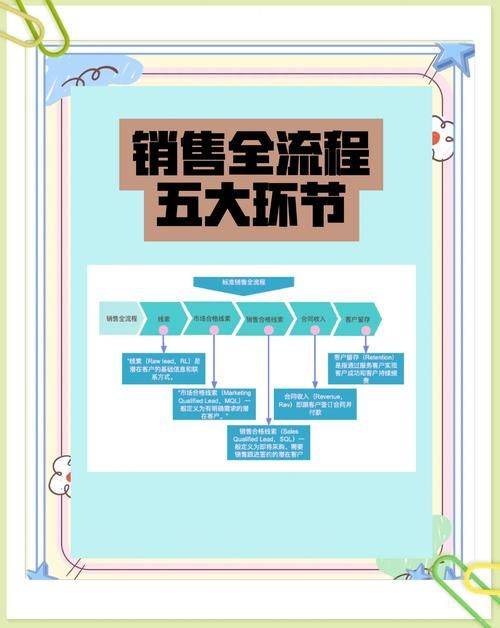
Tool i: sales opportunities management plan form
Tool ii: summary report on client visits
Tool iii: analysis of roles and attitudes of procurement-related personnel within clients
Tool iv: customer relationship assessment analysis table
Tool v: initial needs studies
Tool vi: value shaping/programme presentation schedule
Tool vii: summary of value formation/product presentation table
Curriculum models:
Curriculum
One of the six-step approaches: the planning phase
Site analysis: why is it better for some clients not to develop (the opportunity is still there) that there will never be cooperation in the future
Scene analysis: why does salespersons go to “run” customers every day, but performance is not reflected positively
1. Competition analysis
2. Analysis of internal client procurement processes
Thinking: what needs to be noted in the top-down bottom-up decision-making process
3. Marketing opportunities management plan
Application tool for this chapter: swot-sales opportunities management plan table
Six-step two: client contact
Scene analysis: why are a lot of visits invalid, just passing through
Scene analysis: why does the client always say "think about it" and "see about it" and send us away
Scene analysis: why does relationships with clients always appear to be difficult to reach
I. What factors have led to mistrust of us
Case discussion: how does first-time contact create a good first impression
1. Stages of customer relationship development
2. Four keys to trust
3. Two core purposes for the pre-sales period
Ii. Pre-sales preparation is central to gaining trust and winning sales
1. Knowledge and understanding of products, customers, marginal knowledge
2. Sale of four treasures: business cards, customer information, notebooks, contract documents, etc
3. Sales preview: what is the purpose of the sale, what is the purpose of the customer, possible resistance, etc
Client analysis and relationship building
1. Two major areas of error at the client contact stage
2. Path analysis of human development
3. Two keys to interpersonal relations
Iv. To manage each other’s emotions in human interactions
Thinking: have we ever been angry in our own lives that led to the termination of procurement
1. Blindly arguing with customers is an important cause of sales staff failure
2. Creating a harmonious communication climate in sales communications is a prerequisite for negotiating transactions
Sales are not competitions. Please note that we won the dispute and lost the business
V. Wolves' eyes — different types of clients communicating province
Application of tools for this chapter: client visit summary report | role and attitude analysis table for procurement-related personnel within clients | customer relationship assessment table
Six-step three: need inquiry
Site analysis: why does the client always have no needs
Scene analysis: why do we talk about our products so badly that our clients are not happy
Scene analysis: why does zhang accept words that are not felt at all
I. What is demand
Case analysis: where are our common responses when clients say they do not need them
Ii. Clients and know their needs or do we know each other better? Why? (case discussion)
A. Sales communication based on the former
B. Results of two different concepts
— conclusion: professional salesmen can influence each other's needs and not just respond to them
Iii. Customer classification and communication strategy from a demand perspective
1. Undefined
2. Semi-defined
3. Complete clarity
4. Spin marketing techniques (question techniques)
1. Background issues
2) to explore the issue of sexuality
3) implicit problems
4. Addressing sexual problems
Role playing/field simulation
Application of tools for this chapter: initial needs study report, third tier communication method, spin marketing techniques
Six-step four: value-building
Scene analysis: why do we make the benefits of the product clear, or not
Scene analysis: why do we talk about our products so badly that our clients are not happy
Scene analysis: why is it that when we're finished with the product, customers say it's not the same as the others
How is the “value” in sales understood
1. Value equivalence in the customer's heart
2. Three key factors influencing value
3. Details of value formation for attention: involvement in mobilizing each other's sensory thinking
Ii. How values are shaped
Can you say the unique value of your product
Refining point - perception point - dissemination point
3. Fabe law appliance phrase
Group exercise: refining value points in combination with the characteristics of the company's products/services
Application tools for this chapter: value shaping/programming schedule, value shaping/product presentation summary table, fabe code
Six-step five: dissenting
Scene analysis: why does the client disagree? Where's the source
Scene analysis: why are our customary responses always difficult to work in the face of customer dissent
Scene analysis: why are customers always too sensitive to prices
1. Three broad strategies to effectively address client dissent
2. Six major processes for handling objections
3. Analysis and treatment of customary issues
Phrase: a practical word for price challenge
Six out of six: transaction and hospitality maintenance
Scene analysis: why do we seem to have no problem communicating with clients, but it's always hard to get to the stage of the deal
Scene analysis: why is it that some of our clients trade with us as a hammer, and they have low viscosity
1. Rapid detection of each other's signature
2. Skills for responding to client issues at the transaction stage
Keys to a deal
The highest level of sales — not for sale? How? How do you move clients
How are you doing? Are you thinking about your cut or are you really helping the client
Case sharing/discussion: how do we work with a client-first service
Summary: analysis of key knowledge in the six-step approach from model models points
Discussion: dr. Vs "sale" model analysis, doctors' "prescription" rather than simply "selling" drugs, how can salesmen quickly adjust their sales patterns to be "selling doctors"