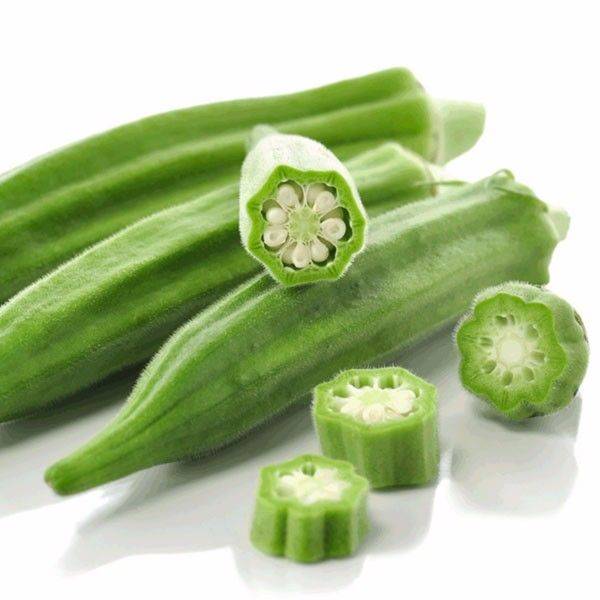
In africa and the americas, the autumn is a rare type of vegetable in the current market, and it is also very unfamiliar and does not form consumption habits. Autumn is a year-old herbs, also known as an autumn clamps, which are rich in calcium, iron, zinc and selenium because of their high nutritional value, often eat to enhance human functioning, and are referred to as renal herbs. Autumn sunflowers are warm, cold, heat-resisting, and are solar-active plants that are fully adapted to the summer cultivation in huangoka city. According to weather conditions in huangoka city in recent years, the field of yellow autumn cultivation could begin planting in mid-april. At present, only one of the 14 vegetable bases on the outskirts of huanggang city is trying to plant the autumn and is selling it to large and medium cities such as wuhan and yellowstone. A survey of the distribution of vegetables shows that the expansion of yellow autumn cultivation in the city of huanggang has considerable development potential and prospects. Autumn cultivation techniques are described below for information。
One whole place
The autumn is not suitable for reconnection, and it is preceded by crops that do not select fruit and vegetables in order to effectively combat dysentery. Autumn is suitable for planting roots and leaves and vegetables in the head. Autumn requires a long period of light, with good ventilation and light conditions, and the cultivated soil is suitable for deep, porous, fertile, well-watered or sandy soils. In order to ensure soil sodium, the field must be ploughed deep, and the earth must be broken, the soil must be razed and the field must be ploughed. 75t/hm2 fertilizers, a nitrogen phosphorus compound 375kg/hm
2 , smuggled raspberry bed, with an average width of 50-60 cm and a gap between the plumes of 20-30 cm。
2 seedlings
Leach seed sprouts must be carried out prior to broadcast, and the soaked sprouts must be seeded at a distance of 10 cm x 10 cm and then covered by approximately 4 cm thick earth. At a temperature of 25-30°c, 4-5d is the seeding of soil (around 7d for the field) and 3040d for the seedling age. In sowing, the application of good fertilizers is also key to the harvest, with three fertilized farmers ' fats, a fine sand mix, being distributed to the surroundings of the seeds to be planted, about 15 cm deep。
3 field management
3. 1 saplings
Shizumi is trying to ensure that the sunflower is luminous and luminous. Two seedlings are usually performed in production. The first sapling takes place when the heart of the autumn is broken, at which time the sapling is to be uprooted. The second sapling, which takes place when the autumn is growing to two to three saplings, still removes weak saplings that are not well developed. The time of seedlings is three to four leafs of yellow autumn, after which one seed is left in each den。
3. 2 cultivation of grass and earth
It can not only contribute to the warming of the earth and the maintenance of good soil conditions, but also to the growth of the roots of the autumn. The first medium tillage takes place before the opening of the first flower of the autumn and can promote the growth of root systems. The flowering results should be combined with water fertilization for chinese farming in order to promote the growth and development of the acetone root system and to avoid the rewinding of plants while protecting against weeds。
3. 3 water fertilization
3. 3. 1 watering. The demand for air moisture and soil moisture is high during the autumn growth. In order to maintain reasonable air and soil moisture, acupuncture is irrigated in a timely manner. In case of water scarcity in 20d after planting, water is sprayed early and late. The seedlings can grow up using either spray or ditch irrigation. High summer temperatures and high evaporation levels require timely water recharge. The water should be watered at around 8 p. M. And later in the afternoon, when temperatures are higher, to the detriment of plant growth. Care is taken to conduct drainage during the rainy season。
3. 3. 2 fertilisation. Autumn demand for fertilizers varies over time: more nitrogen is required in the pre-growth period, and higher demand for phosphorus and potassium in the medium and later stages of growth. Excessive application of intermediate and later nitrogen fertilisation, which results in long planters, delays their flowering results and increases in fruit seating, leads to fewer results and affects yields; nitrogen fertilizer is insufficient, leading to poor growth and affecting flowering fruit. Like other crop cultivation, autumn is grown on the basis of the application of base fat, which should be properly followed and not applied to nitrogen. The first of these is urea 90 ~120 kg/hm2 after seeding. The second was to remove the application of the application after the planting or planting of the seedling and to apply the compound fertilizer 225 ~300 kg/hm2. The flowering result period requires a re-application of human manure of 30~45t/hm2, or a combination of 300~450kg/hm2 nitrogen phosphorus. In the later stages of growth, small amounts of fat recovery, as appropriate, prevent premature plant failure。
3. 4 plant adjustment
Autumn leaves consume large amounts of nutrients during their growth and, if not properly controlled, have a serious impact on the flowering and outcome of the autumn, resulting in delays. In production, measures can be taken to bend the handles down to reduce the consumption of nutrients for their nutritional growth in order to ensure the nutrient supply during flowering. After harvest, the following leaves can be removed, both to build reasonable light and heat conditions, to reduce nutrient consumption and to prevent the spread of their pests。
4 major pest control
4. 1 diseases
Autumn saplings can be contracted during periods of sprouts and periods of stock. When the seedling is later, the disease spreads from leaf blades to the main tuber, which makes the tuber thinner and fades, to the point where the whole strain is atrophy or collapses. Prevention and treatment: prevention and treatment of manganese zinc humid powder at the beginning of the disease with 500 times more fluid than 7-10 d spray。
4. 2 viruses
The virus is the main disease of the autumn, and the strain suffers from the disease, showing the form of flowers or brown stripes, the low strength of the strain, the small or weak. Prevention and treatment: selection of resistant varieties; at the beginning of the disease, 5% of the fungus was used to poison the wettable powder 400-500 times more than one application at 7-10 d and three treatments。
4. 3 poison caterpillars
Autumn sunflowers are vulnerable when they are young. Leaf meat, which feeds on seedlings, leaves only a vein when it is severe. Prevention and treatment: 10 per cent of the agent is used to eliminate 1,500 times the cream or 5 per cent is strongly held by 1,500 times the fluid spray。
4. 4 aphids
Aphids occur throughout the whole growth phase of the autumn, especially when the plant is grown. Treatment can be provided with 10 per cent of aphid pesticides and 10 per cent of acupuncture 3000 times more。
4. 5 ants
After flowering, the ants tend to gather on the plant. Method of prevention and treatment: induced by a 1,000-fold or 5 per cent sharp, 1,500-fold fluid spray from 48 per cent of the semen。
4. 6 tigers
The tiger comes out day and night and bites the seed. Sugar vinegar fluids are commonly used to lure or excavate in the morning, and can be used as a special pesticide。
5 collections
The whole pick-up period of the autumn is 70-100d. Usually 4d of the fruits are harvested after the flower is given the best quality, and the commercial fruit picker criteria are 8-10 cm long, the fruit appearance is small green and the seed in the fruit is not aging. Untimely harvests, aging meat, increased fibres and a significant decrease in the value of merchandise consumption. After the first harvest, the harvest period is reduced at an initial rate of ~2-4d, depending on the temperature. The month of august was marked by a harvest of one per day or the following day. After september, temperatures declined, with 3-4d harvests taking place one time. In general, the fruit can be harvested at 22. 5 ~37. 5 t/hm2 throughout the harvest period of the autumn。